

What is Shuttle Racking?
- 03/01/2025
- Posted by: macgad-admin
- Category: Racking System
What is Shuttle Racking?
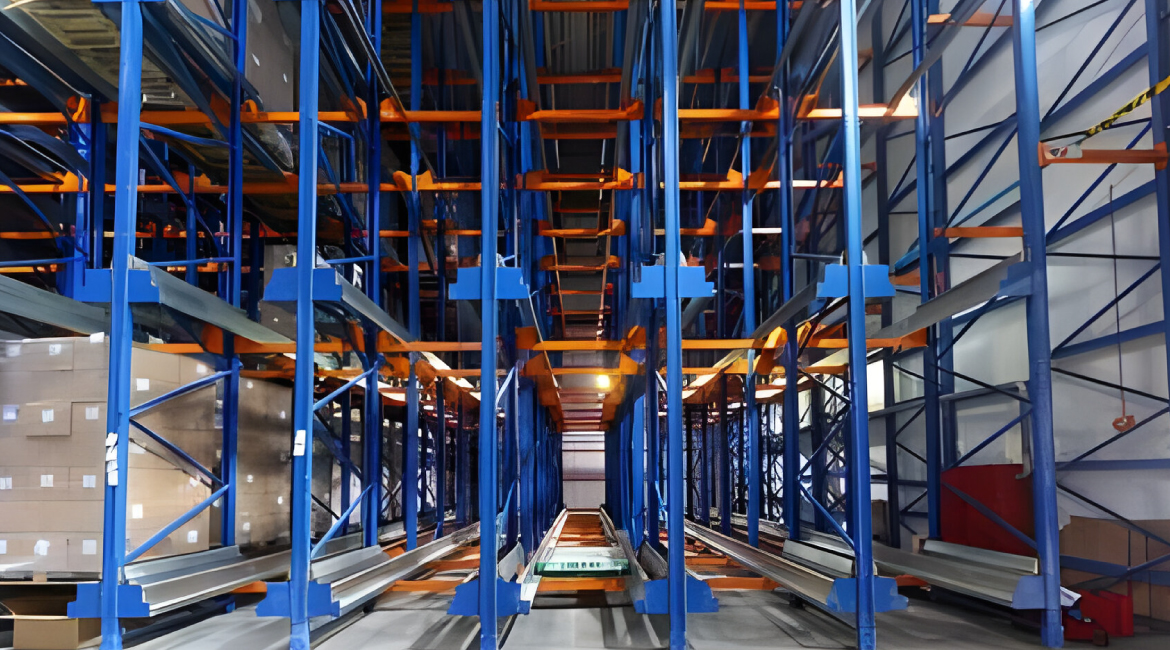
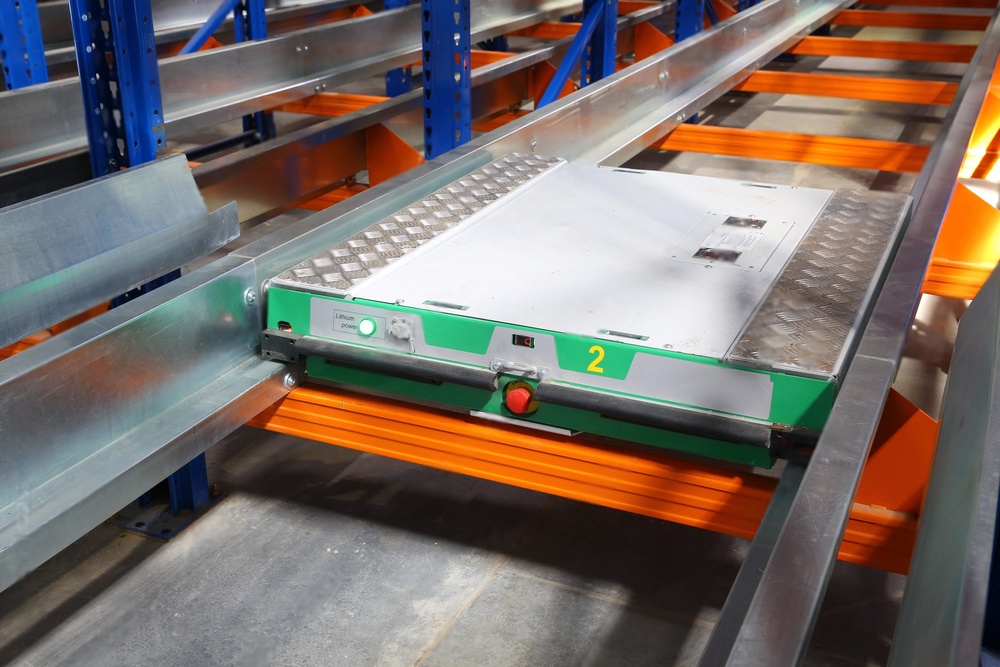
Shuttle Racking uses a powered cart inside deep storage lanes to move pallets between the lane end and the storage position. In the forklift-served configuration covered in this article, a forklift places and collects pallets at the lane entry while the shuttle handles movement along the lane. This is a semi-automated system: the forklift operator and the shuttle each have a defined role. A different, more fully automated option is the four-way shuttle on a connected grid, where shuttles travel along and across connected tracks, with level transfers through specified lifts. In this article, we explain how forklift-served shuttle racking works, what it requires and what to confirm before requesting a quotation.
How Does a Shuttle System Work?
So, how does it actually work? Essentially, this system includes a shuttle cart that automatically loads and unloads pallets within the deep lanes of the racking structure. Here’s how it operates:
When a pallet needs to be stored, a forklift places it at the entry point of the lane. The shuttle then transports the pallet along the lane to the designated position. When retrieval is needed, the shuttle moves the pallet back to the lane end for the forklift to collect. This is a forklift-served semi-automated operation, as shown in Toyota’s semi-automated shuttle overview (manufacturer example only, not a Hyperack specification). Whether the system reduces total operating cost depends on the number of lanes, shuttle count and the throughput required. Or check out this video
Benefits of Using This System
Assess these operating characteristics against the proposed layout and workflow:
- Storage Density
Deep lane storage uses fewer aisles than selective racking, which can increase the number of pallet positions in the same footprint. The actual density gain depends on lane depth, the number of SKUs per lane and the building dimensions, so it should be compared on a layout drawing, not a generic percentage. - Forklift Tasks at the Lane Face
During normal storage and retrieval, the forklift works at the lane face while the shuttle moves pallets within the lane. Compare the complete forklift route, shuttle positioning, staffing, battery charging and service needs against your existing workflow. - Loading and Unloading Cycle
The shuttle moves pallets within the lane at its own cycle time. Total loading and unloading time also includes forklift travel to the lane face, shuttle positioning and any waiting time when multiple lanes share a single shuttle. Compare the total cycle against your peak throughput requirement. - Site Safety Planning
The routine handling route keeps the forklift at the lane face. The site assessment must still cover rack and load contact, pallet placement, pedestrian separation, shuttle positioning, charging and service access, with safeguards defined for the proposed operation.
When to Use Shuttle-Based Racking?
Assess lane-shuttle storage against these requirements:
- High Inventory Turnover: Compare peak pallet movements with the complete forklift-and-shuttle cycle, including transfers between lanes and queues. High turnover alone does not establish suitability.
- Space Constraints: Compare usable positions after SKU allocation, lane depth, aisles, transfer points and service space are included in the proposed layout.
- FIFO or LIFO Access: A single-ended lane (load and unload from the same end) operates as LIFO. An opposite-ended layout (load from one end, unload from the other) can support FIFO where specified. The access method is determined by the physical lane design, not by software alone.
Shuttle System vs. Other Racking Systems
Choosing the right storage solution is crucial. Here’s how shuttle setups compare to other systems:
| Feature | Shuttle-Based Storage | Selective Racking | Drive-In Storage | Push Back Racking |
|---|---|---|---|---|
| Storage Density | Depends on lane depth and number of SKUs per lane | Separate aisles; layout-dependent | Deep lanes; SKU allocation matters | Multi-deep; cart-design dependent |
| Accessibility | Lane-end only; LIFO single-ended, FIFO if opposite-ended | Direct forklift access to each position | Single-ended LIFO only | LIFO; limited by cart count |
| Equipment Needed | Shuttle carts, battery charging, compatible forklift | Compatible forklift and aisle | Compatible truck; lane clearance | Compatible truck; carts per lane |
| Best For | Few SKUs per lane, deep storage with known rotation | Many SKUs needing direct access | Batch lanes with compatible rotation | LIFO batch storage with moderate depth |
Selective racking provides direct access to every pallet but uses more aisle space. Drive-in racking increases density with deep single-ended lanes (LIFO only), and the forklift enters the lane. Whether shuttle racking is the better option depends on your SKU mix, lane depth, throughput requirement and whether the forklift-served operation suits your workflow.
Installation Guide for Shuttle Racking
Planning to install a shuttle-based storage solution? Follow these steps for a smooth setup:
- Prepare Load Data: Record the pallet dimensions, loaded mass and condition for every SKU. Confirm the number of positions per SKU and the required stock rotation (FIFO from an opposite-ended layout, or LIFO from a single end).
- Survey the Site: Record clear height, aisle widths, columns, doors and services, and share existing floor drawings or load information. The responsible design parties should verify the site requirements for the proposed rack, lanes and equipment.
- Define Acceptance Criteria: Before installation begins, agree pass/fail tests for shuttle cycle time, lane alignment and load positioning. Run these tests at commissioning and document the results.
- Authorised Training and Handover: Confirm the operator and maintenance training required for the specified equipment, who delivers it and which instructions and handover records are included in the proposal.
Cost of Installing a Shuttle-Based Storage System
The total cost of a shuttle racking project covers several scopes: the lane racking structure, shuttle carts and battery charging equipment, the forklift interface, commissioning and the ongoing service contract. Each item should be confirmed separately in the quotation. To compare proposals fairly, ensure every supplier prices the same number of lanes, the same pallet positions and the same peak throughput. See Hyperack’s guide to comparing racking quotations for what to check.
Best Racking System Provider?
Choosing a reliable supplier is essential for a successful installation. Here are tips to find the right provider:
- Research Local Providers: Look for established Malaysian companies with a proven record in shuttle racking installations.
- Request Written Scope and Responsibilities: Ask the supplier to state in writing what they supply, install, test and support, and where their scope ends. Confirm warranty coverage, exclusions and the spare-parts process.
- Confirm Maintenance and Training Terms: Verify who performs scheduled maintenance, what operator and maintenance training is included, and whether the service contract covers shuttle batteries, software and emergency response.
- Compare Pricing: Get quotes from multiple suppliers to find the best option for your needs and budget.
Planning a shuttle racking project? Discuss the racking layout, handling interfaces and proposed division of supply and installation responsibilities with Hyperack. Contact us with your pallet data and site dimensions to confirm the quotation scope. See completed projects on our social media.
Conclusion
Forklift-served shuttle racking suits operations that need deep-lane storage for a limited number of SKUs per lane, with the forklift handling only the lane face. Whether it improves total cost and productivity depends on the lane depth, shuttle count, battery infrastructure and how the system integrates with your receiving and dispatch workflow. Prepare your pallet data, peak throughput figures and site measurements, then compare proposals that cover the full scope: racking, shuttle equipment, charging, commissioning and service.
Shuttle Racking Quotation Checklist
- Pallet Specification: Pallet dimensions, loaded mass, load condition and any pallets requiring special handling (e.g. oversized, unstable or temperature-sensitive).
- Lane and SKU Profile: Number of SKUs per lane, pallet positions per lane, and the stock rotation required (LIFO from a single end, or FIFO from an opposite-ended layout).
- Peak Throughput: Simultaneous inbound and outbound pallet movements per hour at peak, the number of shuttles and forklifts operating, and the daily operating window.
- Site Constraints: Usable floor area, clear height, available floor drawings or load information, ambient temperature, charging points and service access.
- Equipment Interfaces: Forklift type and compatibility, shuttle battery and charging requirements, any WMS or control integration, and who is responsible for testing and ongoing service.