

Warehouse racking
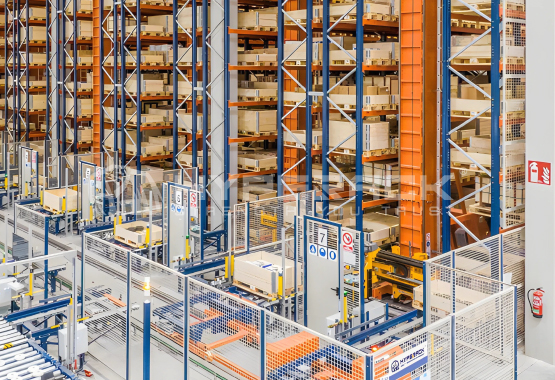
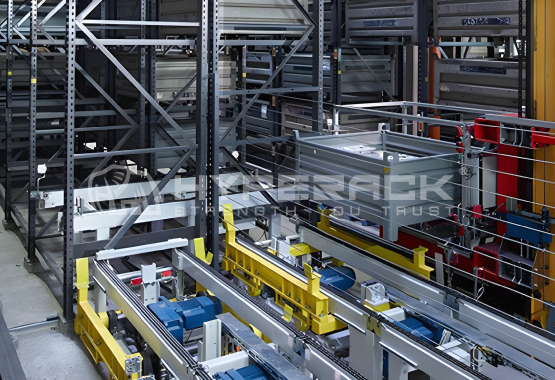
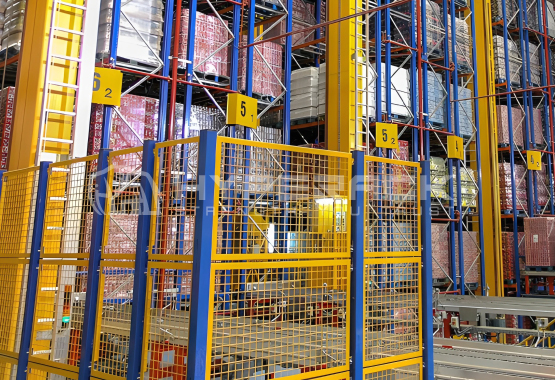
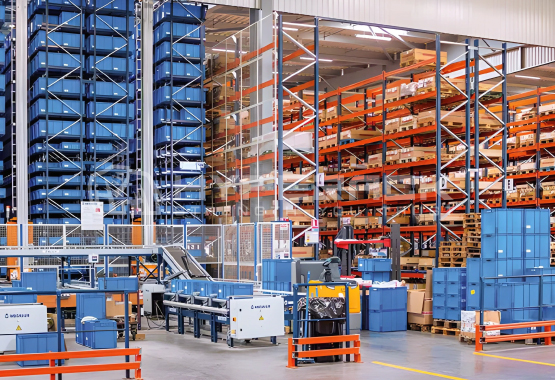
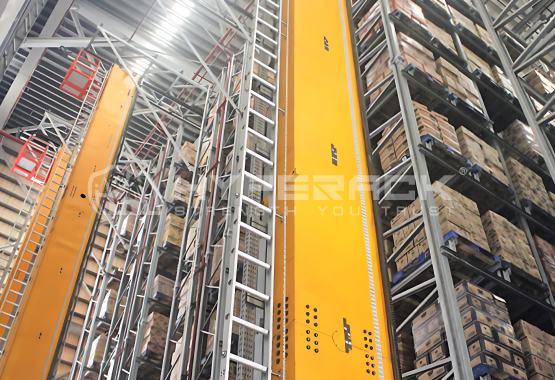
ASRS – Stacker Crane System
A stacker crane ASRS uses a crane that travels along an aisle between racking rows and raises or lowers a load-handling device to place and retrieve loads at designated storage positions. The storage movements are coordinated by the specified controls and handling interfaces.
Pallet unit-load systems and mini-load systems for smaller totes or cases use different equipment and carrier configurations. Select around the actual loaded dimensions, mass, storage quantity and required throughput. For a comparison with shuttle-based automation, see the ASRS Four-Way Shuttle Racking System.
Hyperack supplies and installs essential racking components for ASRS projects. The racking must suit the specified crane, load carrier and handling interfaces. Confirm in the proposal which suppliers are responsible for the machinery, controls, software integration, commissioning and ongoing service.
To prepare a racking proposal, please provide:
- Loaded pallet or carrier dimensions, mass and overhang
- Required storage positions and SKU or product profile
- Peak inbound and outbound movements per hour
- Site clear height, floor information and operating environment
- Machinery, controls and software interface requirements
See the ASRS overview for the related system options.
Ideal for
- Operations evaluating automated storage for a defined unit-load and inventory profile
- Supply chains with storage and retrieval flows that can be specified for the proposed system
- Warehouses comparing required peak movements with the proposed handling and transfer capacity
- Inventory processes with agreed identification, software interfaces and acceptance checks
Advantages
- Potential throughput improvement when the crane, transfer points and controls meet the required peak flow
- Potential reduction in repetitive manual handling; staffing, lifecycle cost and error outcomes depend on the complete workflow
- Reduced routine travel inside the automated storage zone, alongside required safeguarding and trained operating procedures
Budgeting for a Stacker Crane ASRS
For a stacker crane ASRS quote, ask for separate lines for the racking, crane and rails, transfer conveyors, controls and software. Confirm who is responsible for design, installation, testing, commissioning and maintenance. Share the loaded pallet dimensions, clear height and peak movements. If the quotes show a cost per pallet position, compare it using the same number of positions and the same equipment, software and service scope. Email floor plans or crane interface drawings to order@hyperack.com.my.
5 Easy Steps
1. Send Details
Share your loaded unit sizes, required throughput, available clear height and any systems the crane must connect to.
2. Review Scope
Discuss where racking supply ends and crane, controls or software supply begins so the scope boundary is clear upfront.
3. Check Fit
Confirm the proposed racking height, aisle width and crane interface points work within your building and floor slab.
4. Compare Quotes
Review what the quote covers for racking, crane, controls and commissioning and identify items quoted separately or excluded.
5. Plan Handover
Agree on testing scope, who runs commissioning for each system and what documentation is handed over at completion.
Ready to make a change?
We are here to help you choose the best racking for your business. Schedule a call with our representative today.

FAQ
How does an ASRS System differ from traditional manual storage and retrieval methods in terms of technology?
In a stacker crane system, the crane travels along a dedicated aisle and automatically lifts loads to and from storage positions at height, replacing manual forklift access within the racking structure. Automation includes the crane drive, positioning controls and handover interfaces at inbound and outbound stations. Not every stacker crane system requires AGVs or robotic arms; the controls and software integration scope depend on the specific installation. The level of automation and the systems it interfaces with, such as a warehouse management system (WMS) or enterprise resource planning (ERP) software, should be confirmed during the project specification.
What types of products or goods are most compatible with ASRS in terms of storage requirements?
The goods suitable for a stacker crane ASRS are selected by loaded dimensions, mass, stability on the carrier and the throughput required. Pallets and totes are handled by different crane and carrier configurations, so the system is specified around the actual load unit rather than a single product type. Not all goods are suited to automated crane handling; items with unusual dimensions, weight distribution or fragile packaging may need separate assessment. Cold storage, pharmaceutical or other controlled-environment applications are possible but require project-specific design confirmation rather than an assumed fit.
How does ASRS optimize space utilization and improve storage density in a warehouse?
A stacker crane ASRS can achieve higher vertical storage utilisation than manual forklift racking by placing loads at heights that conventional equipment cannot efficiently reach, while reducing the number of manual access aisles. The number of usable storage locations depends on the actual clear height, rack configuration, crane envelope, inbound and outbound areas, equipment clearances, safety zones and maintenance access requirements. When comparing density, use a like-for-like layout with the same goods and site constraints. Higher density does not automatically mean higher throughput; both should be evaluated for the actual installation.
What is the total cost of ownership (TCO) of an ASRS System, and how does it compare to traditional racking systems in terms of ROI?
The total cost of ownership of a stacker crane ASRS includes the racking, crane and handling machinery, controls and software, site preparation works, power supply, integration and commissioning testing, operator training, scheduled service and spare parts, energy consumption and planned downtime allowances. A meaningful comparison with manual racking requires agreed lifecycle assumptions, a verified throughput and labour baseline, and consistent measurement periods. Savings and payback timelines are project-specific and should be calculated from actual quotation figures and operational data rather than assumed from generic ranges.
Does ASRS racking system utilize robots 100%?
Automated storage and retrieval by the crane does not mean the site operates without people. Loading and receiving at inbound and outbound stations, exception handling for damaged or non-conforming loads, system maintenance, safety supervision and operator training remain part of the operation. The scope of human involvement varies with the system design, the level of automation at transfer points and the operational procedures agreed for the site.
What is unit weight per load ASRS racking system robot hold?
Payload depends on the specified crane, load-handling device, carrier, racking and interfaces. Provide the actual pallet or carrier mass, loaded dimensions, overhang and weight distribution. Ask the equipment and racking suppliers to confirm the rated unit load and operating limits for the complete proposed configuration, including each storage position. Generic weight ranges do not establish the rating of the supplied system.
How accurate is ASRS racking system load in and out?
Positioning accuracy and inventory accuracy are different measurements. The crane’s positioning tolerance is specified by the crane manufacturer for a given load, speed and environment, and is verified during commissioning acceptance tests. Inventory and order accuracy depend on the combined performance of the crane, controls, software interfaces and operational procedures. Request the manufacturer’s stated tolerances and the acceptance test criteria for the actual load and configuration rather than applying a universal figure.
What is ASRS racking system requirement?
The main inputs for planning a stacker crane ASRS installation include:
- Loaded unit dimensions, mass, carrier type and storage quantity per SKU profile
- Peak inbound and outbound movements per hour
- Available clear height, floor load capacity, column positions and site access
- Power supply, ambient temperature and operating environment
- Crane, controls and software interface requirements
- Installation sequence, testing, commissioning and access planning
What safety considerations are associated with ASRS implementation?
Safety planning for a stacker crane installation includes:
- Controlled access and safeguarding for the automated storage zone
- Emergency stop arrangements specified for the complete equipment and interfaces
- Supplier-defined operating, safe isolation, maintenance and fault-recovery procedures
- Trained, authorised personnel and a risk assessment covering the actual machinery, racking and site
- Commissioning review and reassessment when the system or operation changes
What is the typical implementation timeline for an ASRS System, including integration with existing warehouse management systems (WMS)?
The implementation timeline for a stacker crane ASRS depends on the design scope, equipment procurement lead times, site preparation works, racking and crane installation, control and software interfaces, testing, commissioning, training and handover. Each project has its own schedule based on these factors. Ask the equipment and racking suppliers for a project-specific programme with milestones and responsible parties rather than assuming a standard duration.