

Warehouse racking
Medium/Heavy Duty Racking
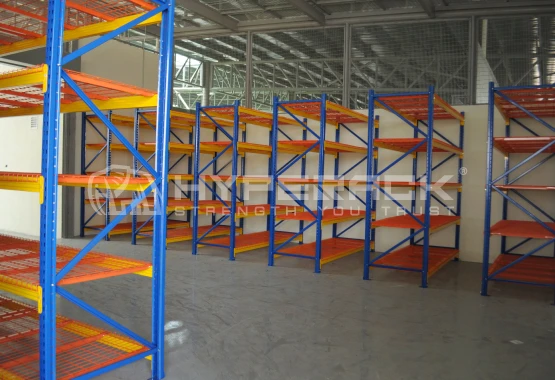
Hyperack supplies medium and heavy duty shelving in Malaysia for warehouse cartons, boxed stock and spare parts. Choose the shelf dimensions, decking and rated configuration around the actual goods: their packed size, loaded weight, quantity and how they will be loaded and retrieved.
For carton storage, record the outer length, width and height of each packed box, its loaded weight and the quantity of each product line. The carton measurement guide helps you prepare these details before discussing shelf depth, level spacing and access with Hyperack.
The shelving configuration shown here supports individual goods on shelves, with any pallet storage on the floor beneath the lowest level. For forklifts placing loaded pallets onto beam levels at height, discuss pallet racking systems instead. The handling method must suit the individual load, working height and selected system.
Ideal for
- Storing large, bulky items
- Heavy Load Management – Designed to handle substantial weights
- Expanding storage by adding additional shelves and frames as needed
Advantages
- Allows for quick and easy assembly
- Built with high-quality pallet racking components
- Flexible and customizable racking for any type of space
- Cost-effective in the long run
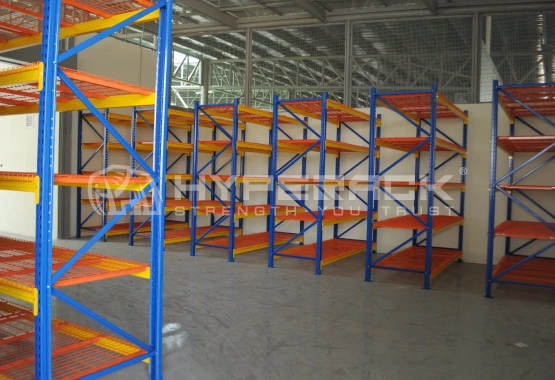
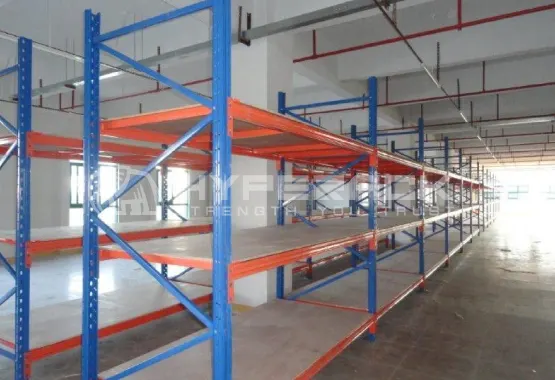
Heavy Duty Racking
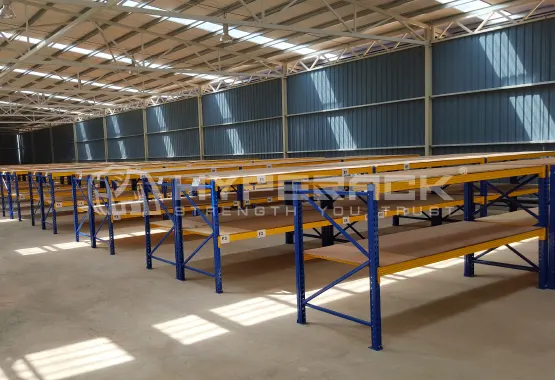
- Longer-length modular shelving
- Load capacity per level: up to 3000kg UDL*
- Suitable for storing pallets on the floor under lowest shelf only
- Also available with moisture-resistant galvanised-steel shelf panels
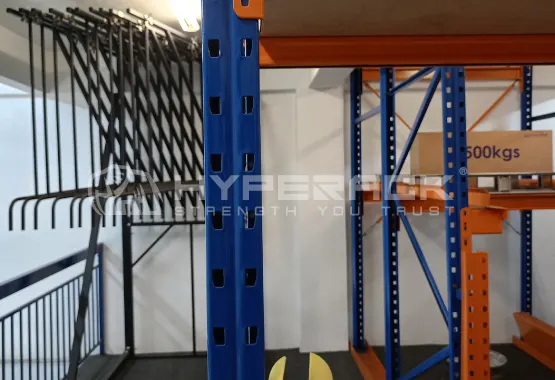
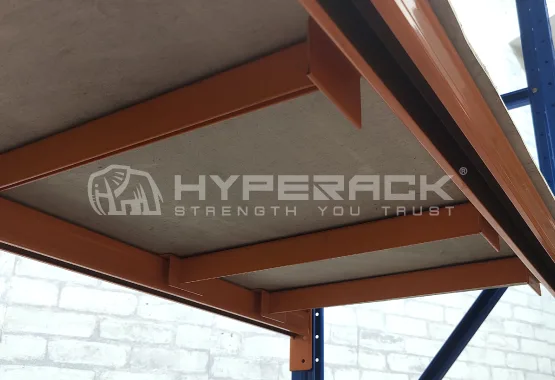
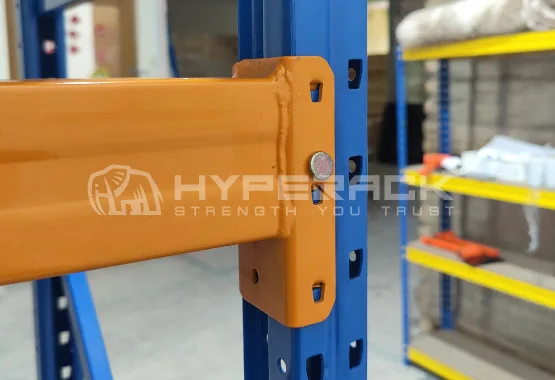
- Stamped-steel, single-piece support beams with high-visibility orange finish
- Beams lock into place with safety clips and can be adjusted on 50mm heights
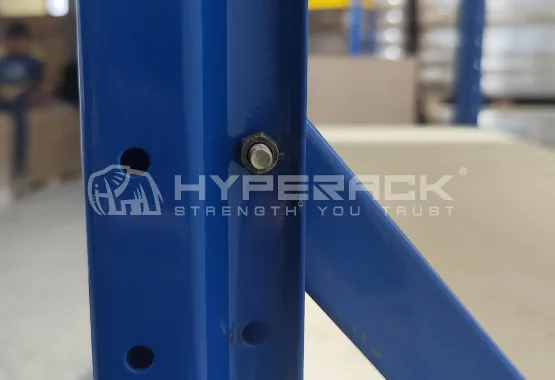
- Fully assembled end frames with powder-coated finish and galvanised bracing
- Shelves with steel deck supports enhance the resilience of the shelves and prevent local distortion
Hyperack’s heavy duty shelving uses modular frames, beams and shelf decking. Confirm the proposed dimensions, decking and arrangement of levels for your goods and site before ordering or adding to an existing system.
Published range and load ratings
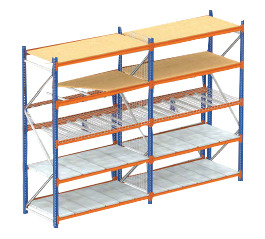
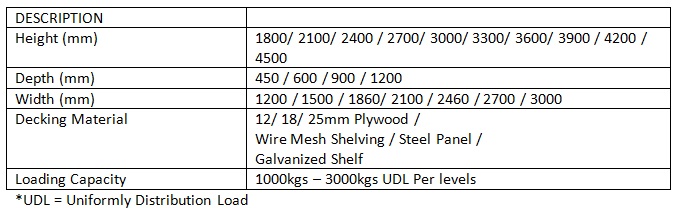
The product range diagram lists these dimensions and options:
- Heights: 1800, 2100, 2400, 2700, 3000, 3300, 3600, 3900, 4200 and 4500 mm
- Depths: 450, 600, 900 and 1200 mm
- Widths: 1200, 1500, 1860, 2100, 2460, 2700 and 3000 mm
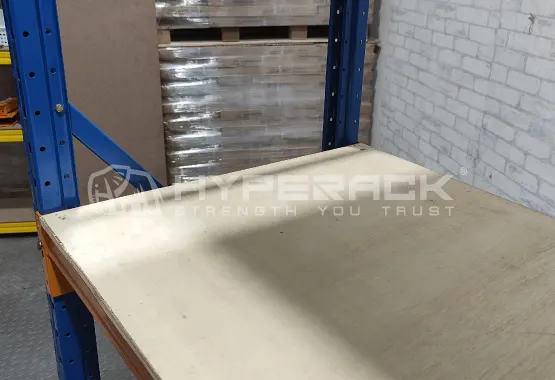
- Decking: 12, 18 or 25 mm plywood, wire mesh shelving, steel panel or galvanised shelf
- Listed loading range: 1000–3000 kg UDL per level, subject to the selected configuration
UDL means uniformly distributed load: weight spread evenly across the shelf’s load-bearing area. The listed range is not a rating for every combination of width, depth, decking and level arrangement. Confirm the permitted load for each shelf level and the whole bay in the quoted configuration; do not derive the bay limit by multiplying a range maximum by the number of shelves. Use the rack load label guide to prepare the loading information you need to confirm with Hyperack.
Handling method and system selection
Select hand-loading or suitable handling equipment for the actual carton weight, dimensions, working height and access. In the shelving configuration shown, pallets are stored on the floor beneath the lowest shelf level. If forklifts will place loaded pallets directly onto beam levels at height, discuss pallet racking systems with Hyperack.
Information for a heavy duty racking quotation
Prepare the following five items. The carton measurement guide and racking quotation brief (PDF) help organise the details:
- Packed outer dimensions and maximum loaded weight of each carton, box or item
- Quantity of each product line, proposed number of shelf levels and intended load distribution across the levels
- Handling method and equipment, loading height and access requirements
- Floor plan, available area, clear height, floor condition and columns, doors or other obstructions
- Whether this is a new installation, extension or replacement; identify existing components if they are to be retained
Use the quotation comparison guide to compare the specified configuration and supplied scope. Contact Hyperack with your measurements and stock details to discuss the appropriate shelving arrangement.
Working with measurements supplied in feet, inches or centimetres? Use our rack-dimension conversion guide and confirm the final ordered dimensions in millimetres.
5 Easy Steps
1. Enquiry
Your journey begins with a simple enquiry. Once we receive your request, our team will review the details and match you with the right expert. We’ll then arrange a quick call or email to learn more about your goals and expectations.
2. Free Consultation
After your initial consultation, we’ll arrange a site visit to assess your space and needs in detail. You’ll meet your dedicated project manager, who will guide the process from start to finish—ensuring everything runs smoothly and efficiently.
3. 3D CAD Design
After the site survey, your project manager will recommend layout options tailored to your space and needs. We’ll then create accurate 3D CAD designs to help you visualise exactly how your facility will look once complete.
4. Instant Quote
You’ll receive a free, personalised quote with a full breakdown of the recommended equipment. We offer high-quality products at competitive prices, with reliable delivery times to keep your project on schedule.
5. Installation
We’ll agree on an installation schedule that suits your operations. Our accredited team will complete the setup, conduct a final inspection with you, and provide follow-up support, including annual safety checks.
Ready to make a change?
We are here to help you choose the best racking for your business. Schedule a call with our representative today.

FAQ
What industries commonly use Medium to Heavy-Duty Racking Systems?
Medium to heavy duty shelving is used in warehouse, manufacturing, logistics, retail and eCommerce storage. Applications include packed cartons, boxed stock, spare parts and components that need shelf support and access for picking. Suitability depends on the packed dimensions and weight of the goods, how they are loaded and retrieved, and the rated shelf, decking and frame configuration. Share those details with Hyperack to discuss the system for your operation.
How do Medium to Heavy-Duty Racking Systems compare to light-duty systems in terms of cost-effectiveness?
Compare medium/heavy duty and light duty shelving for the same stock, loads, access and space requirements. Include the specified rack, decking, delivery, installation, site work and support in each quotation. Any projected saving or payback should state its configuration, quantity, workload and cost assumptions. A higher shelf rating or denser layout alone does not establish lower total cost. Ask Hyperack to compare suitable configurations for your operation and confirm what each proposal includes.
Can Medium to Heavy-Duty Racking Systems be relocated or reconfigured easily?
Hyperack’s published medium/heavy duty range is modular and lists beam adjustment at 50 mm intervals. Before moving a beam, adding a level, extending or relocating shelving, have Hyperack review the existing frames, beams, decking, proposed heights, loads and site conditions. Changes can affect the permitted level and bay loads. Confirm which components can be retained, agree the work with people competent for the system, and obtain any updated loading information, drawings and instructions before use.
What safety measures should be considered when using Heavy-Duty Racking Systems?
Use the confirmed shelf-level and whole-bay loads, load distribution and handling method for the specified configuration. Follow its floor, anchoring, connector, decking and protection requirements. Hyperack’s published range includes beam safety clips and steel deck supports. These features work alongside correct loading and handling, trained staff and inspections. Report impacts, missing parts or other damage promptly and follow the site procedure for restricting use until assessed. Agree inspection and maintenance responsibilities with the supplier and follow the instructions for the installed system.
How does the climate or environment affect Medium to Heavy-Duty Racking Systems?
The environmental conditions within a warehouse can significantly impact the longevity and performance of racking systems. For example, high humidity levels can accelerate corrosion, particularly in metal components. To mitigate this, many Heavy-Duty Racking Systems are available with galvanized steel components or moisture-resistant coatings. Steel beams may also feature powder-coated finishes to provide additional protection against environmental wear. In extreme conditions, such as cold storage, the material selection and structural design of the racks (e.g., thicker gauge steel or enhanced corrosion resistance) must be chosen to withstand temperature fluctuations and prevent material degradation over time.
What are the key differences between Medium and Heavy-Duty Racking Systems?
Both medium and heavy duty shelving can be used in warehouses. The label alone does not establish the permitted shelf or bay load. Compare the actual frame, beam and decking ratings, shelf dimensions and arrangement of levels for the proposed configuration. The appropriate choice depends on the packed size and weight of your goods, load distribution and handling method.
What are the maintenance requirements for Medium to Heavy-Duty Racking Systems?
Regular inspections are essential to identify any signs of wear, damage, or misalignment. Components such as beams, uprights, and safety accessories should be checked for structural integrity. Prompt repairs or replacements of damaged parts are crucial to maintain safety and functionality. Additionally, ensuring that the racking system is free from obstructions and that aisles are clear can prevent accidents and prolong the system’s lifespan.
How do Medium to Heavy-Duty Racking Systems contribute to warehouse efficiency?
These racking systems optimize storage space by allowing for higher density storage, which can lead to reduced floor space requirements. They also facilitate better inventory management through organized storage, making it easier to locate and retrieve items. This organization can result in faster picking times, reduced handling, and improved overall warehouse productivity.
Are there any environmental considerations when installing Medium to Heavy-Duty Racking Systems?
Yes, factors such as seismic activity, temperature fluctuations, and humidity levels can influence the choice and installation of racking systems. For instance, in areas prone to earthquakes, racking systems may require additional bracing or anchoring to prevent tipping. Similarly, in high-humidity environments, selecting materials resistant to corrosion is important to ensure the longevity and safety of the racking system.
What are the typical lead times for ordering and installing Medium to Heavy-Duty Racking Systems?
Lead times can vary based on the complexity of the system, customization requirements, and the manufacturer’s production schedule. Standard systems may have shorter lead times, while customized solutions could take longer. It’s advisable to consult with the supplier to obtain an accurate timeline and plan accordingly to minimize disruptions to warehouse operations.