

Warehouse racking


Double-Deep Pallet Racking System
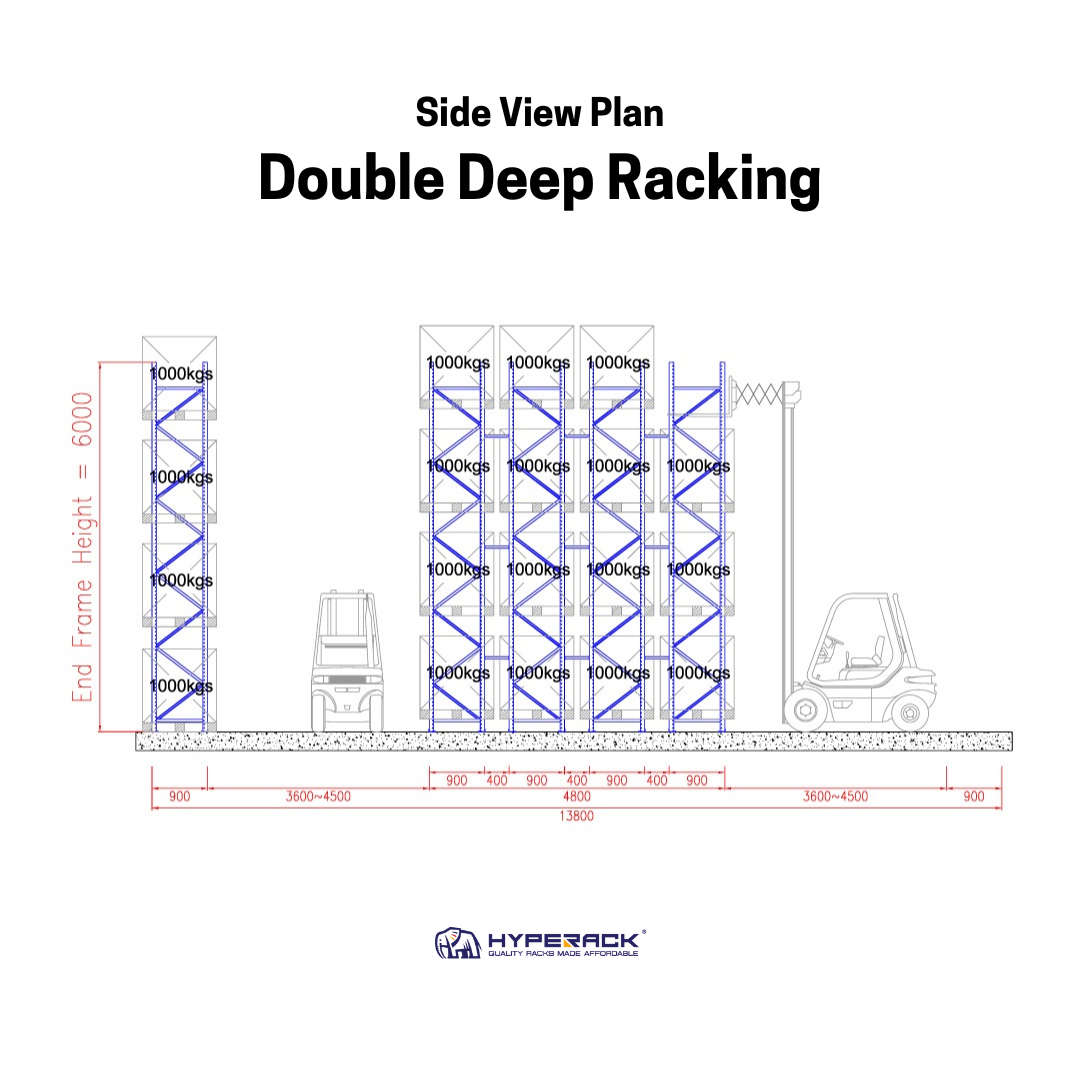
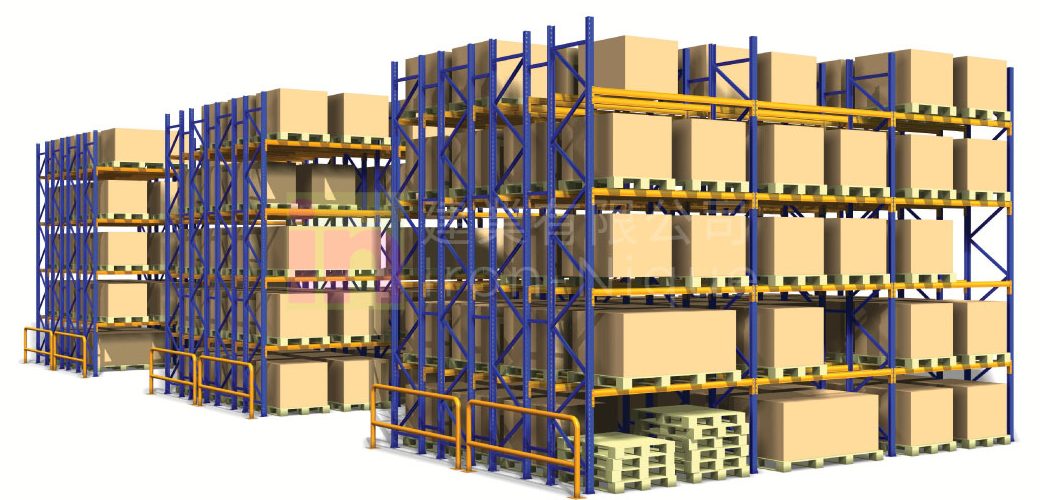
The Double Deep Racking system is a high-density storage solution designed to maximize warehouse space by allowing pallets to be stored two deep from each pick face. Because the front pallet position blocks direct access to the rear, the front pallet is removed first under normal site procedure. The actual density improvement depends on the warehouse layout and how many usable pallet locations the design yields, rather than simply doubling the capacity of an equivalent selective setup.
To operate a Double Deep Racking system, a compatible truck with double-deep reach capability is essential. The truck must be specified for the actual pallet load, required lift height, reach depth, residual rated capacity and aisle envelope of the installation. A generic forklift attachment does not by itself establish compatibility with a particular racking and load configuration.
Overall, Double Deep Racking offers a strategic solution for warehouses storing multiple pallets of the same SKU where compatible batch rotation and reduced aisle count suit the operation. By specifying the right equipment for the actual load and layout, businesses can make effective use of this racking system.
For a published double deep installation example, see Hyperack’s CLF Trading project in Mentakab, dated July 2019 (view the project record).
Ideal for
- High Density Storage - maximizing cubic space
- Reduces aisles space increases cubed space utilization
- When alternative systems such as the Drive-In Racking are not possible
Advantages
- Higher storage density can come from fewer working aisles; compare usable pallet positions in drawings for the same warehouse and loads.
- Compare racking, compatible handling equipment, installation and site work together; total cost depends on the specified proposal.
- Suited to several pallets per SKU, with compatible stock paired front and rear; plan access and rotation requirements before choosing the layout.
Double Deep Pallet Racking Price in Malaysia
As a general guide, Double Deep pallet racking in Malaysia may cost around RM90 to RM150 per pallet location. However, the rack price is only part of the total investment. Double Deep systems require suitable material handling equipment (MHE), such as a reach truck with a deep reach attachment, to access pallets stored behind the front row. The MHE choice, aisle width, rack height and warehouse layout can all affect the overall cost and operation.
For a more accurate quotation, share your warehouse layout, storage requirements and current MHE details with our team.
5 Easy Steps
1. Enquiry
Your journey begins with a simple enquiry. Once we receive your request, our team will review the details and match you with the right expert. We’ll then arrange a quick call or email to learn more about your goals and expectations.
2. Free Consultation
After your initial consultation, we’ll arrange a site visit to assess your space and needs in detail. You’ll meet your dedicated project manager, who will guide the process from start to finish—ensuring everything runs smoothly and efficiently.
3. 3D CAD Design
After the site survey, your project manager will recommend layout options tailored to your space and needs. We’ll then create accurate 3D CAD designs to help you visualise exactly how your facility will look once complete.
4. Instant Quote
You’ll receive a free, personalised quote with a full breakdown of the recommended equipment. We offer high-quality products at competitive prices, with reliable delivery times to keep your project on schedule.
5. Installation
We’ll agree on an installation schedule that suits your operations. Our accredited team will complete the setup, conduct a final inspection with you, and provide follow-up support, including annual safety checks.
Ready to make a change?
We are here to help you choose the best racking for your business. Schedule a call with our representative today.

FAQ
Double Deep vs Selective (Single Deep) Racking: What's the Difference?
The key technical difference between Double Deep and Selective (Single Deep) Racking lies in their storage layout and accessibility. In Double Deep Racking, pallets are stored two positions deep from the pick face; the front pallet blocks direct access to the rear position, so the front is removed first. A compatible double-deep reach truck is needed to access the rear position once the front is cleared. Selective Racking allows direct access to every individual pallet position, making it more flexible for operations with many different SKUs. Double deep reduces the number of aisles needed for a given number of pallet positions, while the actual aisle width in either system depends on the specified truck and site design.
What type of forklift is required for Double Deep Racking?
A compatible double-deep reach truck is required for Double Deep Racking systems. These trucks are equipped with a pantograph or telescoping fork mechanism that extends to the rear pallet position once the front position is clear. The truck must be specified for the actual pallet load weight, required lift height, reach depth and residual rated capacity at full extension. The aisle envelope needed depends on the specific truck model, load dimensions and racking layout, so these are confirmed during the design stage rather than assumed from general figures.
How does stock rotation work in a Double Deep Racking system?
A double deep pallet pair is naturally Last In, First Out (LIFO): the rear pallet is loaded first and the front pallet is loaded second, so the front pallet is removed first during retrieval. Achieving First In, First Out (FIFO) rotation with double deep racking requires deliberate stock-management controls, such as planned rehandling sequences or specific lane-allocation rules, and may suit only certain product profiles. For operations where strict FIFO is essential, such as perishable or date-sensitive goods, a different racking design purpose-built for FIFO flow may be more appropriate. The stock rotation method should be evaluated as part of the racking selection, not assumed after installation.
What industries benefit most from Double Deep Racking?
Double Deep Racking is particularly beneficial for industries such as:
- Retail and Wholesale Distribution: High-volume, uniform pallet storage with relatively low SKU variety.
- Manufacturing: Large-scale inventory of raw materials or finished goods that do not require constant access.
- Food and Beverage: For bulk storage of non-perishable products that need to be organized efficiently. The system is ideal for businesses with substantial warehouse space that need to maximize storage capacity while maintaining efficient, albeit less direct, access to products.
What are the safety considerations for using Double Deep Racking systems?
Safety is a key consideration when implementing a Double Deep Racking system. Operators must be trained to operate double-deep reach trucks safely, ensuring they can navigate narrow aisles and retrieve pallets from the deeper sections without causing damage to the racks or inventory. Other technical safety measures include:
- Load Capacity: Ensuring that each rack and forklift is rated for the appropriate weight load.
- Rack Inspections: Regularly inspecting beams, uprights, and connectors for wear or damage due to heavy loads or forklift impacts.
- Pallet Positioning: Ensuring that pallets are stored correctly to avoid instability, especially in the deeper sections of the racking.
How does the access to the second pallet work in Double Deep Racking systems?
- Front Position First: In a double deep pair, the front pallet blocks physical access to the rear position. Under normal operation, the front pallet is removed before the rear pallet can be reached.
- Reaching the Rear Position: Once the front position is clear, the double-deep reach truck extends its pantograph or telescoping forks into the rear position to pick the pallet. The truck must be rated for the load at that reach depth.
- Cycle Time: When the front position is occupied, accessing the rear position requires an additional handling step. Actual retrieval time depends on the stock position, truck and site procedure, so throughput is assessed during layout planning.
- Stock Management: The pair operates as LIFO (Last In, First Out) by default. Operations requiring a different rotation sequence need deliberate stock-management controls built into the warehouse procedure.
What are the potential downsides or challenges of using Double Deep Racking?
- Limited Access to Rear Position: The front pallet must be removed before the rear position can be reached, which can slow picking when both positions are occupied. Throughput planning should account for the additional handling step.
- Reduced Visibility: Since the rear pallet is stored behind the front, it can be harder to monitor inventory levels or access products quickly without a systematic approach to stock management.
- Aisle and Equipment Requirements: Double deep racking needs a compatible reach truck specified for the actual loads and layout. The required aisle envelope and truck capability are confirmed during the design stage.
- Higher Initial Costs: The initial setup cost can be higher due to the need for a compatible reach truck and the engineering design of the system.
- LIFO Stock Rotation: Each pallet pair operates as LIFO by default. Operations that need FIFO rotation require deliberate stock-management controls or may be better served by a racking system designed for FIFO flow.
How do you handle damaged pallets in a Double Deep Racking system?
- Immediate Removal: As soon as a damaged pallet is identified, it should be removed to prevent the damage from affecting other products and to maintain safety.
- Inspection and Repair: Inspect the pallet thoroughly to determine if it can be repaired (e.g., replacing damaged slats or frames). Ensure that the repairs meet safety standards.
- Replacement: If the pallet is beyond repair, replace it immediately to maintain the integrity of your racking system.
- Document Damage: Keep records of damaged pallets for quality control and to ensure any recurring issues are addressed with suppliers or during inventory management.
- Safety Checks: Regularly check racks and forklift operations to minimize further damage to pallets, as improper handling can contribute to more damage.
Are there any environmental considerations when installing Double Deep Racking in a warehouse?
- Energy Efficiency: Consider the impact of lighting and heating in areas with double deep racking, as taller racks can create dark spaces and may affect heating distribution. Install energy-efficient lighting and temperature regulation to minimize energy use.
- Ventilation and Airflow: Ensure proper airflow in the warehouse to avoid the buildup of moisture, especially in cold storage areas. Double deep racking systems can limit air circulation, so it’s important to design the layout with adequate space between racks.
- Recycling and Sustainability: Use eco-friendly materials for the racking systems where possible. Opt for recyclable metals or materials, and ensure that damaged racks are properly recycled.
- Warehouse Material Handling: Evaluate whether your forklifts and material handling equipment are energy-efficient and designed for the heavier lifting needs of a double deep system.
What are the best practices for organizing and labeling pallets in Double Deep Racking systems?
- Label Clearly: Use large, clear labels that include product information such as SKU, batch number, and expiration date (if applicable). Place labels on the front and side of the pallet for easy identification.
- Group Similar Products: Organize pallets by product type or SKU in the same section to streamline picking and reduce errors.
- Implement Color Coding: Use color-coded labels or tags to indicate stock priority, product type, or location for faster identification and access.
- Plan Rotation by Pallet Pair: A double deep pair is naturally LIFO because the occupied front position blocks the rear. Group compatible stock and batches, and plan expiry or FIFO requirements with the warehouse team instead of assuming labels alone provide FIFO access.
- Regular Audits: Periodically check the condition of the pallets, especially if stock is stored for long periods, to ensure proper organization and avoid bottlenecks.