

Warehouse racking

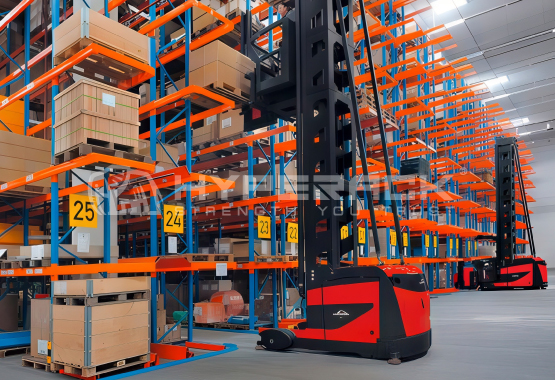
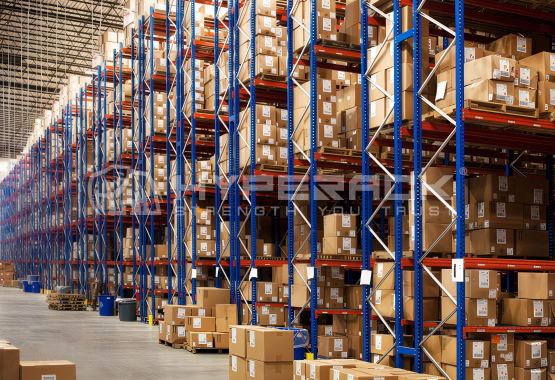
VNA – Very Narrow Aisle Pallet Racking System
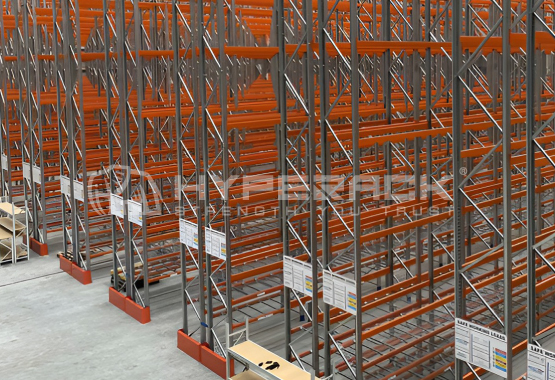
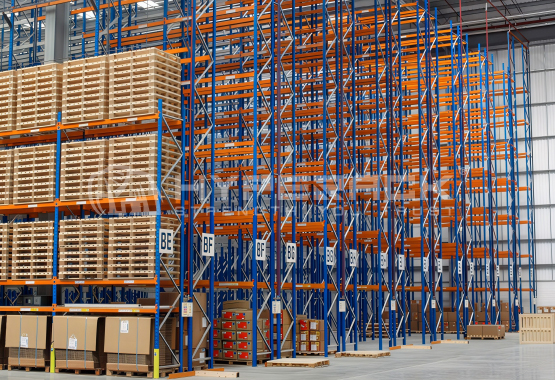
Very narrow aisle (VNA) pallet racking combines a storage layout with handling equipment selected to work in reduced aisles. Plan the rack, loaded pallet, truck, guidance and floor requirements as one arrangement, including transfer space at the aisle ends. A narrower aisle can change storage density, but it does not by itself establish faster handling, lower total cost or a particular usable capacity.
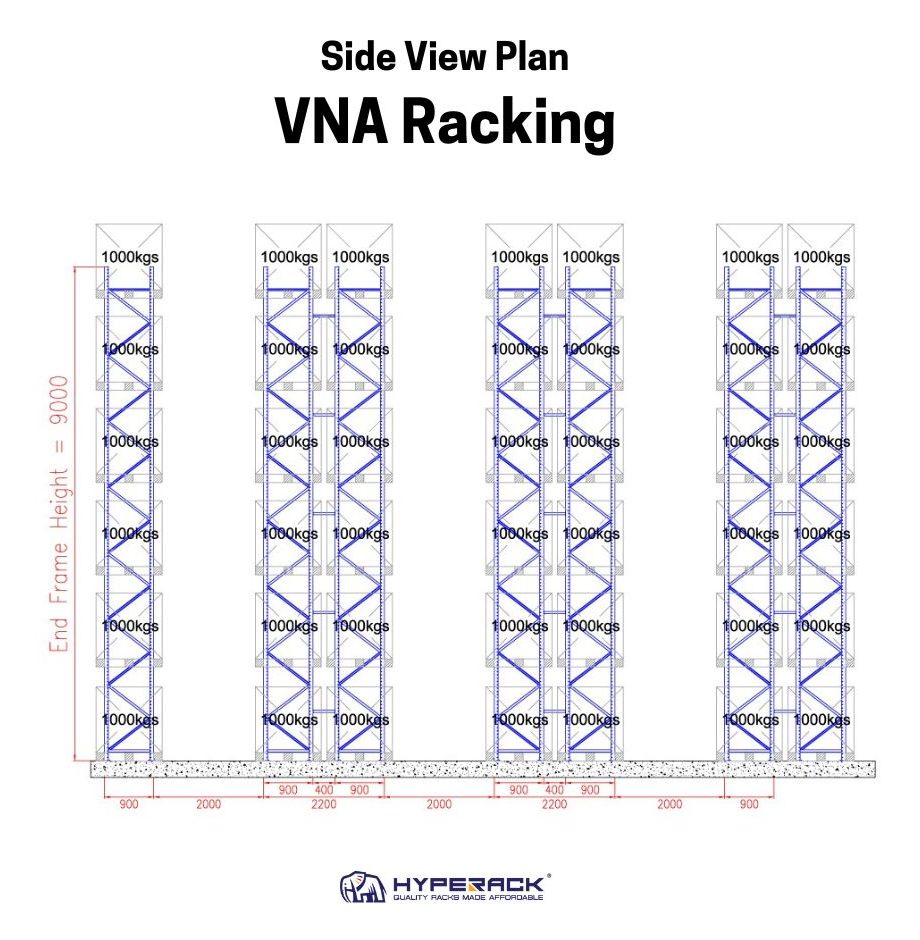
Hyperack’s published VNA catalogue pages describe the system and show a sample layout. The drawing on the following page marks a 9,000 mm end-frame height and 1,000 kg labels on illustrated loads. These are example drawing details, not a universal working-load rating or an approved layout for your warehouse.
Ask the proposal to state the rack and beam arrangement, loaded-pallet dimensions and mass, selected truck and lift capability, guidance, floor assessment, clearances and included installation and support scope. Use the racking quotation comparison worksheet to record the assumptions and compare the complete proposals.
Ideal for
- Sites with floor information assessed against the proposed truck and rack requirements
- Storage loads and quantities matched to the proposed pallet locations and handling equipment
- Operating patterns assessed for replenishment, picking and aisle-end transfers
- Layouts with confirmed working, overhead, doorway and access clearances
Advantages
- Can support an arrangement with direct access to the specified pallet locations
- Allows rack layout and handling equipment to be evaluated together
- Can reduce working-aisle space where the complete arrangement permits it
- Makes usable position counts and cost comparisons specific to the actual proposal
- Guidance and operating controls can be specified for the chosen equipment and site
5 Easy Steps
1. Enquiry
Your journey begins with a simple enquiry. Once we receive your request, our team will review the details and match you with the right expert. We’ll then arrange a quick call or email to learn more about your goals and expectations.
2. Free Consultation
After your initial consultation, we’ll arrange a site visit to assess your space and needs in detail. You’ll meet your dedicated project manager, who will guide the process from start to finish—ensuring everything runs smoothly and efficiently.
3. 3D CAD Design
After the site survey, your project manager will recommend layout options tailored to your space and needs. We’ll then create accurate 3D CAD designs to help you visualise exactly how your facility will look once complete.
4. Instant Quote
You’ll receive a free, personalised quote with a full breakdown of the recommended equipment. We offer high-quality products at competitive prices, with reliable delivery times to keep your project on schedule.
5. Installation
We’ll agree on an installation schedule that suits your operations. Our accredited team will complete the setup, conduct a final inspection with you, and provide follow-up support, including annual safety checks.
Ready to make a change?
For a VNA racking enquiry, share:
- Loaded pallet dimensions, maximum mass, SKU mix and required storage positions
- Site plan, available height, columns, doors, transfer areas and access routes
- Proposed truck model, lift capability, load centre and operating-space requirements
- Guidance proposal, measured floor information and responsibilities for site checks
- Peak movements, picking process, installation, training, service and quotation scope
Contact Hyperack to discuss the coordinated storage and handling proposal.

FAQ
How do VNA Racking Systems differ from traditional Pallet Racking Systems in terms of design and functionality?
VNA uses a pallet-racking layout and compatible handling equipment to reduce working-aisle space while retaining access to pallet locations. The selected truck, load, guidance and clearances determine the actual aisle requirement. VNA is not one fixed aisle width, rack height or level of automation; compare the complete proposed layout and handling method with a conventional selective arrangement.
Can VNA Racking Systems be adapted for different warehouse layouts and storage needs?
The proposed layout needs to match the loaded pallets, SKU mix, storage quantity, access and movement pattern. Confirm the rack configuration, selected truck, guidance and floor requirements together. Any later change to height, beam levels, aisles or loads needs review against the documented system; general adjustability does not establish that every arrangement is suitable.
What are the key technical factors to consider when selecting a VNA Racking System?
Coordinate these requirements in the proposed layout and equipment specification:
- Aisle and handling geometry: Confirm the selected truck and loaded pallet, the required measurement basis, guidance clearances and transfer space.
- Floor requirements: Obtain the applicable truck and rack design tolerances, measured floor information and responsibility for any assessment or remedial work.
- Loads and rack configuration: State the loaded dimensions and maximum mass, component arrangement and documented limits for the proposed system.
- Height and access: Coordinate beam levels, truck lift capability, overhead clearances, doors and the agreed operating and emergency arrangements.
How do VNA Racking Systems contribute to lowering warehouse operational costs from a technical perspective?
A layout with less working-aisle space may offer more usable storage positions, but the result depends on the actual plan and operating requirements. Compare the stated position count and whole cost, including trucks, guidance, floor assessment or work, installation, training, service and downtime assumptions. Ask for the basis of any projected saving. This page does not establish a fixed density increase, labour reduction or payback period.
What maintenance procedures are recommended for VNA Racking Systems to ensure optimal performance?
Agree the responsibilities and instructions for these parts of the installed system:
- Guidance: Follow the selected equipment supplier’s checks for the guidance components actually installed.
- Racking: Record condition, damage, connections and loading against the documented installed arrangement, and obtain advice before repairs or alterations.
- Handling equipment: Follow the truck manufacturer’s inspection, maintenance and operating instructions for the actual model.
- Site conditions: Review the floor, access, environment and operating changes with the responsible parties; agree inspection scope, frequency and recorded actions.
What are the most common challenges faced when operating a VNA Racking System, and how can they be addressed?
Common planning and operating questions include:
- Handling cycle: How will pallets enter, leave and transfer at the aisle ends, including peak movements?
- Site readiness: Which floor, layout, height and guidance checks are still open, and who resolves them?
- Equipment availability: What maintenance, support and interruption arrangements apply to the selected truck and guidance?
- Operating method: What operator training, access controls and loading process are needed for the proposed use?
Evaluate these questions before ordering rather than assuming that greater storage density automatically improves every part of the operation.
What are the primary factors that determine the cost of installing a VNA Racking System?
Compare the written scope for:
- Rack supply: Required positions, frame and beam arrangement, loads and specified protection or accessories.
- Handling equipment: Truck model, guidance, transfer arrangements and any separately quoted controls or software.
- Site work: Survey or assessment requirements, floor work if required, access, delivery, unloading and installation.
- Handover and support: Drawings, load information, instructions, training, warranty and service terms included in the proposal.
Use the same load, layout and scope when comparing quotations. Automation is a separate specified part of a proposal; VNA racking alone does not establish that an ASRS or software system is included.
What types of forklifts are compatible with VNA Racking Systems, and how do they differ from standard forklifts?
Confirm the exact truck model and its operating requirements with the equipment supplier:
- Turret or narrow-aisle truck: Check how the selected fork or load-handling mechanism operates in the aisle, together with guidance and clearances.
- Man-up or man-down: These descriptions concern the operator position; confirm how the chosen model supports pallet handling or order picking.
- Other truck arrangements: Assess an articulated or other proposed truck against its own aisle, load and working requirements rather than treating truck labels as interchangeable.
Match the model to the rack, loaded pallet, floor, lift height and transfer process. A narrow truck body alone is not a complete compatibility specification.
How do VNA Racking Systems help improve order picking accuracy and speed?
The result depends on the layout, location system and operating process. Define travel and transfer movements, replenishment and picking tasks, and how locations and SKUs are identified. If scanning, software or other controls are proposed, specify their scope and validation separately. Measure the actual process against a stated baseline; racking geometry alone does not identify stock or establish a picking-accuracy or throughput improvement.
What are the common safety protocols when using VNA Racking Systems in a warehouse environment?
Agree a site-specific operating plan with the responsible people and equipment suppliers, covering:
- People: Appropriate training, competence, authorisation and supervision for the selected equipment and tasks.
- Access: Operator and pedestrian arrangements, aisle-end transfers and relevant signs or controls.
- Loads: Documented rack and truck limits, pallet condition and the approved handling arrangement.
- Checks: Inspection, maintenance, damage reporting and action records for racks, trucks, guidance and the floor.
- Emergencies: Arrangements appropriate to the site and equipment, including any requirements associated with an elevated operator position.
Confirm applicable local requirements and follow the supplied instructions. This is a planning checklist, not an operator procedure or a universal compliance assurance.