

Warehouse racking
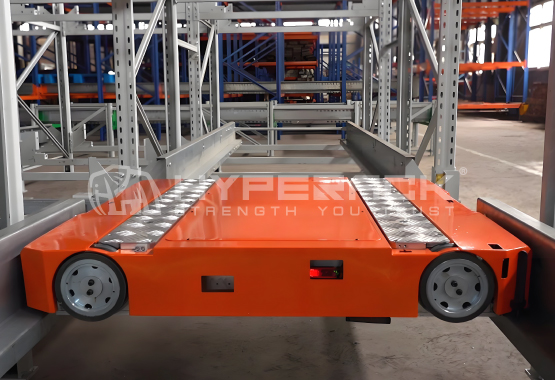
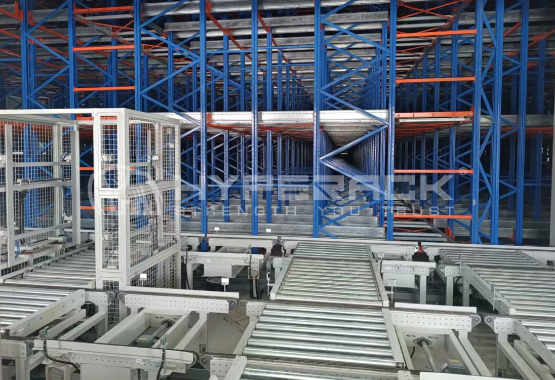
ASRS Four-Way Shuttle Racking System | Automated Warehouse Storage Solution
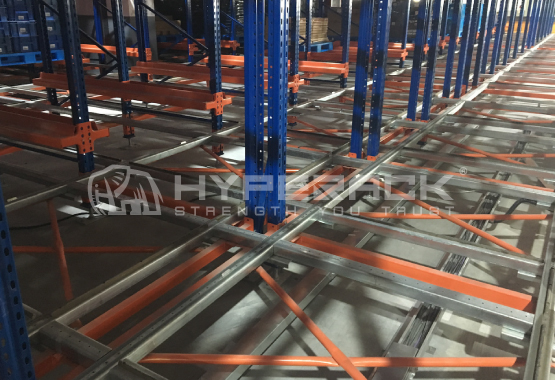
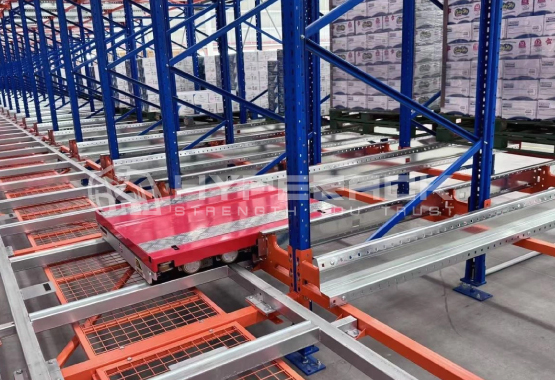
The ASRS Four-Way Shuttle Racking System is an advanced automated storage and retrieval system (ASRS) designed to maximize warehouse space utilization and operational efficiency. Unlike traditional pallet racking systems, the four-way shuttle operates on a grid-based rail structure, allowing it to move forward, backward, left, and right within the racking system.
This intelligent shuttle system automatically transports pallets or storage bins between storage locations and lifting points, enabling fully automated warehouse operations. By integrating shuttle robots, vertical lifts, and warehouse management systems (WMS), the ASRS four-way shuttle system significantly improves storage density, picking speed, and inventory accuracy.
At Hyperack, our ASRS four-way shuttle racking system is designed for modern distribution centers, manufacturing warehouses, and e-commerce fulfillment hubs. The system offers flexible scalability, allowing businesses to expand storage capacity without increasing warehouse footprint.
The automated workflow typically includes:
• Shuttle robots transporting pallets or bins horizontally within the racking grid
• Vertical lifts transferring goods between different storage levels
• Warehouse control systems (WCS) coordinating shuttle movements
• Warehouse management systems (WMS) managing inventory locations and orders
Through this coordinated system, goods can be automatically stored, retrieved, and transferred with minimal human intervention.
Ideal for
- High-density automated warehouses that require maximum storage utilization
- E-commerce fulfillment centers with high-speed order processing requirements
- Manufacturing facilities with frequent material flow and automated logistics systems
- Cold storage warehouses where automation reduces human exposure to low temperatures
- Distribution centers handling large volumes of pallets or bins with high accuracy requirements
Advantages
- Ultra high storage density by minimizing aisle space and maximizing vertical storage
- Fully automated warehouse operation, reducing reliance on manual forklift handling
- Four-directional shuttle movement, enabling flexible and efficient storage access
- High throughput performance, ideal for modern logistics and distribution operations
- Scalable modular system, allowing easy expansion as storage demands increase
- Improved inventory accuracy through integration with WMS and automation software
- Enhanced safety, as fewer forklifts are required inside the warehouse
5 Easy Steps
1. Enquiry
Your journey begins with a simple enquiry. Once we receive your request, our team will review the details and match you with the right expert. We’ll then arrange a quick call or email to learn more about your goals and expectations.
2. Free Consultation
After your initial consultation, we’ll arrange a site visit to assess your space and needs in detail. You’ll meet your dedicated project manager, who will guide the process from start to finish—ensuring everything runs smoothly and efficiently.
3. 3D CAD Design
After the site survey, your project manager will recommend layout options tailored to your space and needs. We’ll then create accurate 3D CAD designs to help you visualise exactly how your facility will look once complete.
4. Instant Quote
You’ll receive a free, personalised quote with a full breakdown of the recommended equipment. We offer high-quality products at competitive prices, with reliable delivery times to keep your project on schedule.
5. Installation
We’ll agree on an installation schedule that suits your operations. Our accredited team will complete the setup, conduct a final inspection with you, and provide follow-up support, including annual safety checks.
Ready to make a change?
We are here to help you choose the best racking for your business. Schedule a call with our representative today.

FAQ
Why Choose an ASRS Four-Way Shuttle Racking System?
Compared with conventional warehouse racking systems, an ASRS four-way shuttle system offers superior flexibility, efficiency, and automation capability. Businesses can achieve higher storage capacity while reducing labor costs and improving operational control.
With increasing demand for smart warehouses and automated logistics systems, the ASRS four-way shuttle racking system has become one of the most advanced warehouse storage technologies available today.
What is a Four-Way Shuttle Racking System?
A Four-Way Shuttle Racking System is an automated warehouse storage system that uses shuttle robots to move pallets or storage bins in four directions (forward, backward, left, and right) within a racking structure. It is commonly used as part of an Automated Storage and Retrieval System (ASRS) to improve warehouse efficiency, storage density, and automation.
Why Choose an ASRS Four-Way Shuttle Racking System?
Compared with conventional warehouse racking systems, an ASRS four-way shuttle system offers superior flexibility, efficiency, and automation capability. Businesses can achieve higher storage capacity while reducing labor costs and improving operational control.
With increasing demand for smart warehouses and automated logistics systems, the ASRS four-way shuttle racking system has become one of the most advanced warehouse storage technologies available today.
How does a Four-Way Shuttle ASRS work?
The system uses four-way shuttle robots running on rails inside the racking structure. The shuttle moves goods horizontally across the warehouse grid, while vertical lifts transfer pallets or bins between different storage levels. The entire process is controlled by Warehouse Control Systems (WCS) and Warehouse Management Systems (WMS) to automate storage and retrieval operations.
What is the difference between a shuttle racking system and a four-way shuttle system?
A traditional shuttle racking system usually moves only forward and backward within one storage lane.
A four-way shuttle system, however, can move in multiple directions across the racking grid, allowing it to reach any storage location without relying heavily on forklifts. This makes it more flexible and suitable for fully automated ASRS warehouses.
What industries commonly use Four-Way Shuttle ASRS systems?
Four-way shuttle racking systems are widely used in industries that require high storage density and fast inventory handling, such as:
- E-commerce fulfillment centers
- Logistics and distribution warehouses
- Manufacturing facilities
- Cold storage warehouses
- Food and beverage distribution centers
What are the main advantages of a Four-Way Shuttle Racking System?
The key advantages include:
- High-density storage to maximize warehouse space
- Fully automated storage and retrieval operations
- Faster pallet or bin handling compared to manual systems
- Reduced labor costs and forklift usage
- Improved inventory accuracy through system integration
Is a Four-Way Shuttle Racking System suitable for small warehouses?
Yes, the system can be designed for both medium and large warehouses. Because the system uses vertical space efficiently, it is especially useful for warehouses with limited floor area but high ceiling height.
How much space can be saved using a Four-Way Shuttle ASRS?
A four-way shuttle racking system can increase warehouse storage capacity by up to 60%–80% compared to traditional pallet racking systems, because it minimizes aisle space and fully utilizes vertical storage height.
Can the Four-Way Shuttle System integrate with warehouse software?
Yes. Most ASRS four-way shuttle systems integrate with Warehouse Management Systems (WMS), Warehouse Control Systems (WCS), and Enterprise Resource Planning (ERP) systems. This integration enables real-time inventory tracking, automated order fulfillment, and optimized warehouse operations.
What is the difference between ASRS and traditional warehouse racking?
Traditional warehouse racking systems rely heavily on manual forklift operations to store and retrieve goods.
An ASRS system, such as a four-way shuttle racking system, uses automated robots, lifts, and software to perform these tasks automatically, resulting in higher efficiency, improved accuracy, and reduced operational costs.