

Warehouse racking
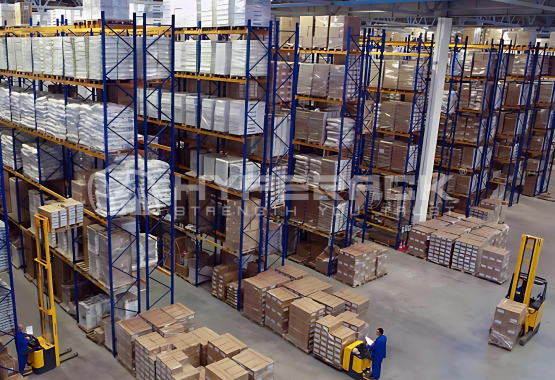
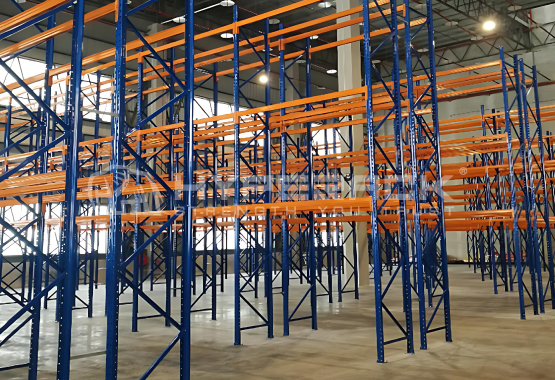
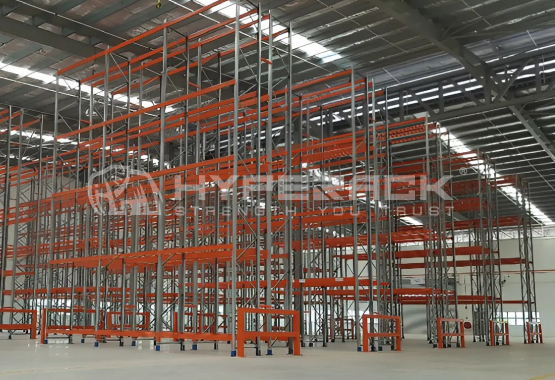
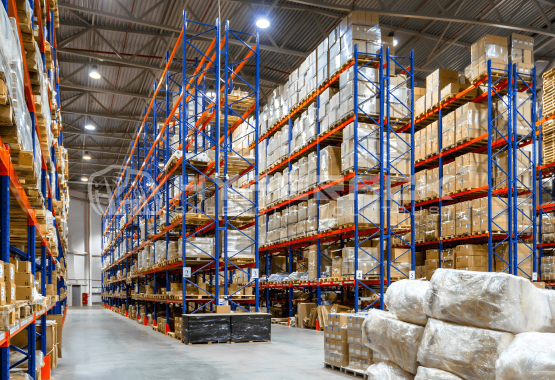
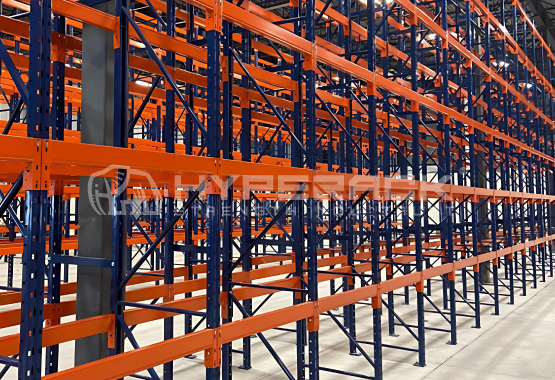
Selective Pallet Racking System
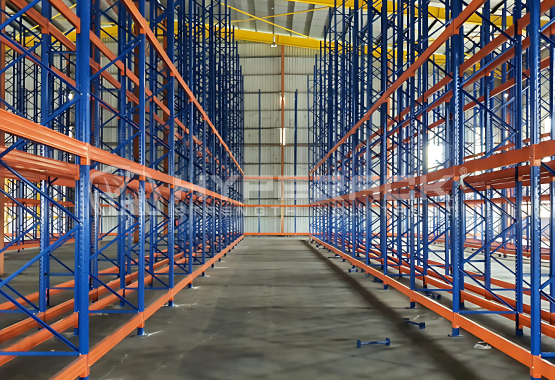
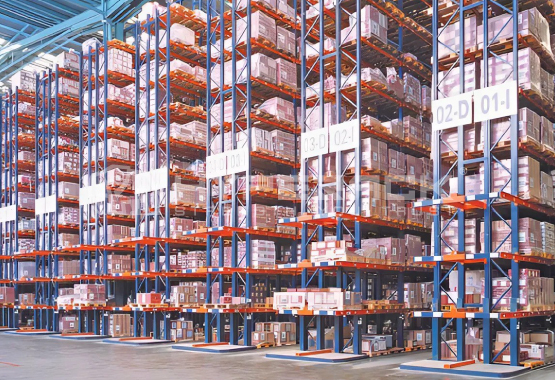
Selective pallet racking gives a forklift or reach truck direct aisle access to each pallet position in a conventional single-deep layout. It can suit warehouses with many SKUs that need to be picked or replenished separately.
Access aisles take floor space. Compare selective and double-deep layouts using the same loaded pallets and site plan. A double-deep layout puts a second pallet behind the first and changes access and truck reach requirements. Compare access, usable positions and installed cost in the pallet racking system comparison.
Hyperack’s published selective pallet racking project for DB Schenker in Tanjung Malim is dated May 2019 (view the project record).
When preparing a new layout enquiry, our pallet sizes and loaded-dimensions guide explains what to measure before requesting a quotation.
Ideal for
- Fast Moving Consumer Goods (FMCG)
- Inventory is rapidly depleted and restocked (called quick turnover)
- Different categories of Goods
Advantages
- Direct aisle access to each pallet position in the specified single-deep layout
- Individual pallet access for a varied SKU mix
- Stock rotation can be planned around separate access to pallet locations
- Compare usable positions after allowing for working aisles
- Compare installed costs using the same loads, floor plan and number of usable positions
- Can be planned around suitable counterbalance or reach trucks; confirm aisle width, load dimensions, lift height and the truck’s rated capacity for the configuration.
Selective Pallet Racking Price in Malaysia
Compare installed quotes for the same number of usable pallet positions, with direct access to each position. Ask for separate costs for racks, accessories, delivery, installation and site work. The warehouse racking cost guide has a worked example.
Send your layout, loaded pallet dimensions and maximum weight, storage quantity, access frequency and forklift or reach-truck model.
5 Easy Steps
1. Send Details
Provide your loaded pallet dimensions, mass, required positions, forklift type and any floor or ceiling obstructions in the space.
2. Review Scope
Discuss how many bays and levels suit your throughput, which access each position needs and how loading is documented.
3. Check Fit
Confirm the proposed layout works with your forklift reach, floor condition and any column or door obstructions on site.
4. Compare Quotes
Check the quoted frames, beams, connectors, delivery and installation scope against what was discussed in the layout review.
5. Plan Handover
Agree on the installation schedule, documented load notices and what to check together before the system is put to use.
Ready to make a change?
Use the quote form below to share your site location and layout dimensions, loaded-pallet dimensions and maximum weight, required pallet positions and handling equipment.

FAQ
What are the safety considerations when installing a Selective Pallet Racking System?
Plan installation and use around the specified rack configuration, pallet loads, floor and anchorage requirements, handling equipment and access clearances. Confirm who is responsible for installation, handover checks, load notices and operator training.
Use protection for exposed columns or rack ends where the risk assessment calls for it, and follow the supplied instructions. Guarding supports damage prevention; it does not replace suitable loading, trained operators or inspection.
How does Selective Pallet Racking compare to other racking systems in terms of cost and efficiency?
In a conventional single-deep layout, selective racking provides direct aisle access to each pallet and can suit a wide SKU mix. Access aisles occupy space, so compare this access with the storage density and stock rotation offered by alternatives such as drive-in or push-back.
Compare project quotations for the same loads, usable pallet positions and rated configuration, with delivery, installation and handling-equipment requirements identified. Review the comparable total per usable position alongside access and operating needs. Selective racking is not automatically the cheapest or most efficient choice for every warehouse; ask Hyperack to compare suitable layouts for your actual site and stock profile.
What types of forklifts are compatible with Selective Pallet Racking Systems?
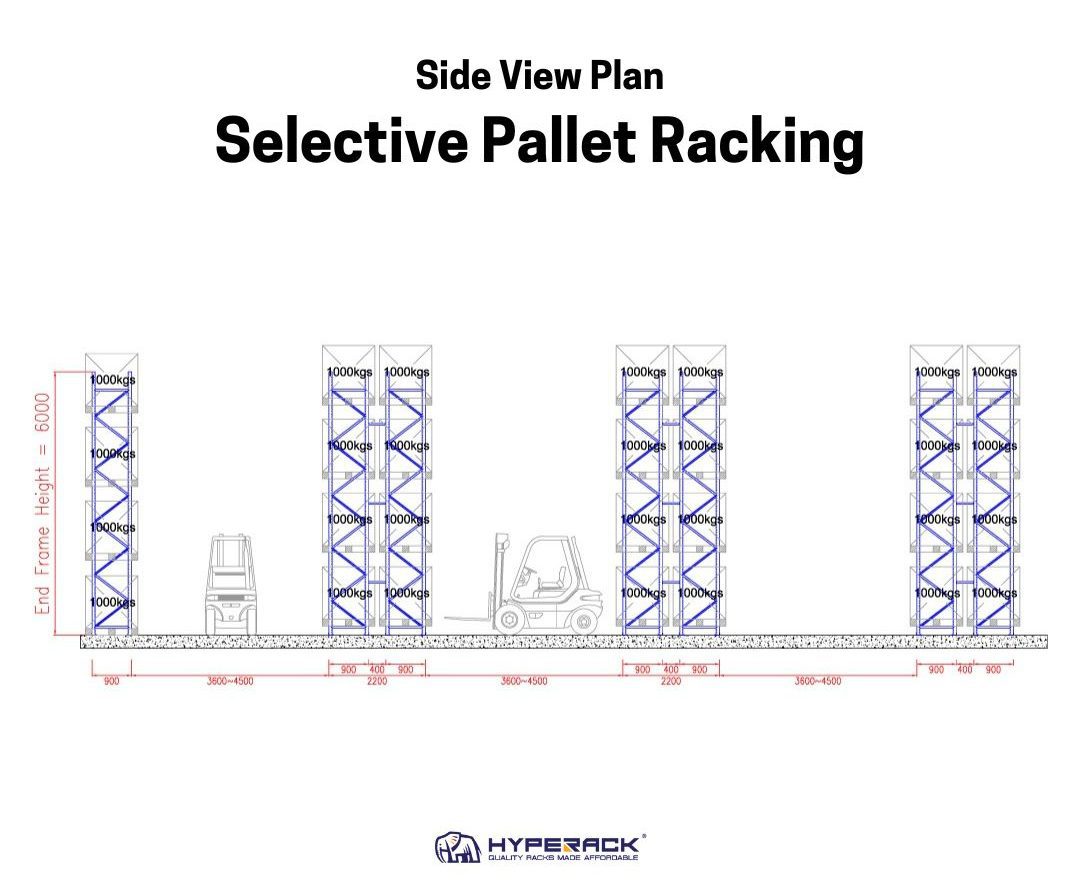
Standard counterbalance forklifts and reach trucks are commonly used with Selective Pallet Racking. The aisle width should be planned to accommodate the specific type of forklift in use.
Can Selective Pallet Racking be customized for different pallet sizes and weights?
Yes, Selective Pallet Racking System are highly customizable and can be adjusted to accommodate various pallet sizes and weights, ensuring optimal storage solutions for diverse inventory requirements.
What maintenance practices are recommended for Selective Pallet Racking System?
Follow an inspection and maintenance plan suited to the installation. Report impacts, damaged members, loose or missing fixings, and floor or anchor damage. Keep load notices legible and observe the stated configuration and loading limits.
Take affected storage out of use for a competent assessment when damage or instability is identified. Repairs, component replacement and adjustments should follow the supplier’s instructions and agreed repair scope; avoid improvised tightening, straightening or substitutions.
Can Selective Racking Systems be used for mixed product storage (various SKUs)
Conventional single-deep selective racking gives direct aisle access to each pallet and can suit a wide SKU mix. Provide Hyperack with the SKU count, pallets per SKU, loaded-pallet dimensions and maximum mass, replenishment frequency and stock-rotation needs. Review the usable positions, clearances, load support and handling equipment for those loads in the proposed layout. Where loads differ, ask which locations or rated configurations suit each one. Confirm the layout and operating requirements together before ordering.
Are there specific safety training requirements for employees working with Selective Racking Systems?
Yes, employees should receive safety training specific to handling and operating around Selective Racking Systems. This includes:
- Proper forklift operation to avoid collisions with the racking system.
- Awareness of weight limits for each rack to prevent overloading.
- Procedures for safely loading and unloading pallets.
- Identifying signs of racking damage or instability to report for maintenance.
Regular safety drills and inspections are also recommended to ensure compliance with workplace safety standards.
What are the common challenges faced when using a Selective Racking System, and how can they be resolved?
Common challenges include:
- Overloading racks: Exceeding the load capacity can lead to structural failure.
Solution: Conduct load assessments and clearly label weight limits on racks. - Forklift collisions: Accidental impacts can damage racking systems.
Solution: Install protective guards and train operators on proper navigation. - Space utilization: Suboptimal racking layouts may waste storage capacity.
Solution: Consult a professional for custom designs tailored to your space and needs. - Damage from improper pallet placement: Pallets not placed correctly may fall or damage beams.
Solution: Ensure staff is trained on correct placement techniques.
How do you determine the right height and width for a Selective Racking System?
Usually, a racking provider like Hyperack will provide you with a calculation and a blueprint draft for the layout, based on these factors. However, it’s important to check and verify these calculations to ensure they meet your warehouse’s specific requirements. You can do this by:
- Pallet dimensions: The size and type of pallets being used dictate the rack’s beam length and spacing.
- Ceiling height: The maximum rack height depends on the warehouse’s ceiling clearance and sprinkler system regulations.
- Forklift reach: Ensure the rack height is within the lifting capacity of your forklifts.
- Aisle width: Aisles must accommodate the type of forklift or equipment used for pallet retrieval.
- Load capacity: Racks must support the total weight of stored goods without compromising safety.
Consulting a racking specialist is always recommended to ensure the layout meets both operational efficiency and safety standards.
Can Selective Racking Systems be expanded or relocated in the future?
An extension or relocation may be possible, subject to a review of the proposed configuration and site. Provide the existing system identification, drawings and load information, component condition, intended pallet loads and the new floor, layout and handling conditions.
Confirm component compatibility, anchorage, installation responsibilities, necessary checks and updated load notices before the revised arrangement is used. Existing ratings do not automatically apply to a changed configuration or location. See the moving or altering racking guide for the information to prepare.