

What is a Gravity Flow Racking System?
- 17/12/2024
- Posted by: macgad-admin
- Category: Uncategorized
What is a Gravity Flow Racking System?
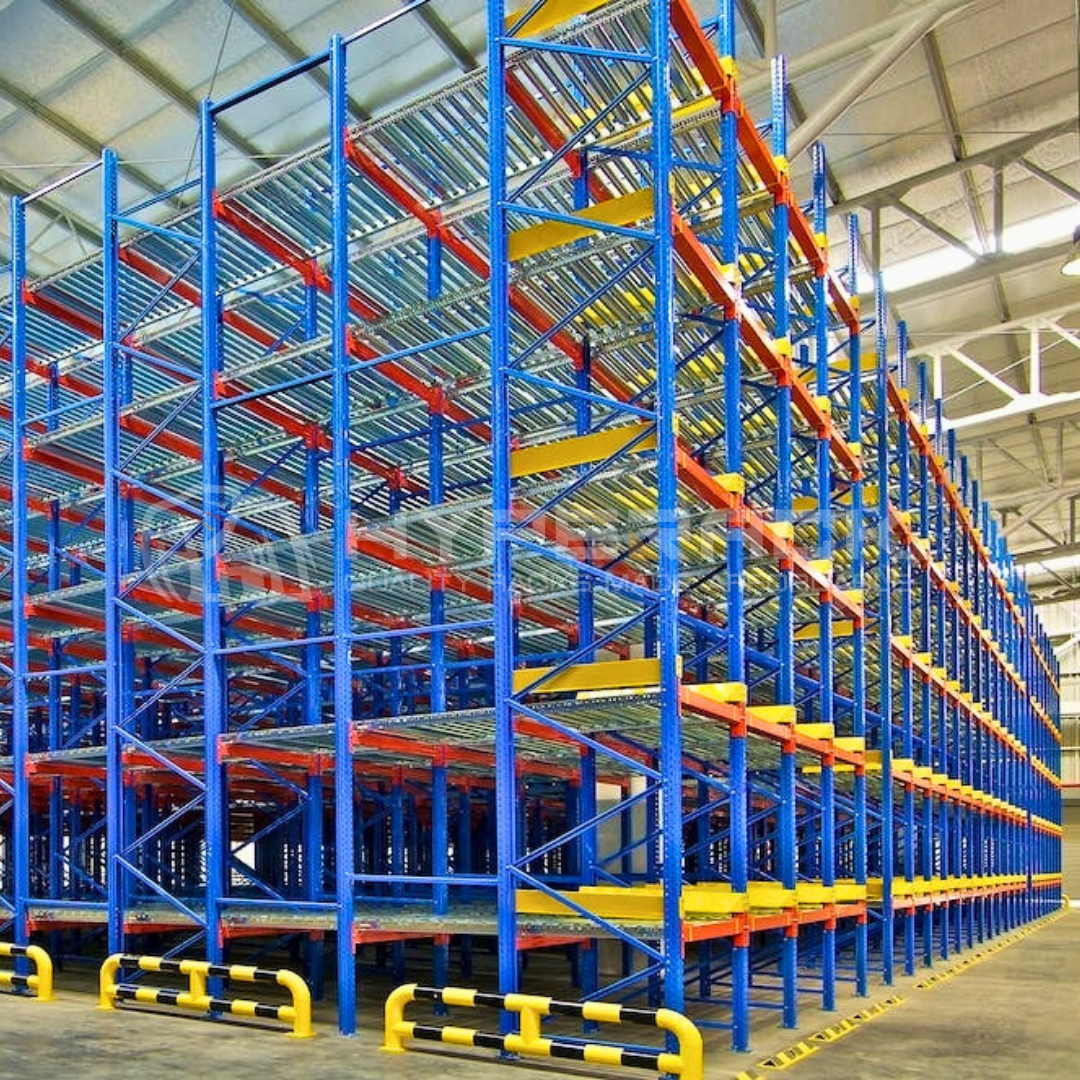
For warehouses that need First-In, First-Out (FIFO) stock rotation within each lane, an opposite-ended gravity flow racking system provides a purpose-built solution. Pallets are loaded at one end of an inclined lane and move by gravity along rollers to the picking face at the opposite end. Normally allocate one SKU to a lane. When used as designed, the opposite-ended arrangement supports retrieving pallets in their loading sequence; product age and expiry still need to be managed. In this article, we explain how gravity flow racking works, when it is a good fit, and what to consider when planning an installation.
How Gravity Flow Racking Systems Work?
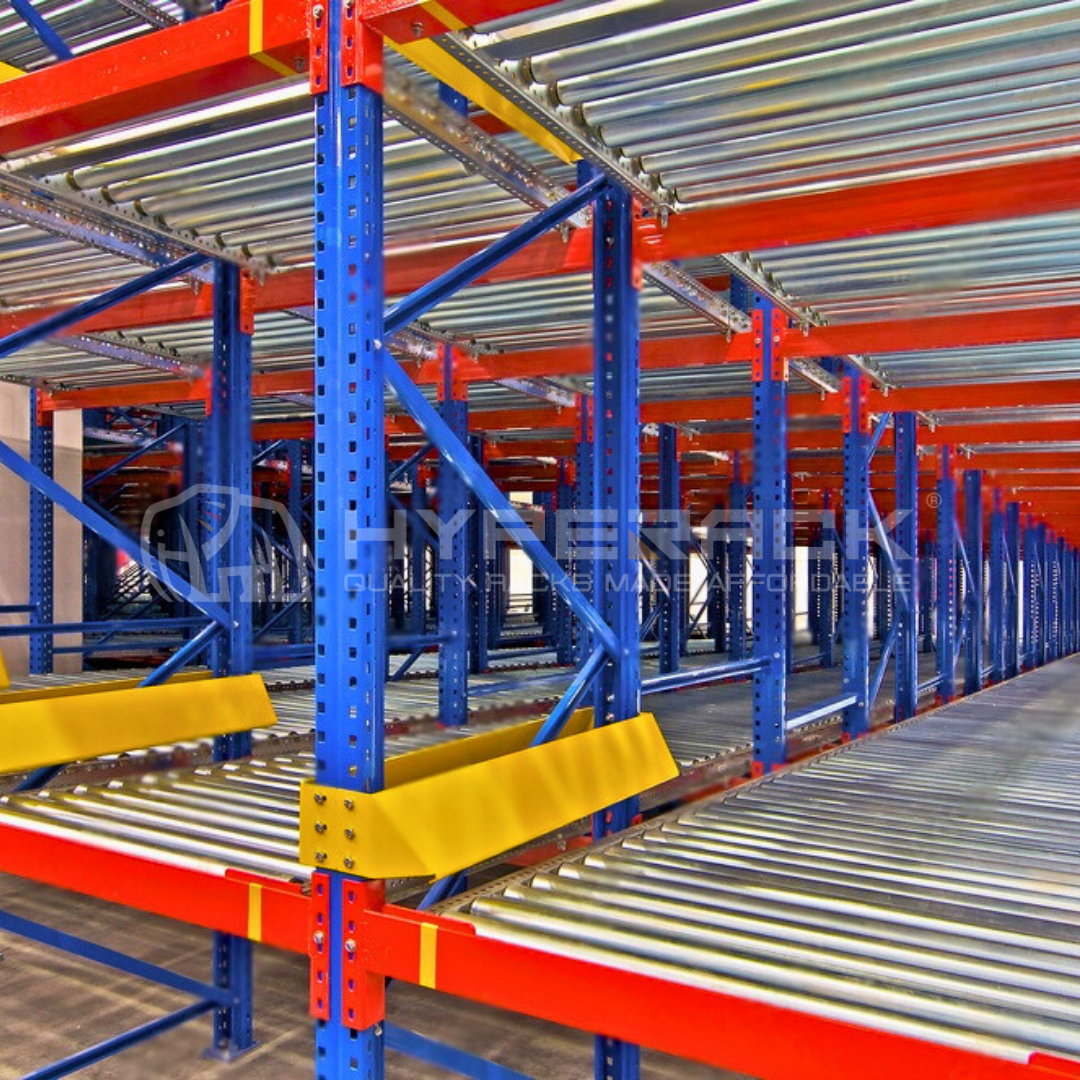
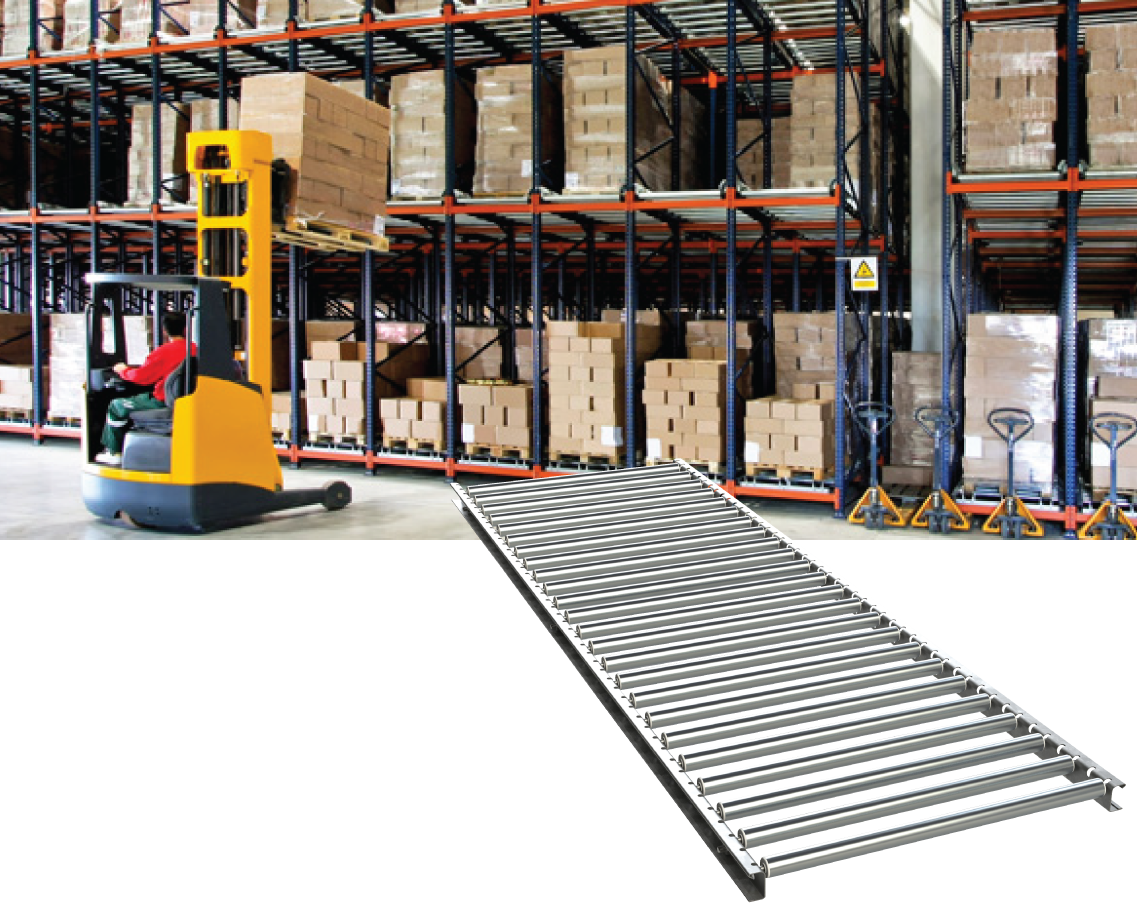
Gravity flow racking uses inclined lanes fitted with rollers, designed to carry pallets from the loading end to the picking end by gravity. The roller type, spacing and brake or retainer mechanisms are matched to the specific pallet carrier, loaded weight and product condition. When the front pallet is picked, the next pallet advances to the picking face.
Because pallets are loaded at the back and picked from the front, the arrangement supports FIFO rotation within each lane when its loading and retrieval sequence is followed. Note that FIFO lane rotation alone does not guarantee earliest-expiry-first dispatch (FEFO); that requires a separate batch and date management process. Pallet flow (full pallets on rollers) and carton or tote flow (smaller units on lighter rollers or wheel beds) serve different carrier sizes and are not interchangeable without redesigning the lane support.
Benefits of Gravity Flow Racking Systems
- Physical FIFO Rotation
An opposite-ended lane supports retrieving the first pallet loaded before those behind it. This can suit repeated compatible pallet loads with a defined operating process for SKU, batch and date allocation. - Separate Loading and Picking Faces
Because loading and picking happen at opposite ends of the lane, replenishment and order picking can proceed in separate aisles. This can reduce congestion compared to systems where loading and retrieval share the same face. - High-Density Storage with Lane Access
Gravity flow lanes store multiple pallets deep with a planned picking face for the front pallet. The actual density gain depends on lane depth, the number of levels, aisle width for loading and picking trucks, and the ratio of storage lanes to aisles in your layout. - Reduced Handling within the Lane
Pallets advance by gravity, so operators do not need to enter the lane or relocate pallets manually. The extent to which this affects labour time depends on the warehouse layout, order volume and how the gravity flow zone fits into the overall picking process.
When to Use Gravity Flow Racking Systems?
Gravity flow racking is well suited to specific storage profiles:
- FIFO-Required Products: When your stock management rules require First-In, First-Out rotation, such as food, beverage or pharmaceutical products with use-by dates, an opposite-ended flow lane can support the intended loading sequence; expiry-date dispatch needs a separate management process.
- High Throughput with One SKU per Lane: Assess whether separate replenishment and picking faces suit the recorded peak flows, staffing and access requirements.
- Space Constraints with Density Needs: Compare approved usable positions, SKU-channel occupancy and both loading and picking aisles against selective racking alternatives before choosing lane depth and levels.
Gravity Flow Racking vs. Other Storage Solutions
How a gravity flow system compares depends on your specific layout, load and operating conditions:
| Feature | Gravity Flow Racking | Selective Racking | Drive-In Racking | Push Back Racking |
|---|---|---|---|---|
| Storage Approach | Multiple pallets deep, opposite-ended loading and picking | Direct access to every pallet position | Truck enters the lane to place or retrieve pallets | Multiple pallets deep, one working face |
| Inventory Rotation | FIFO within each lane | Any pallet accessible at any time | LIFO within each lane | LIFO within each lane |
| Truck Requirements | Loading and picking trucks operate in separate aisles; truck type depends on level height and aisle width | Truck capacity, reach and aisle clearances matched to the design | Truck enters the rack structure; requires specific truck dimensions | Compatible truck and controlled handling at the working face |
| Best Suited For | FIFO inventory, one SKU per lane | Many different SKUs needing direct access | Bulk storage, one SKU per lane with LIFO | LIFO batch storage, one SKU per lane |
Selective racking provides direct access to each pallet but has an aisle arrangement that should be compared against the complete flow layout. Drive-in racking offers deep storage but the truck must enter the lane, and access is LIFO. Push back racking stores several pallets deep from one face with LIFO rotation. An opposite-ended gravity flow arrangement can be considered where a FIFO lane sequence suits the operating process. Mecalux’s pallet-flow technical description distinguishes the opposite-ended FIFO and single-face LIFO configurations.
Planning and Installation for a Gravity Flow Racking System
Installing a gravity flow racking system involves supplier-led design and qualified installation:
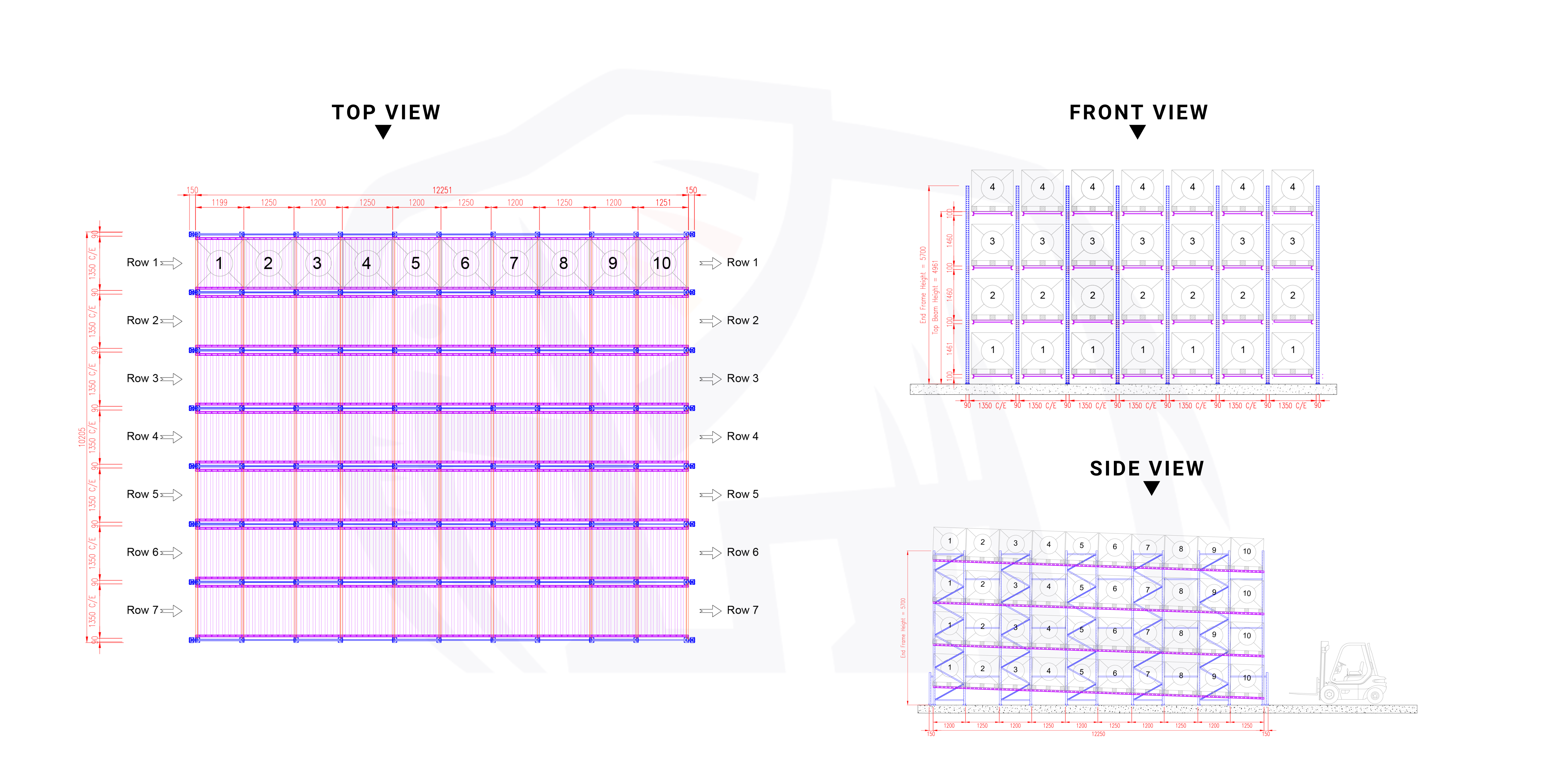
- Evaluate Your Warehouse Layout: Work with your supplier to assess the floor area, ceiling height, loading and picking aisle positions, and truck types. The layout determines lane depth, the number of levels and the position of loading and picking faces.
- Specify Carrier and Load Requirements: Confirm the pallet base size, loaded weight, product condition and any temperature or environmental factors. The roller type, spacing, brake mechanisms and lane stops are designed around these inputs.
- Supplier-Approved Design and Installation: The supplier designs the lane pitch, roller arrangement, brake and retainer controls, and end stops for the approved loads and carriers. Supplier-led installation, commissioning with approved carriers and loads, and operator handover should follow the specified design and procedure.
- Inspection and Ongoing Service: After commissioning, schedule periodic racking inspections and agree service and maintenance terms with your supplier to keep the system operating within its design limits.
Cost of Installing a Gravity Flow Racking Systems
Request a project-specific written quotation. A per-position amount is useful only when its date, capacity, included components and installation scope are clear. The installed cost for a specific project depends on lane depth, roller type, brake and retainer mechanisms, number of levels, upright and beam specifications, installation labour and after-sales service. When comparing quotations, confirm what the price covers including capacity, layout, carriers, rollers, controls, installation, testing and ongoing service.
Best Racking System Provider?
Selecting the right provider is critical for a successful installation. Here are some practical considerations:
- Look for Experience: Choose a company with a track record in gravity flow systems and familiarity with Malaysian warehouse requirements.
- Verify Registration and Standards: Check the provider’s current contractor registration and any relevant product testing or quality certifications.
- Assess Support Scope: Look for providers that offer consultation, layout design, installation, commissioning, operator training and after-sales service.
- Compare Quotes with Written Scope: Evaluate quotes from multiple suppliers and compare what each includes: rollers, brakes, controls, installation, testing and ongoing service terms.
Ready to plan your gravity flow racking layout? At HYPERACK, we provide gravity flow racking systems designed for your warehouse requirements. Contact us today for a FREE consultation, and let our team help you evaluate storage options with AutoCAD layout comparisons and a numerical planning estimate. Explore our social media to see real-life projects in action.
Conclusion
Gravity flow racking provides a practical storage solution for warehouses that require physical FIFO rotation within each lane. By separating loading and picking faces and storing multiple pallets deep, the system can improve stock rotation discipline and increase density compared to selective racking. The specific benefits depend on your layout, pallet specification, throughput and operating procedures. Work with your supplier to confirm that gravity flow racking suits your storage profile and to get a design matched to your actual loads, carriers and truck types.
How Hyperack Plans Your Racking System?
- Expertise: We dive deep into your warehouse space to determine the best racking configurations tailored to your needs.
- High-Tech Solutions: Our AutoCAD designs compare layout options using your site dimensions, stock and handling inputs, including access constraints.
- Side-by-Side Comparisons: Our planning process allows you to compare layout options easily, helping you make informed decisions.
- Layout and ROI Estimates: We provide numerical layout, cost and ROI estimates using agreed inputs and assumptions, to support planning rather than guarantee a return.
- Customization: We can configure racking around your warehouse requirements, subject to design, component and site constraints.