


What is a Very Narrow Aisle Racking System?
- 06/12/2024
- Posted by: macgad-admin
- Category: Racking System
What is a VNA Very Narrow Aisle Racking System?
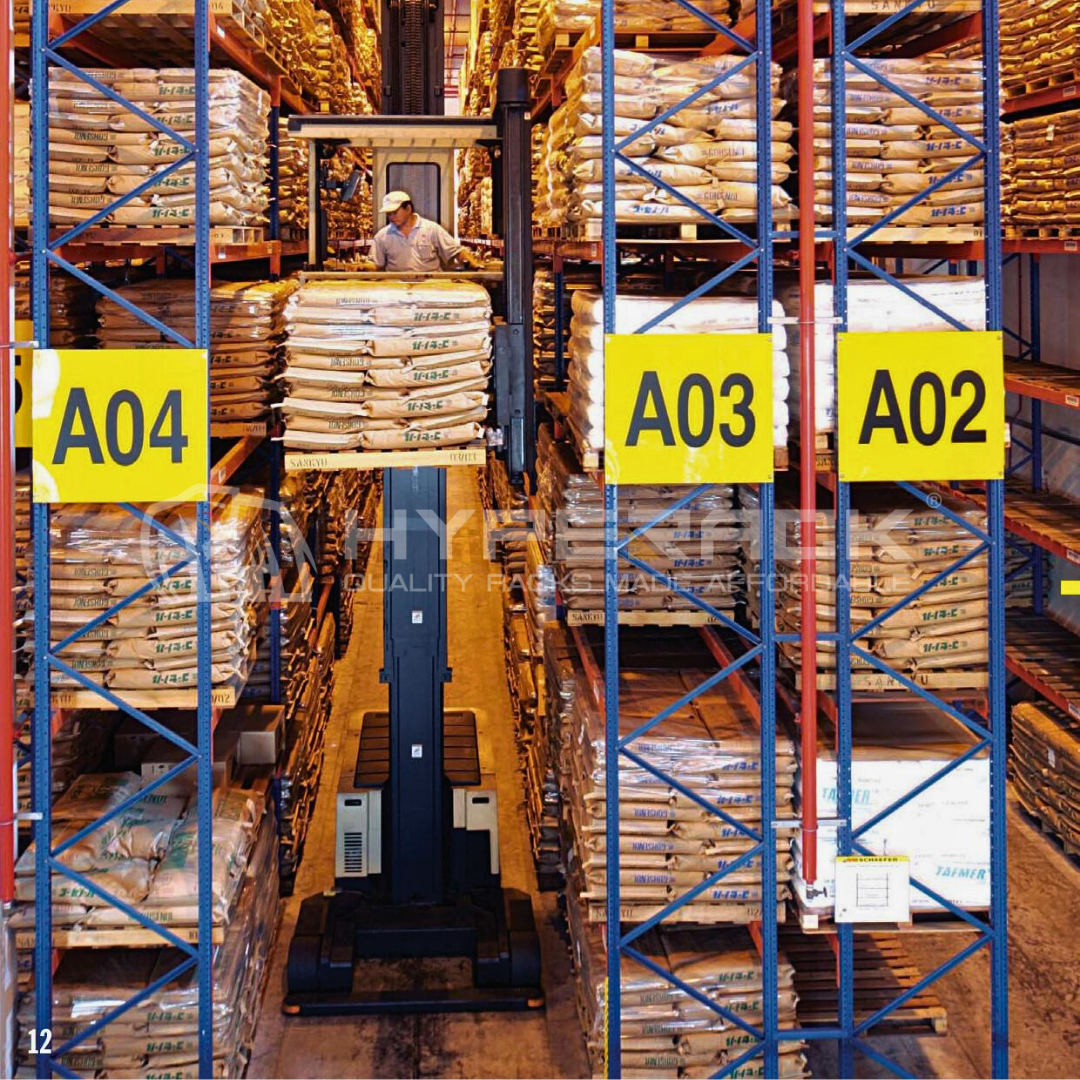
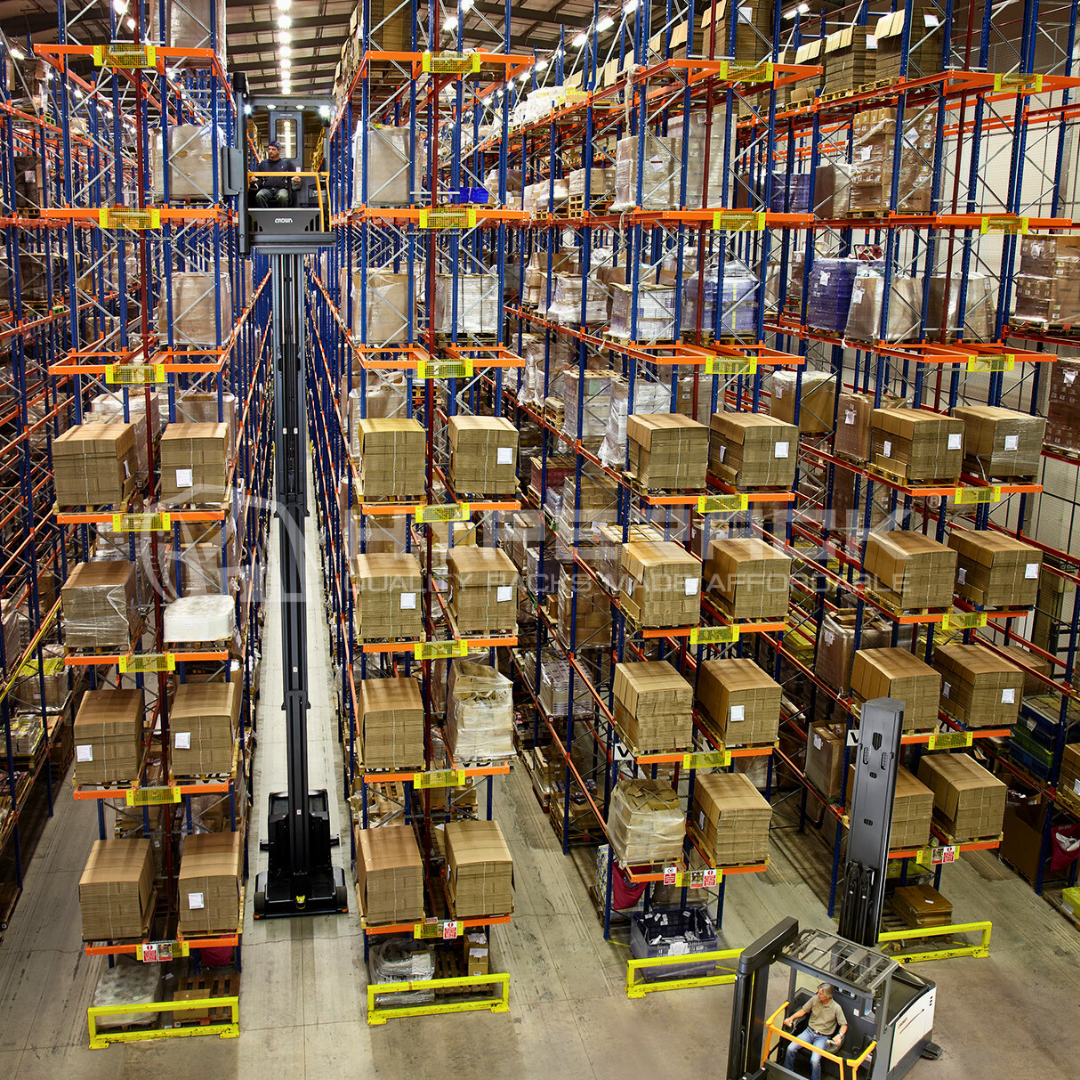
Very Narrow Aisle racking, or VNA racking, combines a pallet-racking layout with handling equipment selected to work in reduced aisles while retaining access to pallet locations. The actual aisle requirement depends on the truck, loaded pallet, guidance and clearances. Plan these together with the floor and transfer space at the aisle ends; a generic aisle-width example is not a specification for every Hyperack installation.
How Does a VNA Very Narrow Aisle Racking System Work?
The selected truck places or retrieves loads at pallet locations within the narrow aisle. Its load-handling method, lift capability and proposed wire or rail guidance must match the rack and pallets. Review floor requirements and aisle-end transfers with the responsible suppliers. Guidance is part of the specified operating arrangement, not a substitute for compatibility checks or training.
A reduced-aisle layout may provide more usable pallet positions, but the gain depends on the whole plan. VNA racking alone does not establish a particular throughput, picking accuracy or level of automation. Specify any scanning, software, assistance or automated functions separately in the proposal.
For a Hyperack enquiry, prepare the loaded-pallet dimensions and maximum mass, SKU mix, required positions, site plan and available height, proposed truck and peak pallet movements. Identify who will assess the floor and guidance requirements.

Benefits of a VNA Very Narrow Aisle Racking System
- Storage Capacity
Reduced working-aisle space can create more pallet positions where the site and equipment permit it. Compare actual layouts, including transfer areas and clearances, rather than assuming a fixed density gain. - Inventory Access
Access to pallet locations can suit a varied SKU mix. Check replenishment, picking and aisle-end transfers at the required peak workload; the racking layout alone does not establish shorter handling times. - Layout Planning
Assess columns, doors, available height, access routes and the proposed truck movement. Reducing aisle width changes the operating arrangement, so review storage positions and workflow together. - Whole-Cost Comparison
Compare racks, trucks, guidance, site work, training and support for the same brief. Storage density may affect cost, but payback depends on actual expenditure, workload and assumptions.
When to Use a VNA Very Narrow Aisle Racking System
For certain needs, a VNA racking system can be a game changer. Here are a few scenarios where it may be especially effective:
- High-Volume Inventory: VNA systems are ideal for warehouses needing to store a large quantity of goods in limited space. The high-density setup makes it possible to accommodate more inventory without needing to expand.
- Frequent Stocking and Picking: Assess the required movements, replenishment and transfer process against the proposed truck and layout before assuming the handling rate will meet demand.
- Compatible Equipment: Confirm the exact truck, lift capability, loaded pallets, guidance and operating clearances. An existing VNA-labelled truck still needs a compatibility check for the proposed installation.
VNA Racking System vs. Other Racking Systems
Compare the actual storage and handling proposals. These are typical configuration differences, not a fixed density ranking; usable positions, access and equipment fit depend on the complete layout.
On a phone, swipe the table sideways to see all columns.
| Feature | VNA Racking | Selective Racking | Drive-In Racking | Push Back Racking |
|---|---|---|---|---|
| Storage Density | Reduced working aisles | Aisle access to each pallet | Deep lanes; fewer aisles | Multiple pallets per lane |
| Accessibility | High | High | Low | Moderate |
| Equipment Needed | Specified VNA truck | Confirm truck and aisle | Confirm truck and clearances | Confirm truck and clearances |
| Best For | High-density storage | Variety of items | Bulk storage | LIFO batch storage |
VNA and conventional selective arrangements can retain access to pallet locations. Single-ended drive-in lanes normally use LIFO access, with front pallets removed before rear pallets can be reached. Choose around SKU mix, rotation and the handling process; greater density does not by itself establish faster picking.
Planning a VNA Racking Installation
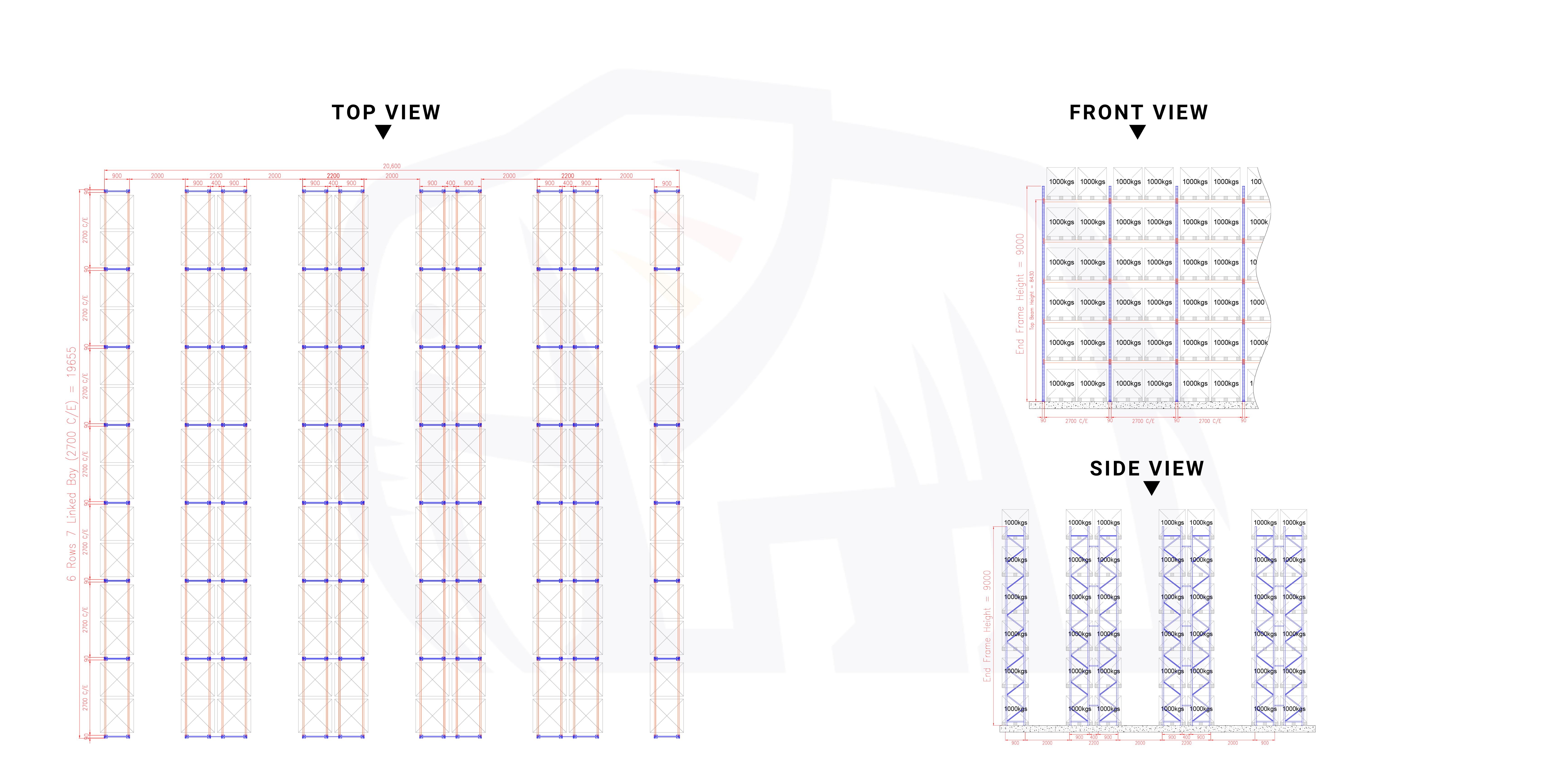
Before ordering, coordinate the layout, equipment and site requirements with the designer and suppliers. These planning checks do not replace the specified installation or operating instructions:
- Evaluate Layout Needs: Provide site dimensions, available height, obstructions, pallet quantities and the proposed movement pattern so the designer can compare suitable layouts.
- Confirm Loads and Equipment: State maximum loaded-pallet mass, dimensions and load centre. Confirm the documented rack and truck limits for the proposed lift heights and configuration.
- Coordinate Guidance and Floor Requirements: Agree the selected guidance, applicable truck and rack tolerances, measured floor information and responsibility for any assessment or remedial work.
- Agree Installation and Handover: Confirm installation responsibilities, operating instructions, training, inspection, maintenance and damage reporting for the rack, truck and guidance before use.
Cost of Installing a VNA Racking System
Request a written quotation using the same load, layout and operating brief. Compare rack supply, the selected truck, guidance, any floor assessment or work, delivery, installation, training, warranty and service scope. Confirm what is separately quoted. Any projected saving or payback needs stated costs and operating assumptions; this guide does not establish a current per-position starting price or guaranteed return.
Choosing a Reliable Provider
A reputable provider is essential for a successful VNA racking installation. Here are a few key considerations:
- Industry Experience: Choose providers familiar with the Malaysian market and well-experienced with VNA systems.
- Compliance and Certifications: Ensure that the provider follows safety standards and regulations.
- Customer Support: Reliable providers offer installation support, maintenance, and customer service.
- Pricing and Warranty Options: Finally, compare quotes and warranties from multiple providers to make an informed choice.
Planning a VNA racking system? Ask HYPERACK to review the rack, loaded pallets, handling equipment and site requirements together. Contact us for a FREE consultation and discuss the layout and quotation scope for your warehouse. Explore our social media to see real-life projects in action.
Conclusion
VNA racking can reduce working-aisle space while retaining access to pallet locations. Confirm the rack, pallets, truck, guidance, floor and transfer process as a coordinated proposal. Compare usable positions and the complete cost against the same operating brief before selecting a layout.
How Hyperack Plan Your Racking System?
- Site Assessment: Share your site dimensions, available height, obstructions and pallet movements. Ask what the site assessment will cover.
- CAD Layout: Confirm whether the CAD layout will show aisle widths, the truck operating envelope, guidance and transfer areas at the aisle ends.
- Equipment and Floor Coordination: Confirm the proposed VNA truck, guidance type, floor tolerances and rack compatibility together before ordering.
- Layout Comparison: Compare usable pallet positions, aisle requirements and handling. If a financial comparison is included, ask for the cost and operating assumptions.
- Quoted Scope: Ask which parts of the quote cover racks, trucks, guidance, floor assessment, installation and training.