


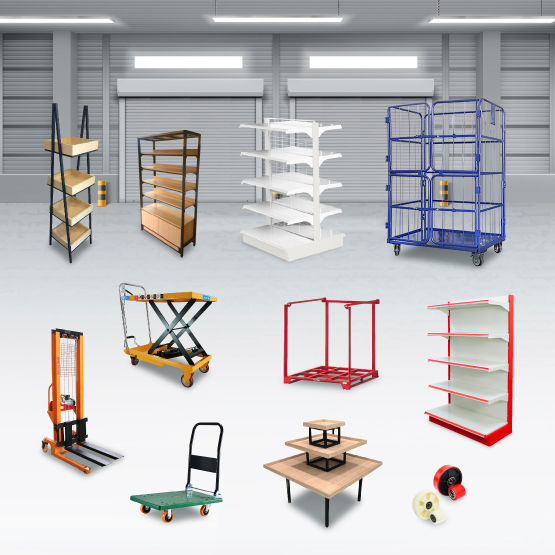
Types of Racking Systems in Warehouse – Updated 2025
- 16/07/2024
- Posted by: macgad-admin
- Category: Racking System
Warehouse racking is a crucial element in optimizing storage, improving inventory management, and ensuring efficient warehouse operations. With various racking systems available, it’s essential to choose the right one to meet your specific needs. In this post, we’ll explore different types of warehouse racking systems to help you make an informed decision.
Types of Warehouse Racking Systems
Warehouses come in all shapes and sizes, and the things they store are just as varied. That’s why there are so many types of racking systems! From bulky lumber to tiny screws, each storage need has its ideal solution. Whether it’s maximizing space with drive-in racks or ensuring easy access with selective systems, the variety of racking options allows warehouses to optimize their storage capacity and efficiency.
1. SELECTIVE PALLET RACKING


Selective pallet racking is one of the most common and versatile types of warehouse racking systems, offering numerous benefits for efficient storage and retrieval:
- Storage Configuration: Selective pallet racking provides individual access to pallet positions. The position count depends on the proposed layout, load configuration, building constraints and handling equipment, rather than a universal increase over floor stacking.
- Enhanced Accessibility: Unlike floor stacking, selective racking provides direct access to each pallet, ideal for warehouses with diverse inventory. This means you can quickly and easily retrieve any item you need, saving valuable time and effort.
- Improved Inventory Management: By maximizing space utilization, selective racking facilitates better organization and efficient inventory management. In turn, you’ll gain greater control over your stock levels and reduce the risk of misplaced or forgotten items.
- Adaptable Storage Solution: This racking system is easily adjustable to accommodate different pallet sizes and weights, making it a versatile solution for evolving storage needs. No matter what your inventory throws your way, selective racking can adapt to keep everything organized.
- Safe and Efficient Operations: Selective racking minimizes warehouse accidents (often caused by improper loading/unloading) by providing direct aisle access for safe and efficient stock retrieval. This not only protects your workers but also improves overall warehouse productivity by streamlining picking and put-away processes.
2. DRIVE-IN RACKING SYSTEM


Drive-in racking systems are designed for high-density storage, making them an excellent solution for maximizing warehouse space:
- Storage Density: Drive-in racking places pallets within lanes entered by the handling truck. Suitability depends on the goods, stock rotation and operating requirements; compare actual layouts rather than assuming a fixed percentage capacity gain.
- Efficient Access for Bulk Items: As mentioned earlier, drive-in racking allows direct forklift access, enabling you to quickly access and manage large quantities of similar items. Additionally, this system is ideal for storing products with a long shelf life and low pick rates, allowing for compact storage of bulk inventory.
- Ideal for Long-Shelf-Life Products: Drive-in racking is perfect for storing products with a long shelf life and low pick rates. This allows for compact storage of bulk inventory, maximizing your warehouse space. Moreover, easy access to large volumes of products within the racking system simplifies inventory management and organization.
- Improved Inventory Management: Easy access to large volumes of products within the racking system simplifies inventory management and organization. This makes drive-in racking a great solution for warehouses storing bulk items with low pick rates.
3. PUSH-BACK RACKING


Push-back racking systems are a highly efficient type of warehouse racking that utilizes a last-in, first-out (LIFO) approach.
- Streamlined Warehouse Operations: Easy access to the front of each lane allows for efficient loading and unloading of pallets with forklifts, minimizing wasted time and effort. This will create a smoother workflow in your warehouse.
- Ideal for Medium-Turnover Products: This push-back racking system is perfect for storing items with a moderate rate of retrieval, ensuring optimal space allocation within your warehouse.
- Reduced Aisle Requirements: By eliminating the need for multiple access aisles, push-back racking optimizes usable warehouse space, resulting in significant space savings for your facility.
- Enhanced Space Management: This efficient storage solution allows you to make the most of your existing warehouse layout. By implementing a push-back racking system, you can maximize your storage capacity without sacrificing functionality.
4. GRAVITY FLOW RACKING


Gravity flow racking, also known as pallet flow racking, utilizes gravity and weight to take in and take out pallets:
- FIFO System for Efficient Inventory Management: Gravity flow racking utilizes a first-in, first-out (FIFO) approach, ensuring older products are picked first, minimizing the risk of expired goods and optimizing stock rotation. This FIFO system, in turn, promotes efficient inventory management and reduces waste.
- Smooth Inventory Flow with Gravity-Powered Movement: Pallets loaded at the back utilize gravity to glide down rollers toward the picking area, maintaining constant product movement and reducing manual handling. This smooth inventory flow not only minimizes labor costs but also ensures faster picking times.
- Ideal for Perishables and High-Turnover Items: The FIFO system and efficient flow make gravity flow racking perfect for managing perishable goods and high-demand products that require quick picking and restocking. Furthermore, the constant product movement helps prevent spoilage and ensures fresh inventory is readily available.
- Maximized Space Utilization: This racking system optimizes warehouse space by eliminating unnecessary aisles and allowing for a higher density of stored products. By maximizing space utilization, gravity flow racking allows you to store more inventory in the same footprint, potentially reducing your overall warehouse needs.
- Enhanced Warehouse Efficiency and Productivity: By combining space optimization, smooth inventory flow, and efficient picking, gravity flow racking significantly improves overall warehouse productivity and efficiency. Ultimately, this translates to faster order fulfillment, reduced labor costs, and a more streamlined operation.
5. DOUBLE DEEP RACKING


Double-deep racking offers a powerful storage solution for warehouses by significantly increasing storage density without sacrificing accessibility. Here’s how double-deep racking can benefit your warehouse:
- Increased Storage Capacity: Double the storage depth compared to single-deep racking, maximizing your warehouse footprint. This makes double-deep racking a great choice for warehouses looking to store more inventory without expanding their physical space.
- Space Optimization: Achieve a cost-effective storage solution by utilizing previously unused vertical space. In other words, double-deep racking helps you get more out of your existing warehouse by taking advantage of the vertical space that often goes to waste.
- Maintained Accessibility: Specialized forklifts with extended reach ensure efficient access to inner pallets. While double-deep racking offers more storage, it’s important to note that you’ll need specialized equipment to access palletized goods in the back row.
- Ideal for Specific Products: Perfectly suited for warehouses handling large quantities of identical products or with high stock turnover. Double-deep racking is ideal for warehouses that deal with similar items that are frequently accessed.
- Modern Warehousing Strategy: A popular choice for warehouses seeking to optimize storage efficiency and meet modern demands. Overall, double-deep racking is a modern warehousing strategy that can significantly improve efficiency and storage capacity.
Contact us for a FREE design consultation
6. VNA (VERY NARROW AISLE) RACKING


VNA (Very Narrow Aisle) racking systems are designed specifically for warehouses with limited space, allowing for significant increases in storage density:
- Increased Storage Density: VNA racking significantly reduces aisle width compared to standard systems, freeing up valuable floor space for more storage. This will dramatically increase in storage capacity within your warehouse.
- Space Optimization: Get the most out of your existing warehouse footprint by maximizing storage capacity within the same area. By implementing VNA racking, you can significantly enhance your storage capabilities without expanding your warehouse footprint.
- Specialized VNA Forklifts: Ensure smooth operation in narrow aisles with specialized forklifts designed for efficient maneuvering. VNA systems require specialized forklifts to navigate the narrow aisles safely and efficiently.
- Ideal for High-Volume Warehouses: Efficiently store large quantities of goods while maintaining easy accessibility with a VNA racking system. VNA racking is a perfect solution for warehouses that handle high volumes of inventory, as it allows you to store more products while still ensuring efficient retrieval.
- Enhanced Warehouse Efficiency: VNA racking goes beyond space optimization, improving overall warehouse operation efficiency. The benefits of VNA racking extend beyond increased storage density. It can also streamline picking and retrieval processes, leading to significant improvements in overall warehouse efficiency.
7. TWIN BAY RACKING


For a proposed twin-bay arrangement, ask the supplier to identify the exact configuration, access method and documented loading limits. Compare its usable positions and operating requirements with the alternatives for the same brief.
- Retrieval Requirements: Review the proposed picking and replenishment routes for your inventory. Retrieval performance depends on the layout, handling equipment, stock profile and operating process; no average time saving is established here.
- Cost Savings: Optimizing storage and operations with twin bay racking systems can lead to substantial cost reductions. By maximizing your warehouse space and streamlining workflows, you can free up resources for other investments.
- Modernized Warehouse Management: Twin bay racking perfectly aligns with modern warehouse management strategies that prioritize efficiency and space optimization. This modern approach allows you to make the most of your warehouse footprint, leading to improved inventory control and overall productivity.
8. SHUTTLE RACKING
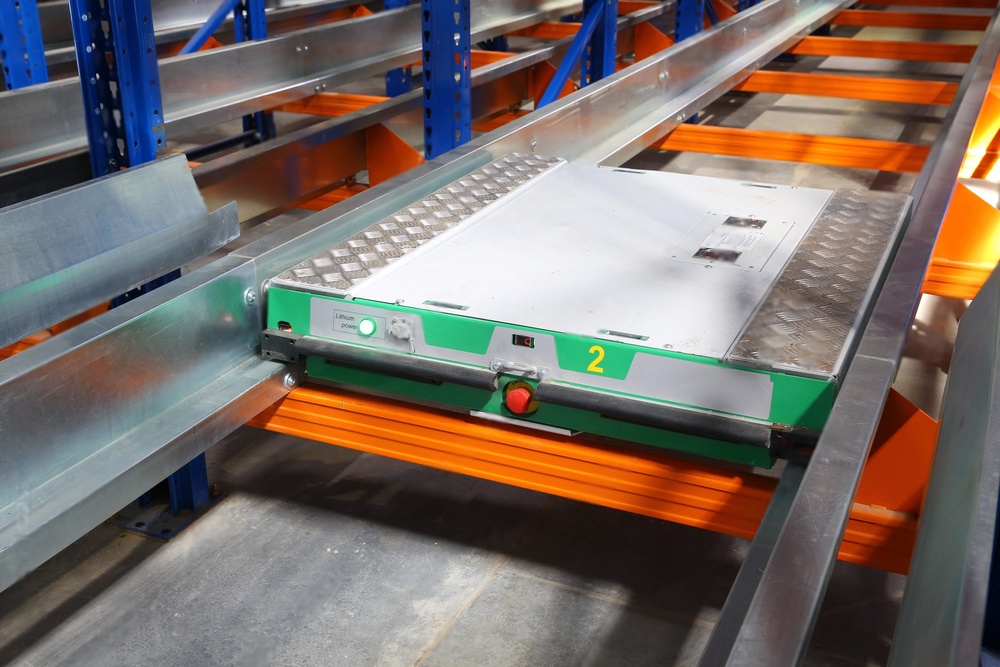
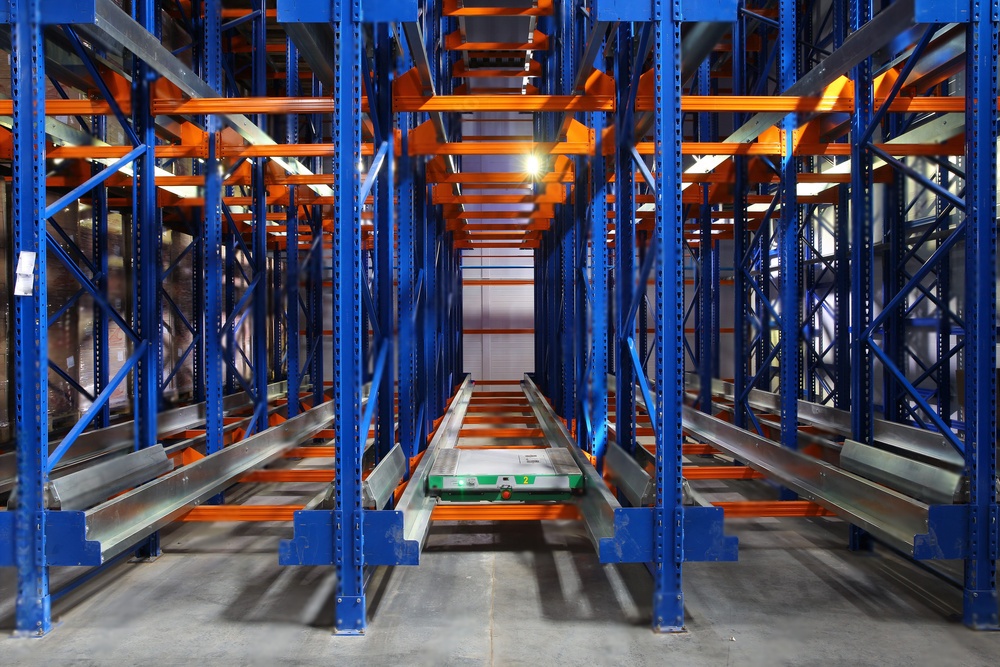
Shuttle racking systems, known as semi-automated warehouse racking systems, significantly enhance storage density and throughput efficiency, making them ideal for operations that handle high volumes of similar products:
- Maximized Storage Density: Shuttle racking systems utilize remote-controlled shuttles to optimize space usage within your warehouse. This significantly increases storage capacity compared to traditional racking methods.
- Enhanced Throughput Efficiency: By minimizing forklift movements, shuttle systems streamline pallet retrieval and storage. As a result, you can expect faster picking and put-away times, boosting overall warehouse productivity.
- Improved Warehouse Safety: Reduced forklift operation with shuttle racking systems translates to fewer accidents and a safer working environment for employees. Additionally, these systems often have built-in safety features that further minimize risk.
- Ideal for High-Volume Storage: Shuttle racking perfectly suits warehouses managing large quantities of similar products. With its high-density storage capabilities, this system allows you to maximize available space and efficiently house a significant amount of inventory.
- Scalable and Versatile: These adaptable shuttle racking systems can conform to various warehouse configurations, future-proofing your storage solution. This means you can easily expand the system as your business grows and storage needs evolve.
9. ASRS (AUTOMATED STORAGE AND RETRIEVAL SYSTEMS)


ASRS (Automated Storage and Retrieval Systems) racking system represent the pinnacle of warehouse racking technology, integrating robotics and automation to revolutionize storage and retrieval processes.
- Storage Configuration: An automated storage proposal should state its storage positions, access method and layout assumptions. Compare those documented details for your goods and building instead of assuming a standard percentage space gain.
- Operational Requirements: Review how an automated system would receive, store and retrieve your goods, including its staffing, equipment and support requirements. Any labour-cost or throughput change needs a project-specific assessment rather than a generic percentage promise.
- Enhanced Competitiveness: Improved efficiency translates to faster order fulfillment, keeping your business ahead in today’s demanding logistics landscape. By investing in ASRS racking, you can ensure your business remains competitive and responsive to customer needs.
- Strategic Investment: ASRS technology is a strategic investment that streamlines operations and empowers you to meet growing customer demands effectively. In today’s competitive market, having an ASRS system can give your business a significant edge.
10. CANTILEVER RACKING
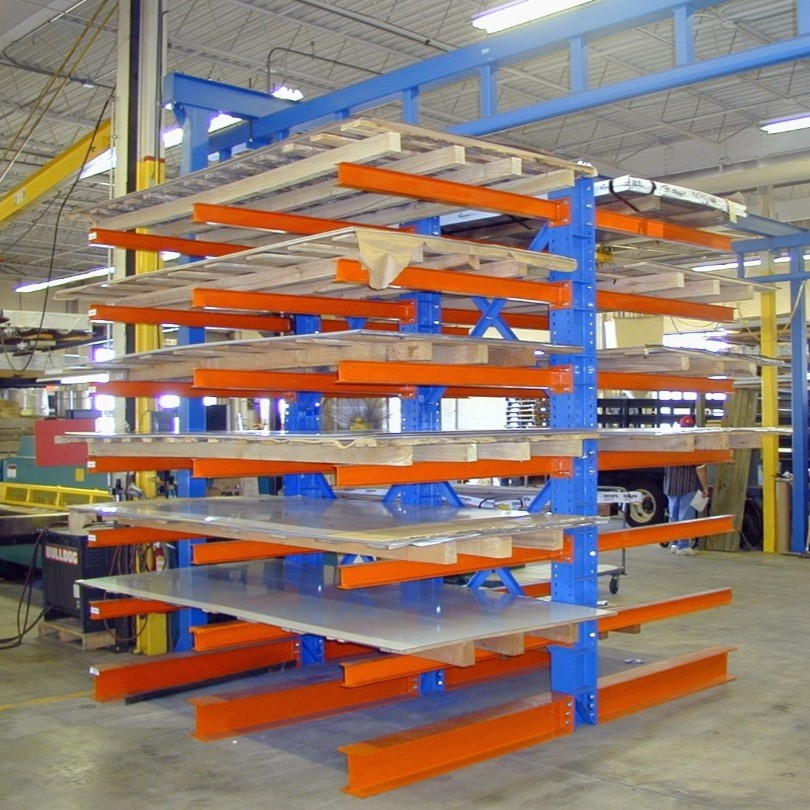

Cantilever racking systems reign supreme in warehouse storage, offering a perfect solution for those long, bulky items that just don’t fit on standard shelving. Here’s why cantilever racking should be your go-to storage solution:
- Accommodates Oversized and Oddly Shaped Items: In contrast to standard shelves, cantilever racking boasts arms extending outwards from strong columns. This design provides ample space for lumber, pipes, furniture, and anything else that might not fit neatly on a shelf.
- Maximizes Vertical Space: Moving beyond wasted precious warehouse floor space, cantilever racking excels in utilizing vertical space. This allows you to store more products efficiently, maximizing your available storage footprint.
- Adjustable Configurations: For warehouses with ever-changing inventory, cantilever racking offers a perfect solution. Its adjustable configuration allows you to easily adapt the system to your specific needs, ensuring a perfect fit for your current and future storage requirements.
- Improves Accessibility and Safety: The open design of cantilever racking provides several benefits. It allows for easy access and handling of even the heaviest of loads, promoting better organization within your warehouse. Additionally, this open design contributes to overall safety by giving you a clear view of your stored items.
11. BOLTLESS RACKING

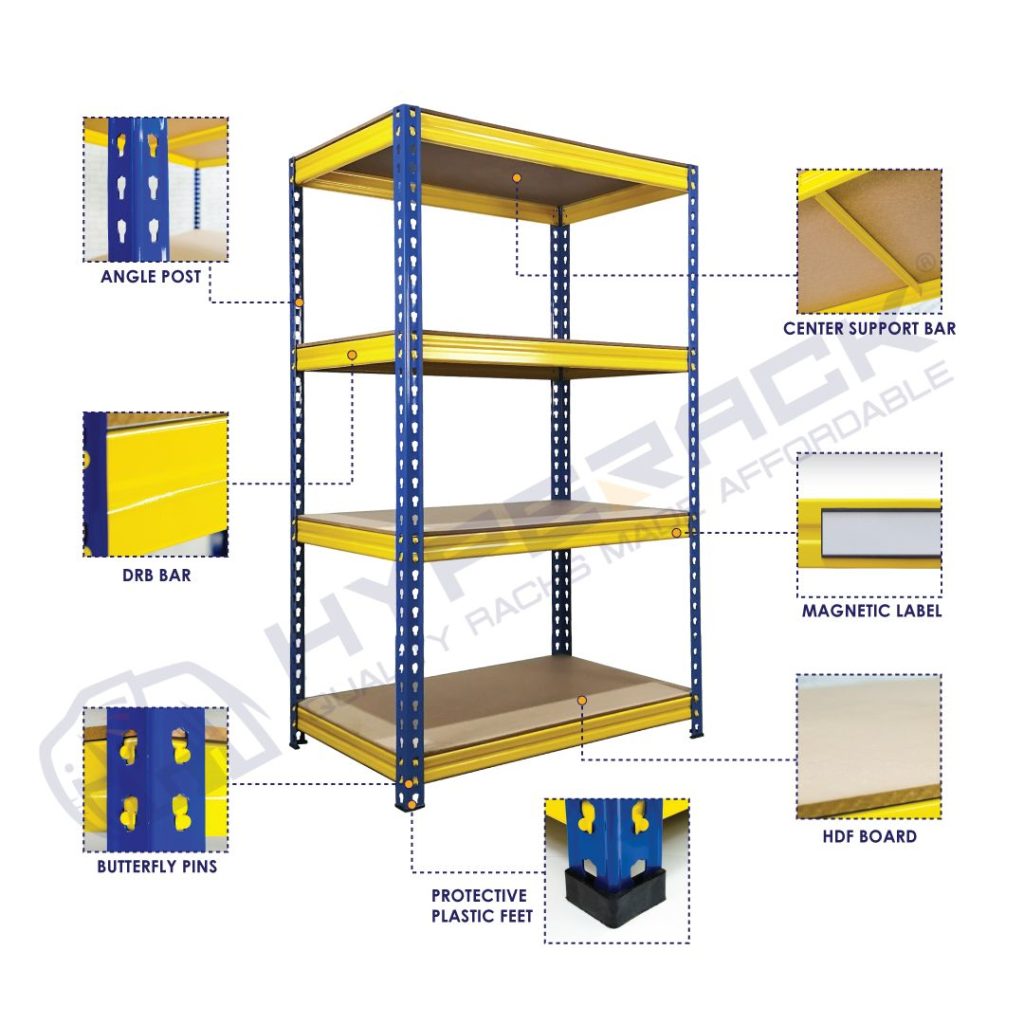
Boltless racking systems offer a convenient and cost-effective storage solution for warehouses. Here’s why you should consider them:
- Quick and Easy Assembly: No nuts, bolts, or tools required! Boltless racks utilize a clip-together design, resulting in a hassle-free assembly process.
- Ideal for Lighter Items: Their design makes them perfect for storing a variety of lighter-weight products. Additionally, boltless racks are a great option for items less than 400kg.
- Highly Versatile and Adjustable: Easily customize shelf height to perfectly fit your specific storage needs. This enables you to optimize your storage space for a wide range of items.
- Cost-Effective: The simple assembly will reduce installation time and labor costs, making them a budget-friendly option.
- Efficient Space Utilization: Their lightweight construction allows for optimal use of warehouse space while maintaining organization. Furthermore, boltless racks can be easily reconfigured to adapt to changing storage requirements.
Conclusion
Understanding the different types of warehouse racking systems is crucial for optimizing your storage solutions. By selecting the right warehouse racking, you can improve efficiency, maximize space, and enhance inventory management in your warehouse operations. Ready to optimize your warehouse storage? Contact us today for a FREE consultation and discover how we can help you implement the ideal racking system for your needs. ?
Which racking system do you need?
Use this quick reference to match your storage requirement to the right system type. Each links to a detailed product page with specifications.
On a phone, swipe the table sideways to see all columns.
| Storage need | Recommended system | Key characteristic |
|---|---|---|
| Direct access to every pallet | Selective pallet racking | 100% pallet accessibility from the aisle |
| More density, still using forklifts | Double deep pallet racking | Two pallets deep, needs reach truck |
| High density block storage, uniform pallets | Drive-in pallet racking | Forklift enters the rack structure |
| Multiple SKUs several pallets deep | Push-back racking | Pallets advance automatically on inclined rails |
| FIFO rotation required | Gravity flow racking | Pallets move by gravity from loading to picking face |
| Limited floor space, maximum height | VNA racking | Specialist trucks in narrow aisles |
| Heavy cartons and bulky items, manual handling | Heavy duty racking | Hand-loaded shelving for large items |
| Light to medium items, offices and stockrooms | Boltless racks | Tool-free assembly, multiple series |
| Retail product display | Gondola racks | Customer-facing shelving with display accessories |
| Long goods (pipes, timber, steel) | Cantilever racking | Open-front arms for long or awkwardly shaped items |
Contact Hyperack to discuss which system suits your warehouse, factory or retail space.