

Pallet Jack, Pallet Stacker or Lift Table?
- 15/11/2026
- Posted by: tendou
- Category: Racking System
Choose by the work you need done
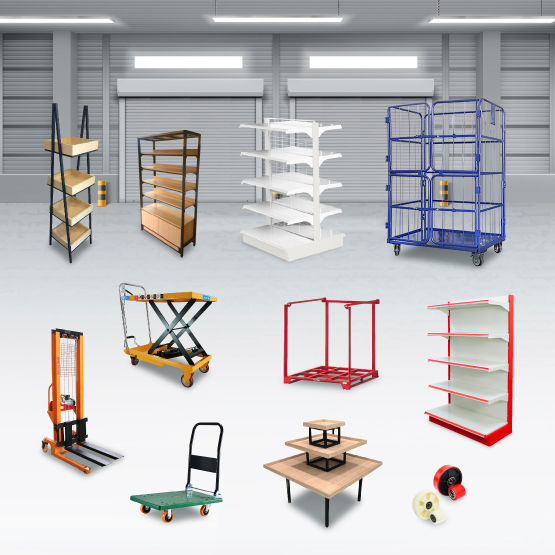
Start with where the load needs to go. For a pallet moving between two floor-level locations, compare pallet jacks. For a compatible pallet that must be placed at a raised storage level, compare stackers. For goods that need to be raised to a working height for packing or assembly, compare lift tables. These equipment types solve different tasks, even when a catalogue gives them similar capacity labels.
For loose cartons moving on a level route without lifting, compare hand-push trolley models. Check that the cartons fit the deck and that the permitted load and wheels suit the route.
Move a pallet at floor level
A pallet jack raises a compatible pallet enough to move it. It is a starting point for moves between receiving, staging and dispatch where the load stays at floor level. Compare Hyperack’s manual pallet jacks using the actual pallet entry, lowered fork height, fork width and length, loaded weight and route. The fork-size guide explains what to measure. A fork that fits the opening does not, by itself, establish that the loaded pallet and route are suitable.
Place a pallet at a raised storage level
A pallet stacker is the starting point when a compatible unit load needs to be raised above floor-transport height. Compare Hyperack’s pallet stackers using the required placement height, pallet and support-leg clearance, load centre, capacity at that height, mast clearance and turning space. Include the intended racking and pallet orientation in the quote request. A listed maximum lift height does not establish the capacity or clearance at the intended storage level.
Bring goods to a working height
A lift table raises goods supported on its platform. Consider this category when the task is to bring a component or carton to a useful working height, rather than put a pallet into racking. For Hyperack’s hydraulic table lifter, ask about the platform size, lowered and raised heights, load distribution, operating limits and unit nameplate. Describe whether the table is needed at a single workstation or whether moving the unit is part of the task.
Copyable equipment enquiry brief
Give each supplier the same information, so you can compare models and written limits against the same job.
- Task and locations: floor transport, pallet placement or work-height positioning.
- Goods and maximum loaded mass, including pallet or container where relevant.
- Load footprint, pallet entry and orientation, or item support area on the platform.
- Starting height, required placement or working height, and overhead clearance.
- Travel route, turning space, floor conditions, doorways and frequency of use.
- Requested model, quantity and written operating limits for the actual application.
Contact Hyperack with the task and dimensions. Ask the supplier to confirm equipment compatibility and relevant limits for the quoted model.