

Warehouse racking


Cantilever Racking
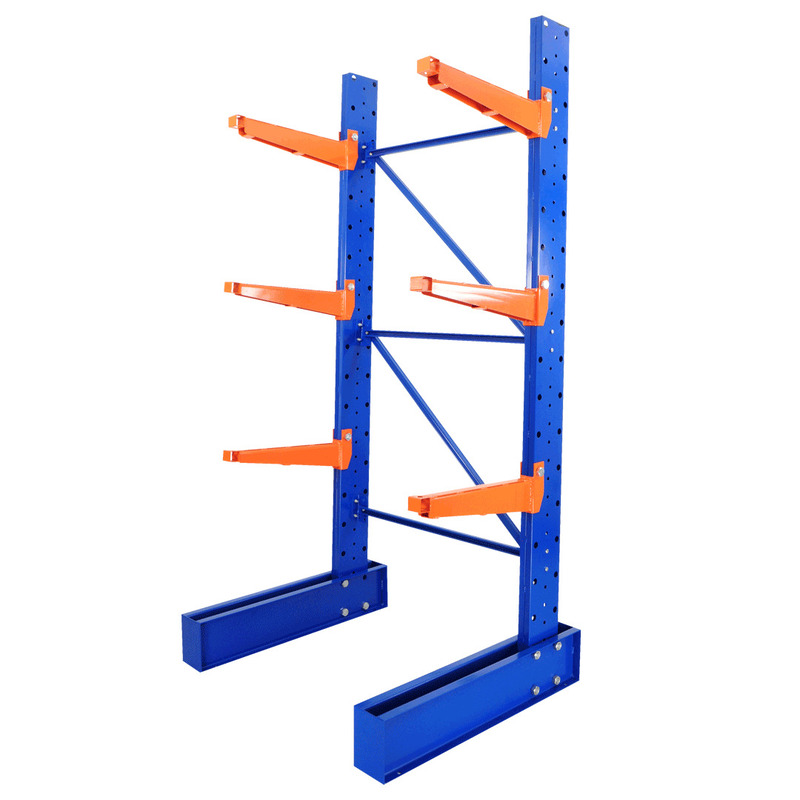
Hyperack supplies cantilever racking for storing long goods in Malaysia, including steel bars, steel profiles, pipes, tubes, packs of timber and suitable bulky items. Arms extend from vertical columns without front uprights obstructing the load face. The loading method and equipment must suit the material and the specified rack design.
Cantilever racking is available in single-sided and double-sided configurations. Single-sided racks are accessed from one side, suited where the rack is positioned near a wall or boundary with the required clearances. Double-sided racks have arms on both sides of a central column, suited where handling equipment can approach from both directions. The choice depends on your floor layout, material handling and access clearances.
To receive a design-specific quotation, provide the actual material lengths and weights, how loads distribute across arms, your handling equipment and access requirements, and whether the installation is indoor or outdoor. See our guide to cantilever racking for how the system works, and comparing racking quotations for what to look for when evaluating quotes.
Ideal for
- Oversized Products – Ideal for items that cannot be safely blocked or stacked
- Steel bars, pipes, timber packs and suitable long goods
Advantages
- High-Density Storage – maximizes cubic space
- Versatile Storage Locations
- Flexible Cantilever Arms – ensuring a customized storage solution
5 Easy Steps
1. Send Details
Share the length, mass and support needs of your long items along with the handling method used to load them.
2. Review Scope
Discuss how your long items are supported and handled. Ask for the proposed arm layout and the assumptions it uses.
3. Check Fit
Confirm the proposed arm levels, column spacing and base fixing suit your floor, item sizes and handling equipment.
4. Compare Quotes
Check the quoted columns, arms, bracing and base plates against the layout and load profile agreed in the review.
5. Plan Handover
Agree on the installation check, load notices for each bay and the documentation provided before the racking is loaded.
Ready to make a change?
For a cantilever racking quote, use the form below to share the length of your longest material or bundle, its loaded weight and whether you need access from one side or both.

FAQ
What types of items are best suited for Cantilever Racking?
Cantilever Racking Systems are engineered for storing long, irregularly shaped, and heavy materials that cannot be efficiently stored on conventional shelving. These include items such as steel bars, pipes, timber beams, oversized furniture, and construction materials. The system’s robust horizontal arms are designed to handle the weight and length of these materials, ensuring stability and safety. With adjustable arm lengths and load-bearing capacities, cantilever racks accommodate products of varying sizes and weights, providing a highly versatile solution for industries like construction, manufacturing, and logistics.
How does Cantilever Racking improve warehouse efficiency?
Cantilever Racking Systems significantly improve warehouse space utilization and operational flow. By eliminating the need for vertical columns between each shelf, the system offers an uninterrupted horizontal storage space, ideal for long items. This design allows for the storage of products with greater flexibility, as the arms can be adjusted to different heights. Additionally, the open-front design allows for easy access, reducing handling time and enabling faster picking, loading, and unloading. The system also supports high-density storage, making it ideal for warehouses with large inventories of bulkier items, enhancing throughput and overall storage efficiency.
What are the key differences between single-sided and double-sided Cantilever Racking?
- Single-sided Cantilever Racks: Accessed from one side, suitable where the rack is positioned near a wall or boundary with the required clearances. Consider the handling clearance needed on the access side for forklifts or cranes, and whether one-sided loading and retrieval suits your material flow.
- Double-sided Cantilever Racks: Arms extend from both sides of a central column, allowing access from two directions. Suitable where aisle layout permits handling equipment to approach from both sides. The choice between single and double-sided depends on your floor layout, material handling equipment and access clearance, not a fixed capacity doubling.
How can I customize a Cantilever Racking System to suit my storage needs?
Cantilever Racking Systems offer extensive customization options to meet the specific needs of different industries and types of products. Key customization features include:
- Arm length and spacing: Arms are specified based on the actual dimensions and overhang of the materials to be stored. Provide your material lengths and bundle profiles so the supplier can determine the arm length, number of supports and spacing required for safe load distribution.
- Weight capacity: Each arm, column and overall system has a rated load capacity that depends on the specified configuration. Provide actual material weights, bundle sizes and how loads are distributed across arms so the design matches your rated requirements.
- Frame height: Column height depends on the number of arm levels needed, the material dimensions at each level, handling equipment reach and the available clear height at your site. Provide these inputs for a design that uses your vertical space within the rated system limits.
- Material and coating: Discuss the installation environment and corrosion protection with the supplier. Confirm the steelwork and protective finish included in the actual quotation and whether they suit the indoor or outdoor exposure at your site.
What are the maintenance requirements for Cantilever Racking Systems?
To ensure the continued safety and functionality of Cantilever Racking Systems, regular technical maintenance is necessary:
- Structural inspections: Follow the inspection plan supplied with the racking. Check uprights, arms and base plates for visible damage, impact marks or misalignment. Report any damage to the supplier or a qualified racking inspector rather than continuing to load a damaged component.
- Rated load checks: Keep the supplied load notices legible and follow the limits for the specified configuration. If the rated information is missing or the stored load or configuration has changed, ask the supplier for the applicable drawing and load limits before loading.
- Anchorage and base checks: Verify that base plates remain anchored as installed and that the floor around anchor points is undamaged. If anchorage is loosened or the floor is cracked, restrict the bay and arrange a qualified assessment before reloading.
- Coating and corrosion checks: Inspect protective coating on arms and columns for chipping, scratching or corrosion, particularly in outdoor, humid or chemically exposed installations. Report damage for assessment and arrange any repairs according to the supplied maintenance plan.
What are the advantages of using Cantilever Racking over traditional shelving systems?
So, if you’ve got bulky or oddly shaped items like pipes, timber, or furniture to store, cantilever racking is a game-changer. Unlike your regular shelving, the arms are open and don’t have those vertical posts in the way, giving you more space and making it easier to grab what you need. It’s all about making the most of your space while keeping everything accessible.
How do I determine the appropriate load capacity for my Cantilever Racking System?
Start with the actual material lengths and depths, bundle or unit weights, and the supports needed for each load. Ask the supplier or designer to assess arm length and spacing, load distribution, column capacity and the overall rating for the specified configuration and handling conditions. Request the applicable load-rated drawing and load notices with your quotation; a single per-arm figure does not establish the capacity of the complete rack.
Are Cantilever Racking Systems suitable for outdoor storage applications?
Cantilever racking can be specified for outdoor use, but it must be designed for the site conditions. Outdoor installations require assessment of wind loads, foundation type, drainage and weather exposure. An appropriate protective finish, such as hot-dip galvanizing, reduces corrosion risk but does not eliminate it entirely; ongoing coating inspections are still needed. Discuss your site with the supplier so the design, anchorage and finish are specified for outdoor conditions rather than assumed suitable.
What safety considerations should be taken into account when installing and using Cantilever Racking?
Install according to the manufacturer’s design and instructions, including specified anchorage and floor requirements. Train operators on rated load limits, safe loading and unloading procedures, and handling equipment clearances. Carry out inspections at the intervals specified in the supplied inspection plan, and report any impact damage, deformation or overloading immediately. Following rated loads and safe handling practices reduces risk, but safety depends on the full combination of correct installation, proper use and regular inspection.
How can I optimize the layout of my warehouse using Cantilever Racking to maximize storage space?
Plan the layout around your material lengths, loading method, handling equipment and the clearances needed to manoeuvre and retrieve the load. Compare single-sided access near a wall or boundary with double-sided access where both faces can be reached. If your storage needs change, review alterations with the supplier or designer so that load distribution, rated configuration and access clearances remain suitable.