


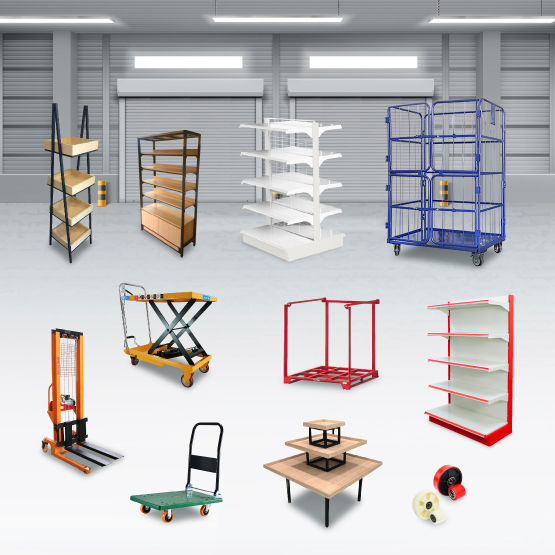
Gondola Racks for Retail Shops in Malaysia
- 14/02/2025
- Posted by: macgad-admin
- Category: Racking System
What is a Gondola Rack?
A gondola rack is a modular, freestanding shelving system used to display merchandise in retail shops, minimarkets, supermarkets and pharmacies. The right configuration depends on the actual floor space, merchandise dimensions, load requirements and browsing layout of the premises. This guide covers what gondola racks are, how the main types differ, which components and specifications to confirm, and what to include when requesting a quotation.
Definition & Core Features
A gondola display rack is a versatile, freestanding shelving unit used in retail stores to display products in an organized manner. It is designed with adjustable shelves, a sturdy frame, and modular components that allow retailers to customize the setup based on their needs.
Configuration and Support
A gondola unit typically consists of a base deck, upright posts, a back panel or pegboard, and adjustable shelf levels. The exact components, dimensions and anchoring requirements vary by model and manufacturer. Confirm the structural support, base fixing and compatible parts with the supplier before selecting a configuration for the intended merchandise and location.
Key Features of Gondola Racks
- Adjustable Shelving
For a model with adjustable shelves, use only the positions and arrangements permitted in its instructions. Confirm the applicable load limits and clearances for the actual merchandise dimensions and weights. Before changing shelf levels or components, check the supplier’s reconfiguration instructions and any need for trained installation support. - Modular Design
Gondola systems use compatible sections and accessories to organise different merchandise. The display capacity depends on the selected unit dimensions, shelves, product sizes and layout; compare the actual proposal rather than assuming a fixed percentage increase. - Freestanding Design
Gondola ranges include freestanding island configurations and single-sided units positioned along walls. Confirm the particular model’s anchoring and installation requirements with the supplier; placing a unit near a wall does not establish how it is structurally supported. - Load and Component Specification
Ask for the specified materials and compatible components for the selected gondola model. A material label alone is not a load rating. Confirm the permitted shelf, base and total-unit loads for the quoted shelf width, depth and position, including the loading distribution and any hook or accessory limits. Compare the actual merchandise with the supplier’s written load documentation before choosing an arrangement. - Customizable Accessories
Accessories such as hooks, baskets and sign holders may suit particular merchandise and configurations. Confirm availability, load ratings and compatibility with the selected gondola model in the supplier’s proposal; not all accessories are standard inclusions. Digital signage involves separate mounting, power supply and equipment scope and is not part of a standard gondola quotation unless explicitly included.
Types of Gondola Racks
Gondola racks are available in several configurations, each designed to meet specific needs. These include:
Single-Sided Gondola Racks
Best for: Wall placements where one display face is needed
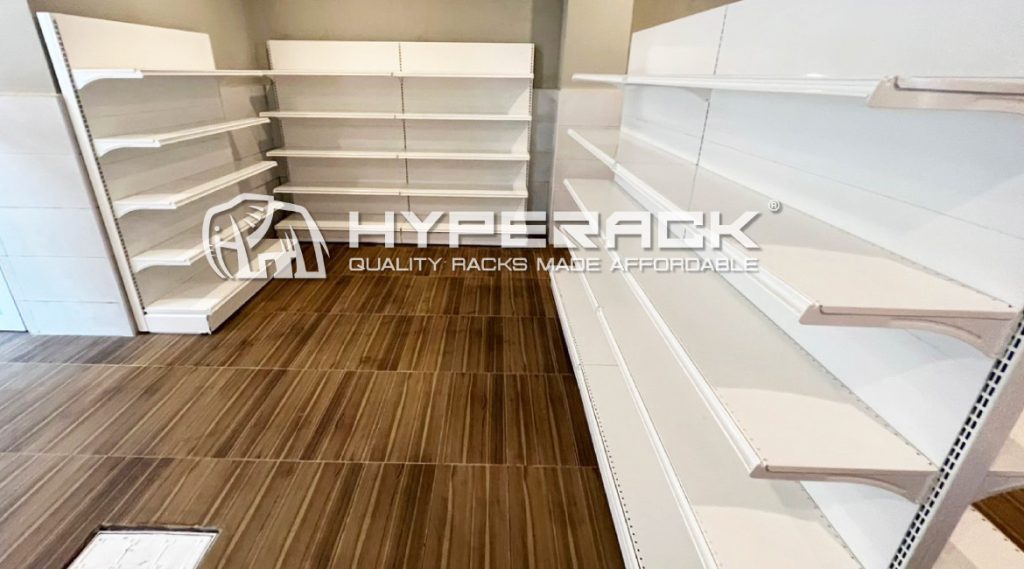
Use Case: Single-sided racks are typically placed against a wall or partition. A minimarket or convenience store, for example, might line a perimeter wall with single-sided units to display packaged food and beverages. The actual aisle width, stocking access and browsing clearance depend on the measured shop layout.
Double-Sided Gondola Racks
Best for: Central display aisles
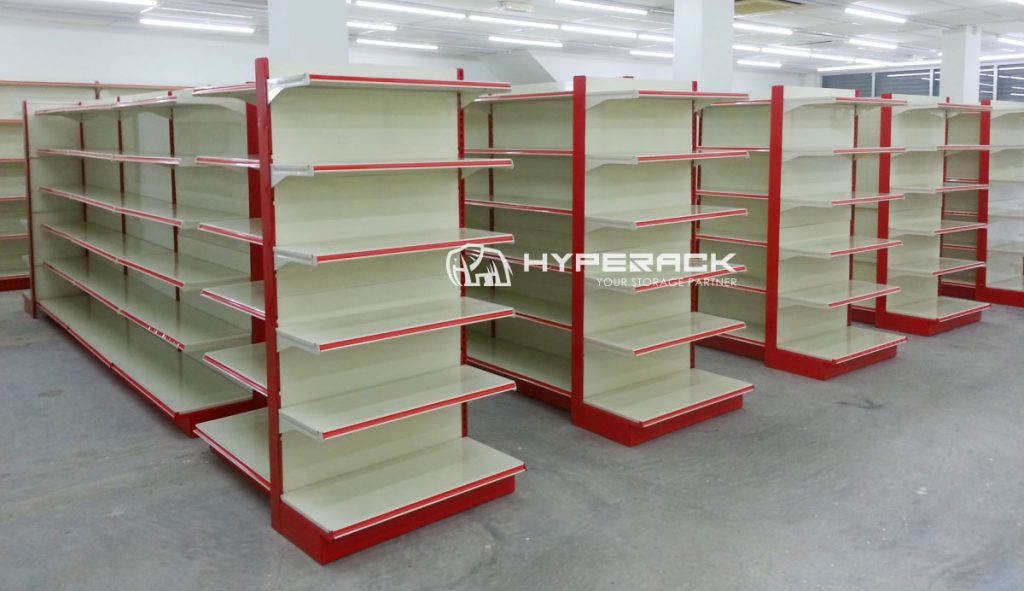
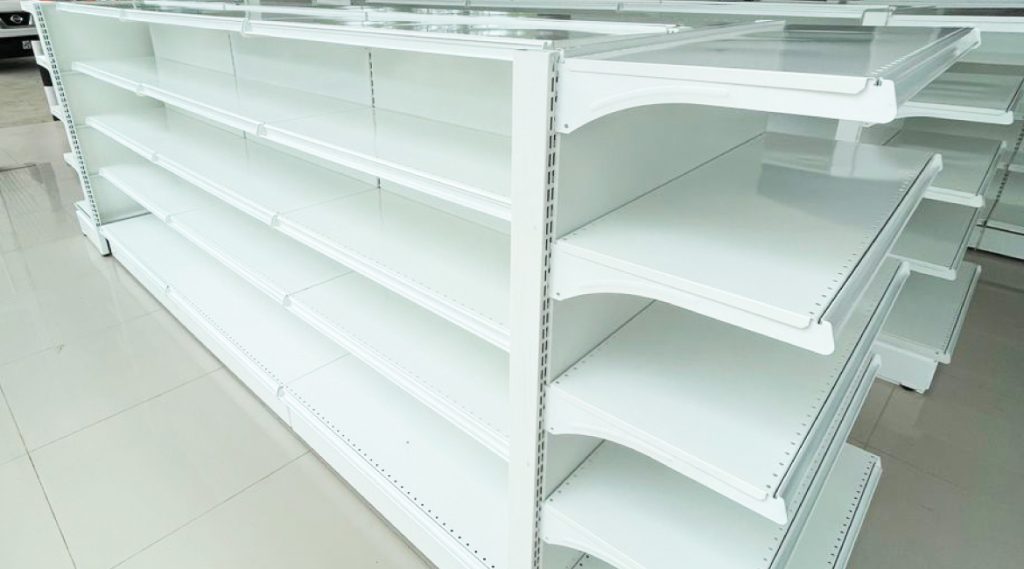
Use case: A double-sided gondola presents merchandise on both faces of an island run. Plan the merchandise, browsing space and access requirements for the actual shop; no fixed visibility or sales increase is assumed.
End Cap Gondola Racks
Best for: Promotional end displays
Use case: End displays can group seasonal or promotional merchandise at the end of a row. Choose the position, product mix and access arrangements for the premises rather than relying on a promised purchase-rate increase.
Corner Gondola Racks
Best for: Using corner floor space that standard runs do not reach
Use Case: Consider a corner unit where its proposed shape and footprint fit the available space; confirm which compatible sections and supports the layout needs. A small bookstore, for example, might use a corner unit to present a featured genre. Whether the position suits the intended product depends on the store’s measured traffic flow and restocking access.
Five Retail Layout Considerations
1. Space Maximization
Gondola shelving can use several display levels within a shop. How much merchandise fits depends on the fixture dimensions, shelf spacing, product sizes and the circulation space that must remain clear. Compare a measured layout rather than assuming a standard percentage gain.
2. Enhanced Product Visibility
Place products so customers can see labels and reach the intended merchandise. Shelf height, product dimensions and the display plan all affect presentation; any sales effect should be assessed from the retailer’s own results rather than an unattributed percentage.
3. Streamlined Organization
Grouping merchandise by relevant categories can make a display easier to understand and maintain. Clear labels and an organised layout support browsing, but they do not establish a guaranteed satisfaction or conversion increase.
4. Layout Flexibility
Modular gondola systems are designed to support different shelf and accessory arrangements over time. Changing a layout for seasonal displays or new merchandise lines involves confirming that the replacement configuration stays within the model’s permitted shelf positions, load limits and compatible components. Check the supplier’s reconfiguration instructions and whether support or trained installation is included before planning a changeover.
5. Materials, Maintenance and Cost
When comparing gondola quotations, check the intended environment, finish, compatible components, maintenance requirements and written support terms. Replacement costs and service life depend on use and condition; no fixed lifespan or percentage saving is promised here.
Gondola Display Planning for Retail Shops
Retailers planning a gondola layout can consider these practical points when choosing configurations and merchandise placement:
- Product Placement: Plan the visibility and accessibility of merchandise for your customers. Review the actual shop layout and sales data when testing a display change instead of assuming one shelf height produces a fixed sales uplift.
- Seasonal Displays and Promotions: Group relevant merchandise for a planned promotion and confirm that the chosen fixtures and accessories suit it. Review performance against the retailer’s own baseline; a seasonal display does not by itself establish a percentage sales gain.
- Digital Signage: If the retailer wants digital displays, scope the equipment, mounting, power and compatibility separately with the relevant suppliers. Do not assume electronic equipment is included with a gondola quotation or that it guarantees a sales increase.
- Encouraging Cross-Selling with Accessories:
Gondola shelves and hooks can group related products together. For example, a shoe display could include socks, polish or laces on adjacent shelves or accessory hooks. Whether grouping complementary items increases sales is an outcome to track from the retailer’s own data, not a guaranteed result. - Themed Zones: Related merchandise can be grouped into clear themes, such as back-to-school items. Check the product mix, signs and access needs for the shop; additional purchases remain an outcome to measure, not a promised percentage.
Industry Applications: Common Retail Settings
Gondola racks are used across a range of retail settings. The suitability of a particular model depends on the merchandise dimensions, weight, packaging and the shop’s layout:
- Supermarkets / Hypermarket: Supermarket and hypermarket gondola runs typically carry packaged food, beverages and household goods. Confirm that the shelf depth, load rating and spacing suit the intended product dimensions and restocking method.
- Pharmacies: Gondola shelving in a pharmacy displays retail products such as personal care items and packaged vitamins. Choose shelf positions that suit the packaging sizes within the model’s permitted configuration and loading limits.
- Electronics Stores: Chargers, accessories and boxed electronics can be displayed on gondola shelves within the model’s load and dimension limits. Heavier or larger items require confirmation of the per-shelf capacity and any securing or anti-theft provisions.
- Apparel Stores: Folded garments, shoes and small accessories can be arranged on shelves, while compatible hooks accommodate hanging items such as belts and bags. Check hook load ratings and fixture compatibility for the selected model.
- Bookstores: Choose shelf positions and depths for the actual book dimensions and display arrangement. Confirm the applicable loading limits for the intended stock weight per level.
FAQs: Gondola Racks Demystified
- Q: How much weight can a gondola rack hold?
A: There is no single universal figure. The per-shelf capacity depends on the specific model, shelf width, depth and position, and is separate from the base and total-unit limits. Ask the supplier for the written load table covering the exact configuration, loading distribution and any accessory ratings. - Q: Are gondola racks easy to assemble?
A: Assembly and reconfiguration requirements vary by model. Request the manufacturer’s instructions covering required tools, anchoring, trained installer responsibility and handover. Confirm with the supplier whether assembly and future reconfiguration support are included in the quotation. - Q: Can gondola racks be used outdoors?
A: Do not assume a retail gondola fixture is suitable for outdoor use. Ask the supplier for documented suitability of the proposed model for the actual exposure and site, including finish, corrosion resistance, maintenance and support requirements. If suitability is undocumented, select a product explicitly approved for the proposed conditions.
Conclusion: Preparing Your Gondola Rack Specification
Before requesting a gondola quotation, measure the floor area and note the merchandise dimensions and maximum weights for each section. Decide whether single-sided, double-sided, end-cap or corner configurations suit the layout, and list the required shelf levels, depths and accessories. Confirm the site environment, installation and delivery scope, anchoring requirements and ongoing support terms, so that competing proposals cover the same specification.
Hyperack’s gondola rack page shows published rack dimensions, wall and island options and the information needed to request a quotation for your layout. See the worked example of an itemised gondola quote request for wall runs, islands, end displays, delivery and installation.
Use the same written specification when comparing gondola rack suppliers in Malaysia on the actual model, load ratings, included components and support terms.
Need to decide between gondola and boltless racks? Read Gondola or boltless racks for a retail shop for a comparison table and checklist.