


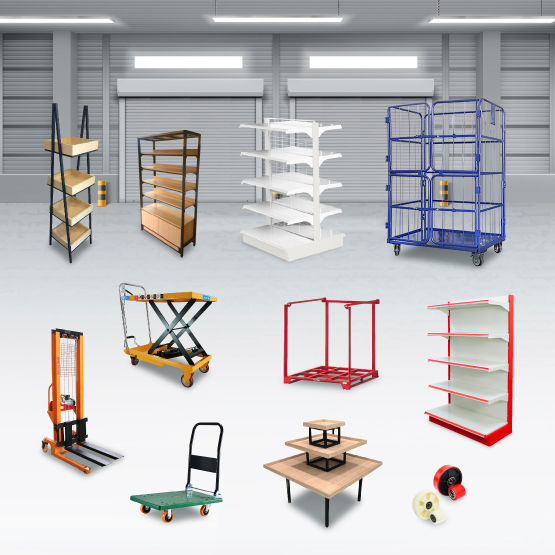
Boltless Rack vs. Bolted Racks: Which One is Right for You?
- 06/08/2024
- Posted by: macgad-admin
- Category: Racking System
Boltless Rack vs. Bolted Rack: Which is Best for Your Warehouse?
A boltless rack uses interlocking connections for its main shelf joints. A bolted rack uses bolts to fasten its joints. Compare the exact shelf and bay ratings, dimensions and handling requirements for the models you are considering.
What is a Boltless Rack?
A boltless rack uses interlocking shelf-to-upright connections for its main shelving joints. Joint designs differ by model. Boltless does not mean that a complete installation never needs tools, retainers or fixings. Confirm the specified components, assembly tools and procedure for the rack you are ordering.
What is a Bolted Rack?
A bolted rack uses bolts, nuts and sometimes screws to fasten its frame and shelf components. This traditional fastening method is common in industrial and heavy-duty settings. The resulting structure and performance depend on the specific rack’s design, materials and rated capacity, not on the fastening method alone.
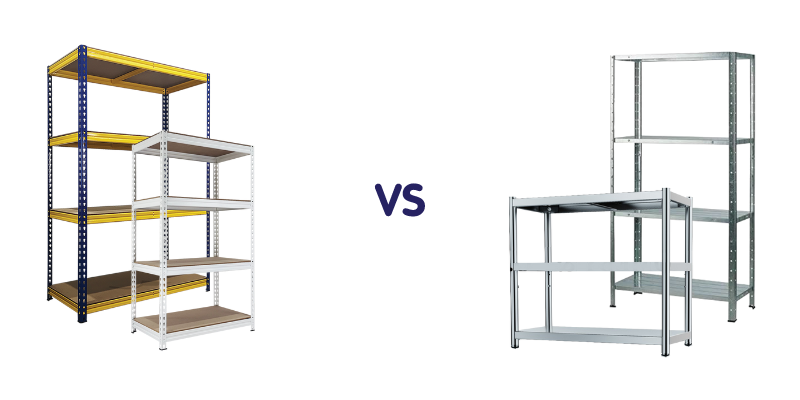
Key Differences Between Boltless and Bolted Racks
Let’s compare these two racking types based on several practical factors:
- Ease of Assembly
- Boltless Rack: Main shelving joints interlock, but the specified tools, retainers, supports and any installation fixings depend on the model. Check the actual assembly instructions and included components before planning the work.
- Bolted Rack: Follow the specified assembly sequence, hardware and tightening instructions for its bolted connections. Compare the actual erection work and supplied parts for the two models; the joint label alone does not establish assembly time or stability.
- Flexibility and Adjustability
- Boltless Rack: Confirm the available shelf positions and permitted arrangements for the selected model. Follow the unloading and adjustment procedure. Changes to level spacing, spans, components or supports can affect the permitted load.
- Bolted Rack: Changes involving bolted connections may require loosening, refitting and specified tightening. Follow the supplier’s unloading and reconfiguration procedure, and confirm the permitted arrangement before returning the rack to use.
- Durability and Stability
- Boltless Rack: Hyperack publishes three boltless series with different rated ranges per level: Value Rack, Livin Rack and Boltless Rack. Published headline figures and product-page illustrations may not agree across all sources for a given series. Confirm the exact model, shelf dimensions, configuration and written per-level and per-bay ratings directly with Hyperack before ordering.
- Bolted Rack: A bolted connection does not establish a higher working load or longer service life. Compare the specified shelf and complete-bay ratings, dimensions, decking, load distribution, support requirements and operating conditions for the actual models.
- Cost Considerations
- Boltless Rack: Request an itemised quote covering the selected dimensions, decking, permitted loads, accessories, delivery and assembly scope. Compare equivalent configurations and included work before judging the total cost.
- Bolted Rack: Check which hardware, supports, fixings and assembly work are included. Compare the complete installed scope and any ongoing inspection or adjustment requirements; no joint type guarantees a lower lifetime cost.
Which Racking System is Right for You?
The better choice between a boltless rack and a bolted rack depends on what you are storing, how you handle it and how often the layout changes. Consider these factors:
- Storage requirements: Determine the weight, size and handling method of what you store. Hand-picked cartons and palletised goods need different equipment and rated capacities.
- Frequency of layout changes: Compare the adjustment procedure and permitted shelf positions for the exact models. Plan the unloading, handling and any required reassessment when the layout or loading changes.
- Budget: Compare racks of equivalent dimensions, decking and load rating. A lower sticker price on a rack with different specifications is not a fair comparison.
Start with the intended storage and handling duty. Hand-loaded cartons, household items and forklift-handled pallets need equipment designed for those uses. For pallet storage, evaluate a compatible pallet-racking configuration and handling equipment; a shelving load figure or joint-type label alone does not establish suitability.
Conclusion
Prepare the packed item dimensions and weights, load arrangement, number of levels, floor plan and operating environment before comparing quotes. View Hyperack Boltless Rack specifications. Contact Hyperack to confirm the selected model, permitted loads and included components for your configuration.
? Follow us on Facebook | Tiktok | LinkedIn | Youtube