


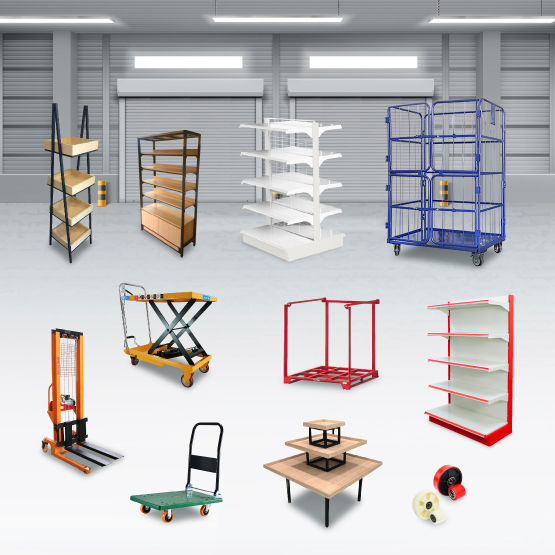
11 Types of Warehouse Racking Systems Compared
- 16/07/2024
- Posted by: macgad-admin
- Category: Racking System
Start with how you store and retrieve goods. Selective pallet racking gives direct access to individual pallets. Deeper lanes can suit grouped pallet stock if their loading and retrieval sequence matches your stock rotation. Boltless shelving is an option for cartons picked by hand, while cantilever racks use open-front arms for long stock such as timber or pipes. Compare the eleven warehouse racking systems below against your load dimensions, handling equipment and available space. Use the comparison table to shortlist systems by storage need.
Types of Warehouse Racking Systems
Warehouses come in all shapes and sizes, and the things they store are just as varied. That’s why there are so many types of racking systems! From bulky lumber to tiny screws, each storage need has its ideal solution. Whether it’s maximizing space with drive-in racks or ensuring easy access with selective systems, the variety of racking options allows warehouses to optimize their storage capacity and efficiency.
1. SELECTIVE PALLET RACKING


Selective pallet racking is one of the most common and versatile types of warehouse racking systems, offering numerous benefits for efficient storage and retrieval:
- Storage Configuration: Selective pallet racking provides individual access to pallet positions. The position count depends on the proposed layout, load configuration, building constraints and handling equipment, rather than a universal increase over floor stacking.
- Enhanced Accessibility: Unlike floor stacking, selective racking provides direct access to each pallet, ideal for warehouses with diverse inventory. This means you can quickly and easily retrieve any item you need, saving valuable time and effort.
- Improved Inventory Management: By maximizing space utilization, selective racking facilitates better organization and efficient inventory management. In turn, you’ll gain greater control over your stock levels and reduce the risk of misplaced or forgotten items.
- Adaptable Storage Solution: This racking system is easily adjustable to accommodate different pallet sizes and weights, making it a versatile solution for evolving storage needs. No matter what your inventory throws your way, selective racking can adapt to keep everything organized.
- Site layout and handling: Selective racking provides direct aisle access to each pallet. Check that the proposed aisle layout suits the handling equipment and that the rack and pallets are specified for the loads you plan to store.
Compare selective pallet racking
2. DRIVE-IN RACKING SYSTEM


Drive-in racking stores pallets in deep lanes that a lift truck enters. Lay out the lanes around pallet access and stock rotation.
- Storage Density: Drive-in racking places pallets within lanes entered by the handling truck. Suitability depends on the goods, stock rotation and operating requirements; compare actual layouts rather than assuming a fixed percentage capacity gain.
- Stock rotation: Single-ended lanes usually use last-in, first-out (LIFO) access. A pallet at the front can block access to pallets behind it.
- Stock grouping: Consider whether you can group compatible loads with similar retrieval requirements. Compare the lane arrangement with your SKU mix and batch rotation.
- Equipment fit: Ask the supplier to check the proposed truck, loaded pallets and operating clearances. Compare the usable pallet positions and access with your other options.
3. PUSH-BACK RACKING


Push-back racking systems are a highly efficient type of warehouse racking that utilizes a last-in, first-out (LIFO) approach.
- Streamlined Warehouse Operations: Easy access to the front of each lane allows for efficient loading and unloading of pallets with forklifts, minimizing wasted time and effort. This will create a smoother workflow in your warehouse.
- Ideal for Medium-Turnover Products: This push-back racking system is perfect for storing items with a moderate rate of retrieval, ensuring optimal space allocation within your warehouse.
- Reduced Aisle Requirements: By eliminating the need for multiple access aisles, push-back racking optimizes usable warehouse space, resulting in significant space savings for your facility.
- Layout trade-off: Compare the proposed pallet positions and picking access with a selective layout for the same inventory. Check whether last-in, first-out access works for the stock assigned to each lane.
See push-back racking configurations
4. GRAVITY FLOW RACKING


Gravity flow racking, also known as pallet flow racking, utilizes gravity and weight to take in and take out pallets:
- FIFO System for Efficient Inventory Management: Gravity flow racking utilizes a first-in, first-out (FIFO) approach, ensuring older products are picked first, minimizing the risk of expired goods and optimizing stock rotation. This FIFO system, in turn, promotes efficient inventory management and reduces waste.
- How pallets move: Pallets load at one end and move down inclined rollers toward the picking face. Check that the proposed system suits the dimensions and condition of the pallets you use.
- Stock rotation: First-in, first-out access can support a stock-rotation plan. Check whether you can load and pick at opposite ends and whether the process suits how you track expiry dates and batches.
- Maximized Space Utilization: This racking system optimizes warehouse space by eliminating unnecessary aisles and allowing for a higher density of stored products. By maximizing space utilization, gravity flow racking allows you to store more inventory in the same footprint, potentially reducing your overall warehouse needs.
- Throughput checks: Ask the supplier to show how replenishment and picking would work with your stock profile and handling equipment. Compare both activities with the proposed layout and the available aisle space.
5. DOUBLE DEEP RACKING


Double-deep racking stores pallets two positions deep. A front pallet can block access to the rear position, so compare stock rotation and the handling equipment required for both positions.
- Increased Storage Capacity: Double the storage depth compared to single-deep racking, maximizing your warehouse footprint. This makes double-deep racking a great choice for warehouses looking to store more inventory without expanding their physical space.
- Space Optimization: Achieve a cost-effective storage solution by utilizing previously unused vertical space. In other words, double-deep racking helps you get more out of your existing warehouse by taking advantage of the vertical space that often goes to waste.
- Maintained Accessibility: Specialized forklifts with extended reach ensure efficient access to inner pallets. While double-deep racking offers more storage, it’s important to note that you’ll need specialized equipment to access palletized goods in the back row.
- Ideal for Specific Products: Perfectly suited for warehouses handling large quantities of identical products or with high stock turnover. Double-deep racking is ideal for warehouses that deal with similar items that are frequently accessed.
- Modern Warehousing Strategy: A popular choice for warehouses seeking to optimize storage efficiency and meet modern demands. Overall, double-deep racking is a modern warehousing strategy that can significantly improve efficiency and storage capacity.
Compare double-deep pallet racking
6. VNA (VERY NARROW AISLE) RACKING


Very narrow aisle (VNA) racking uses handling equipment selected to work in reduced aisles. Compare complete layouts for the same pallet mix and workload.
- Usable positions: Count usable pallet positions in each proposed layout after allowing for columns, doors, clearances and aisle-end transfers.
- Site fit: Check the truck guidance and floor requirements with the rack and equipment suppliers.
- Truck compatibility: Confirm the selected truck’s working aisle, lift height and compatibility with the loaded pallet.
- Workload: Check peak replenishment and retrieval, including any transfer step at the end of an aisle.
- Comparable quotes: Compare the total scope of racks, trucks, guidance, floor checks, training and ongoing support.
7. TWIN BAY RACKING


For a proposed twin-bay arrangement, ask the supplier to identify the exact configuration, access method and documented loading limits. Compare its usable positions and operating requirements with the alternatives for the same brief.
- Retrieval Requirements: Review the proposed picking and replenishment routes for your inventory. Retrieval performance depends on the layout, handling equipment, stock profile and operating process; no average time saving is established here.
- Comparable costs: Compare installation, handling equipment and ongoing support for layouts that meet the same brief.
- Drawings and access: Ask for a drawing that shows which pallet positions the truck can reach and any restrictions on loading or retrieval.
8. SHUTTLE RACKING
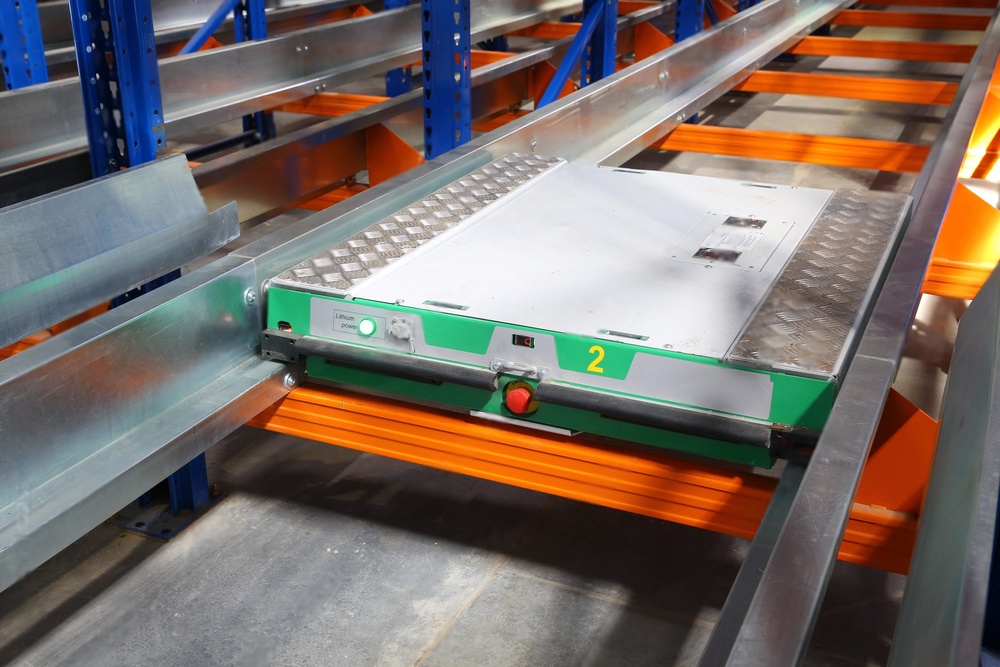
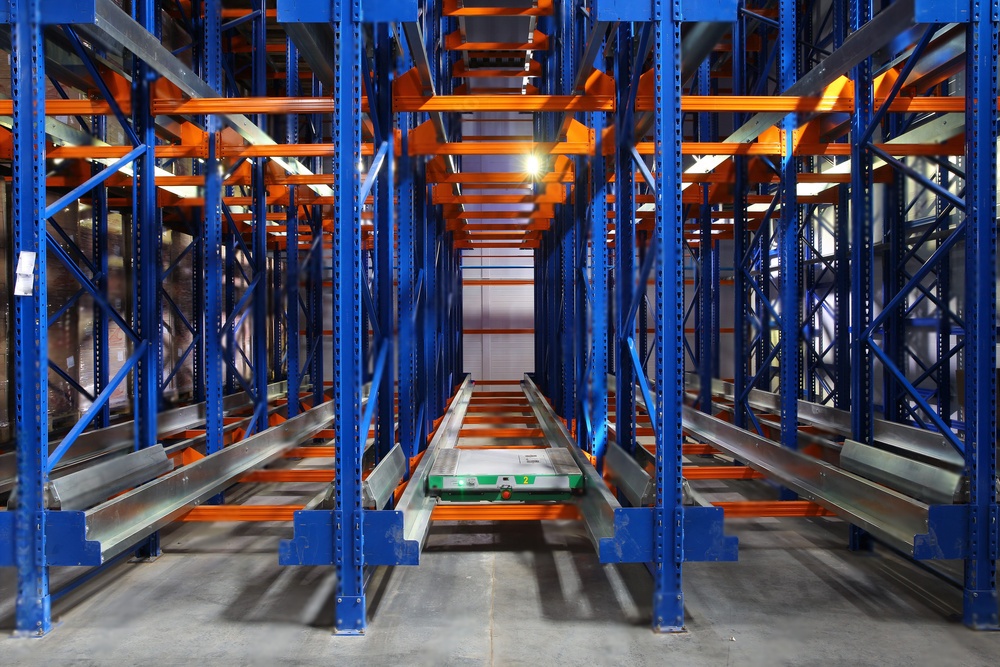
Shuttle racking systems, known as semi-automated warehouse racking systems, significantly enhance storage density and throughput efficiency, making them ideal for operations that handle high volumes of similar products:
- Maximized Storage Density: Shuttle racking systems utilize remote-controlled shuttles to optimize space usage within your warehouse. This significantly increases storage capacity compared to traditional racking methods.
- Enhanced Throughput Efficiency: By minimizing forklift movements, shuttle systems streamline pallet retrieval and storage. As a result, you can expect faster picking and put-away times, boosting overall warehouse productivity.
- Truck and shuttle movements: Ask the supplier to explain where lift trucks place and collect pallets, how the shuttle moves inside the lane and what the proposed controls and maintenance procedures cover.
- Ideal for High-Volume Storage: Shuttle racking perfectly suits warehouses managing large quantities of similar products. With its high-density storage capabilities, this system allows you to maximize available space and efficiently house a significant amount of inventory.
- Scalable and Versatile: These adaptable shuttle racking systems can conform to various warehouse configurations, future-proofing your storage solution. This means you can easily expand the system as your business grows and storage needs evolve.
9. ASRS (AUTOMATED STORAGE AND RETRIEVAL SYSTEMS)


An automated storage and retrieval system (ASRS) uses equipment to put away and retrieve loads from storage racks. Hyperack supplies and installs the racking components. Confirm who provides the handling equipment, controls and software before choosing a proposal.
- Storage Configuration: An automated storage proposal should state its storage positions, access method and layout assumptions. Compare those documented details for your goods and building instead of assuming a standard percentage space gain.
- Operational Requirements: Review how an automated system would receive, store and retrieve your goods, including its staffing, equipment and support requirements. Any labour-cost or throughput change needs a project-specific assessment rather than a generic percentage promise.
- Scope and handover: Confirm who integrates the equipment with the racking, who commissions the system and who provides ongoing support. Record each responsibility in the proposal.
- Acceptance checks: Ask how the system will be tested with representative loads and how the proposed throughput and downtime assumptions will be checked.
Review Hyperack’s ASRS racking scope
10. CANTILEVER RACKING
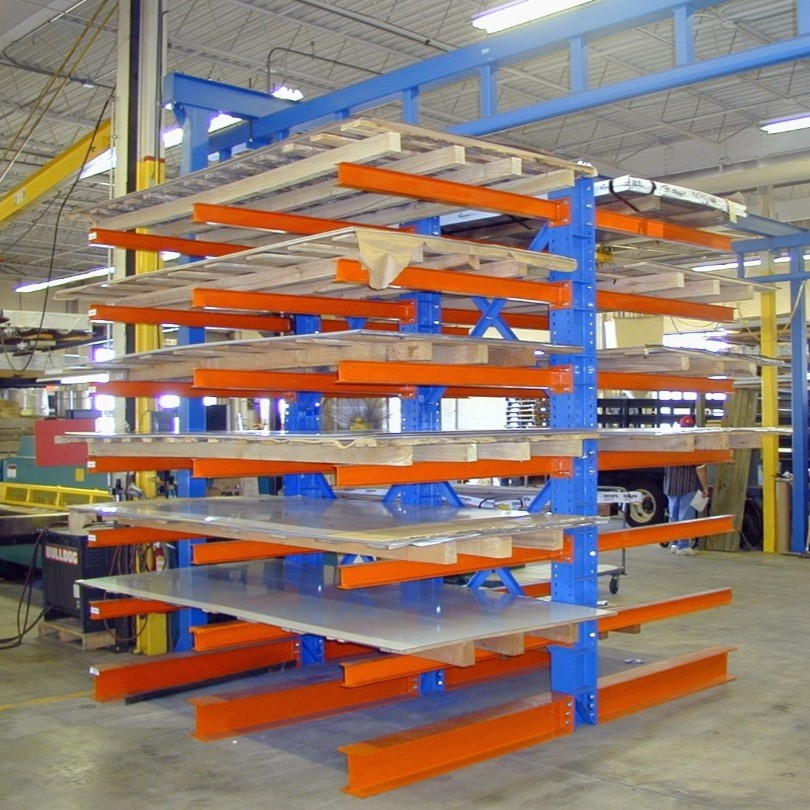

Cantilever racking systems reign supreme in warehouse storage, offering a perfect solution for those long, bulky items that just don’t fit on standard shelving. Here’s why cantilever racking should be your go-to storage solution:
- Accommodates Oversized and Oddly Shaped Items: In contrast to standard shelves, cantilever racking boasts arms extending outwards from strong columns. This design provides ample space for lumber, pipes, furniture, and anything else that might not fit neatly on a shelf.
- Maximizes Vertical Space: Moving beyond wasted precious warehouse floor space, cantilever racking excels in utilizing vertical space. This allows you to store more products efficiently, maximizing your available storage footprint.
- Adjustable Configurations: For warehouses with ever-changing inventory, cantilever racking offers a perfect solution. Its adjustable configuration allows you to easily adapt the system to your specific needs, ensuring a perfect fit for your current and future storage requirements.
- Access and load checks: The open front gives handling equipment access to long stock. Confirm the support arrangement and documented load limits for the proposed arm configuration and the items you need to store.
See cantilever racking configurations
11. BOLTLESS RACKING

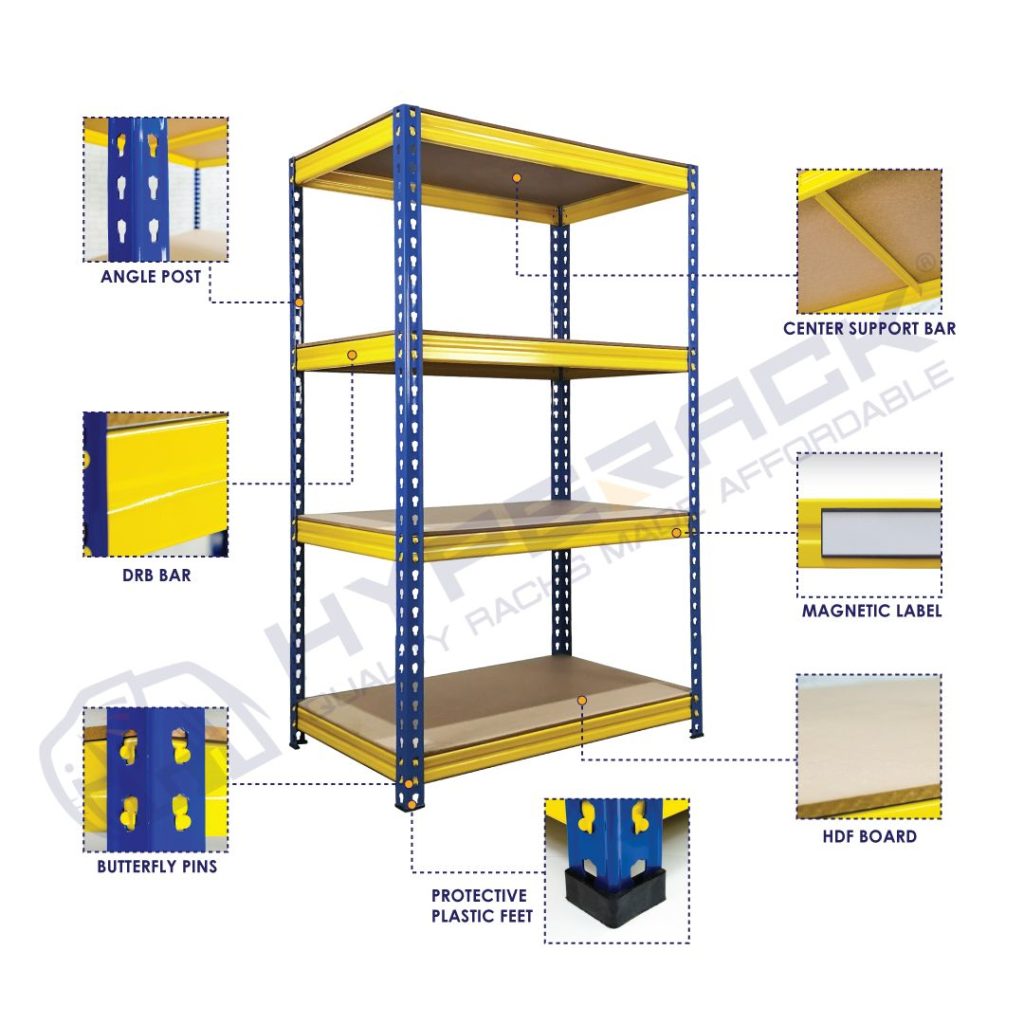
Boltless racking systems offer a convenient and cost-effective storage solution for warehouses. Here’s why you should consider them:
- Assembly: Boltless racks use interlocking shelf joints. Follow the assembly instructions for the selected model and confirm which tools or fittings it needs.
- Hand-loaded storage: Boltless racks suit hand-loaded items such as cartons and supplies. Check the documented shelf and bay ratings for the selected model and ask how the load should be distributed.
- Highly Versatile and Adjustable: Easily customize shelf height to perfectly fit your specific storage needs. This enables you to optimize your storage space for a wide range of items.
- Cost-Effective: The simple assembly will reduce installation time and labor costs, making them a budget-friendly option.
- Efficient Space Utilization: Their lightweight construction allows for optimal use of warehouse space while maintaining organization. Furthermore, boltless racks can be easily reconfigured to adapt to changing storage requirements.
Conclusion
Understanding the different types of warehouse racking systems is crucial for optimizing your storage solutions. By selecting the right warehouse racking, you can improve efficiency, maximize space, and enhance inventory management in your warehouse operations. Ready to optimize your warehouse storage? Contact us today for a FREE consultation and discover how we can help you implement the ideal racking system for your needs. ?
Contact Hyperack about your racking project
Which racking system do you need?
Use this quick reference to match your storage requirement to the right system type. Each links to a detailed product page with specifications.
On a phone, swipe the table sideways to see all columns.
| Storage need | Recommended system | Key characteristic |
|---|---|---|
| Direct access to every pallet | Selective pallet racking | 100% pallet accessibility from the aisle |
| More density, still using forklifts | Double deep pallet racking | Two pallets deep, needs reach truck |
| High density block storage, uniform pallets | Drive-in pallet racking | Forklift enters the rack structure |
| Several pallets deep where last-in, first-out fits | Push-back racking | Pallets advance automatically on inclined rails |
| FIFO rotation required | Gravity flow racking | Pallets move by gravity from loading to picking face |
| Limited floor space, maximum height | VNA racking | Specialist trucks in narrow aisles |
| Heavy cartons and bulky items, manual handling | Heavy duty racking | Hand-loaded shelving for large items |
| Light to medium items, offices and stockrooms | Boltless racks | Interlocking shelf joints. Check the model’s assembly instructions. |
| Retail product display | Gondola racks | Customer-facing shelving with display accessories |
| Long goods (pipes, timber, steel) | Cantilever racking | Open-front arms for long or awkwardly shaped items |
Contact Hyperack to discuss which system suits your warehouse, factory or retail space.