


What is a Pallet Tainer?
- 24/01/2025
- Posted by: macgad-admin
- Category: Racking System
What is a Pallet Tainer?
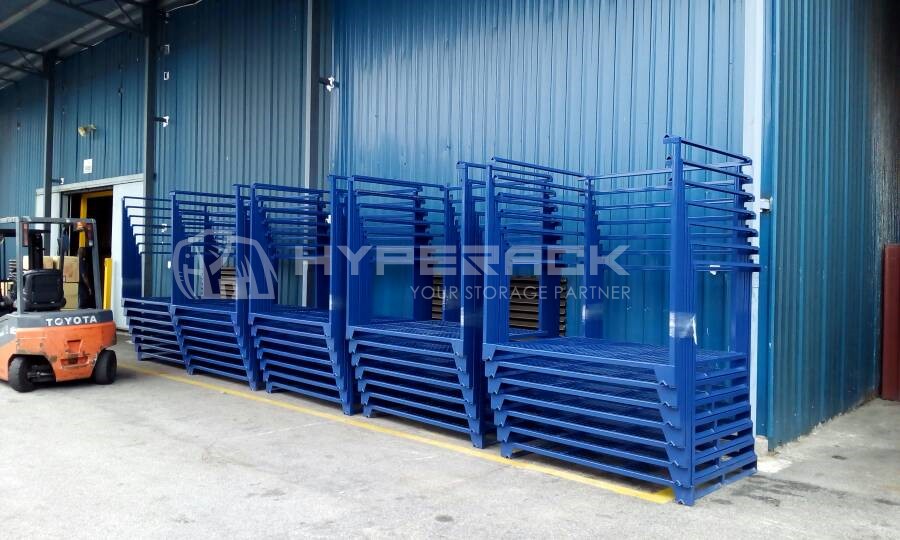
A pallet tainer is an open metal frame used to support and contain suitable unit loads for warehouse storage and handling. Hyperack’s published pallet-tainer range lists PT 1–PT 12 models. These are open-frame structures, so the packaging, base and restraint must suit the goods; the frame itself is not a sealed or dustproof container.
Hyperack publishes model dimensions. The product-page loading graphic lists 500, 1,000, 1,500 and 2,000 kg as uniformly distributed loads (UDL). The catalogue lists 500, 1,000 and 1,500 kg. Neither source assigns a rating to an individual model. Ask Hyperack to confirm the selected frame, loading option and permitted loaded stacking arrangement for your actual goods and site.
How Does a Pallet Tainer Work?
The frame has a base, posts and guide rails to support suitable packaged or palletised goods. Before specifying a unit, compare the load’s dimensions, mass and weight distribution with the selected model and loading option. Published inner dimensions describe the space inside the frame; they do not establish its outer footprint or fork-entry clearance.
A compatible forklift or pallet jack needs sufficient rated capacity, suitable fork entry and clearance for the loaded unit. Confirm these measurements with Hyperack and your equipment supplier. The product drawing illustrates stacking and nesting, but an illustration does not establish an approved loaded stack height. Empty nesting and loaded stacking are different arrangements.
Benefits of a Pallet Tainer
Pallet tainers can be useful where the selected frame and operating method fit the load. Review these factors before comparing a proposal:
1. Space Efficiency
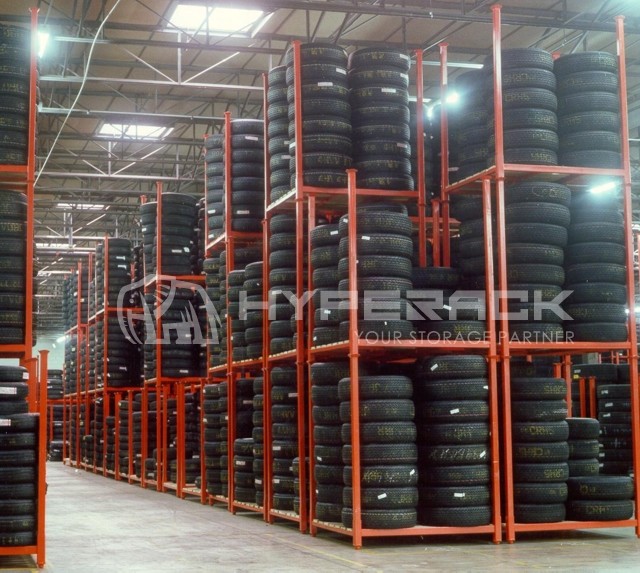
Stacking suitable loaded units can use vertical space, subject to the confirmed model, loading option, floor conditions and permitted stacking arrangement. Empty units may nest where the selected design allows it. Compare usable positions and handling routes for your own layout instead of assuming a standard capacity gain.
2. Durability and Protection
The metal frame provides load support. Packaging, base support and restraint must protect the actual goods; an open frame does not keep out dust or rain. Confirm the material, finish, exposure conditions and inspection requirements for the proposed application rather than assuming a fixed service life or damage-prevention guarantee.
3. Improved Handling
Check the loaded mass, fork-entry dimensions, equipment capacity and route clearances. A frame that suits one handling truck or pallet does not establish compatibility with another. Conveyor, robot or automated storage interfaces need their own confirmation.
4. Cost-Effectiveness
Compare the quoted equipment, packaging, handling, delivery and support costs for the same brief. Any expected labour saving, damage reduction or payback depends on the goods, workload and operating process; the frame alone does not establish a financial return.
5. Versatility
Hyperack describes applications in manufacturing, logistics and packaged agricultural goods. Suitability still depends on the unit load, packaging, support, environment and equipment. Confirm these details for each application, especially where goods need containment or protection that an open frame cannot supply.
Pallet Tainer, Mesh Cage or Work Tainer?
Hyperack’s product pages and catalogue show three options. Start with how the goods are supported, contained and moved.
Pallet Tainer. An open frame for compatible packaged or palletised loads. Check the load support, fork entry and handling equipment for the quoted unit. See the pallet-tainer range.
Pallet Mesh Cage. The catalogue shows a collapsible cage with a folding front. It lists height, outer width and inner width in millimetres for each model: M3 (640, 800, 640), M5 (840, 1,000, 800) and M7 (890, 1,200, 1,000). Check that the mesh and base suit the items. Confirm usable depth, opening size and the written load rating before ordering. View the Pallet Mesh catalogue page (PDF).
Work Tainer. A wheeled cage for rolling transport along a suitable route. Check doorway clearances, thresholds and the quoted wheel or brake arrangement before specifying. See the work-tainer range.
When to Use a Pallet Tainer?
Consider a pallet tainer when you need to support and move a suitable unit load and can confirm the following requirements:
- High-Volume Storage: Compare the required number of units, permitted loaded stacking arrangement and picking routes for the actual stock. The best arrangement depends on inventory and access requirements.
- Diverse Product Types: Check each unit load’s dimensions, packaging and support requirements. Goods with different handling or containment needs may require different frames or another storage solution.
- Transportation Needs: Confirm loaded mass, vehicle and route clearances, restraint and loading or unloading equipment. A published frame size does not by itself establish suitability for a particular transport route.
Pallet Tainer vs. Other Storage Containers
Compare actual specified products for the same goods and operating brief. The table lists selection checks, rather than universal rankings for durability, price or performance:
On a phone, swipe the table sideways to see all columns.
| Selection check | Pallet Tainer | Plastic Bins | Metal Cages | Wooden Crates |
|---|---|---|---|---|
| Load support | Model and UDL | Check rated load | Check rated load | Check rated load |
| Stacking | Confirm loaded stack | Check bin design | Check cage design | Check crate design |
| Handling | Fork entry and mass | Handling method | Equipment fit | Equipment fit |
| Protection | Open frame; package goods | Specified lid or seal | Specified gaps and closure | Specified lining and closure |
| Quote basis | Model, load, quantity | Size, material, quantity | Size, material, quantity | Size, material, quantity |
A plastic bin, metal cage or wooden crate can have very different dimensions, closures and ratings depending on its design. Obtain the actual product specification and compare its load support, protection, stacking and handling requirements with the pallet-tainer proposal. Do not assume that every bin stacks poorly or that every cage is difficult to handle.
Planning Pallet-Tainer Use in Your Warehouse
Before use, agree the unit-load and operating requirements with Hyperack. Include these checks in the proposal and handover:
- Evaluate Your Needs: Provide the actual goods, packaging, maximum loaded mass and weight distribution, pallet or base size, quantity and operating environment.
- Choose the Right Size: Start with the PT 1–PT 12 published inner dimensions. Separately confirm outer dimensions, load height, fork-entry clearance and the appropriate UDL option; do not infer loading capacity from model size.
- Optimize Your Storage Layout: Agree the permitted loaded stacking configuration, floor requirements, aisle clearances and equipment access. Any placement in an existing racking system needs a specific compatibility check rather than an assumption of universal fit.
- Monitor Product Movement: Use the agreed loading and handling method, monitor frame condition and review damaged units before continued use. Confirm the applicable inspection and maintenance requirements with Hyperack for the selected unit and site.
Cost of Implementing a Pallet Tainer System
Request a written quotation for the model, confirmed loading option, quantity, material and finish, required support or accessories, delivery site and any installation or handling support. State the packaging, loaded mass, distribution of weight and stacking requirements. Compare quotations for the same scope and confirm what is included; this guide does not establish a current starting price or guaranteed payback.
How to Choose a Pallet-Tainer Supplier
When choosing a pallet-tainer supplier, review the evidence and scope of the actual proposal:
- Reputation: Review relevant project evidence and ask what goods, frame configuration and operating conditions were involved. A project reference should be assessed for its relevance to your own requirements.
- Customization Options: Give the supplier any required differences from the published models. Confirm the available frame features, dimensions, material and finish in the written quotation.
- Warranty and Support: Ask for the applicable warranty terms, exclusions, inspection guidance and support arrangements for the selected product and order. Do not assume identical coverage for every configuration.
Ready to discuss pallet tainers for your goods? At HYPERACK, we can review the appropriate frame, loading option and layout for your requirements. Contact us today for a FREE consultation, and let our experts help you plan your storage solution. Explore our social media to see real-life projects in action.
Conclusion
A Hyperack pallet tainer is an open-frame storage and handling option for suitable unit loads. Start with the published model dimensions and separate UDL options, then confirm the outer footprint, loaded stacking, packaging, restraint and equipment fit. A clear quotation and operating brief are more useful than generic promises about protection, savings or compatibility.
How Hyperack Plans Your Racking System
- Expertise: We review your goods, warehouse space and operating requirements to discuss suitable storage configurations.
- High-Tech Solutions: Our AutoCAD designs help compare layouts, storage positions and access requirements for the proposed scheme.
- Side-by-Side Comparisons: Our planning process allows you to compare layout options easily, helping you make informed decisions.
- Data-Driven ROI Calculation: We provide numerical layout data for comparison. Any proposed ROI calculation needs the actual costs, workload and assumptions used; it is not a guaranteed return.
- Customization: Discuss custom storage requirements with our team and confirm the available product and layout scope in the proposal.